 Save
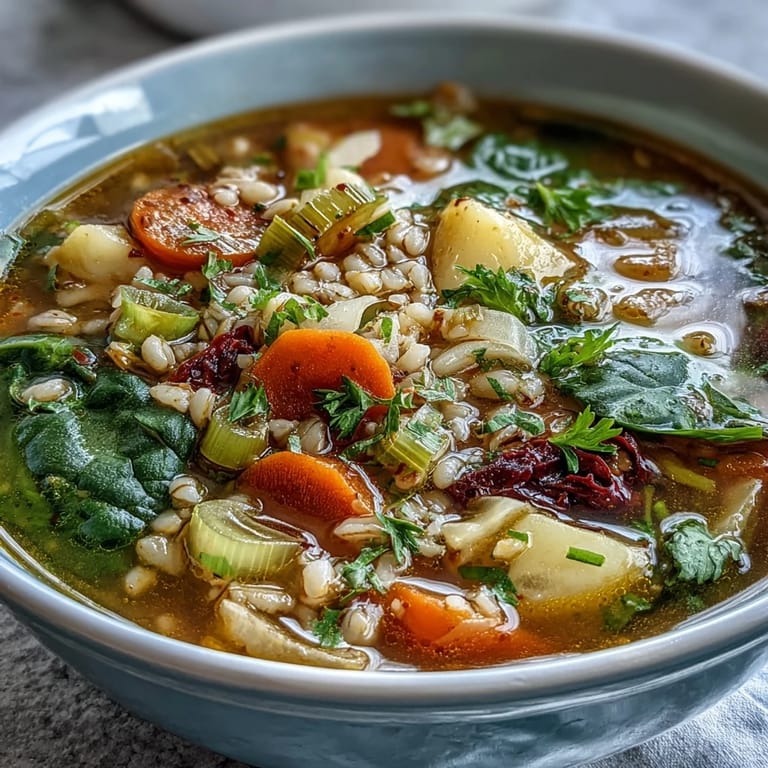
Save There's something about the week when the farmer's market shifts from root vegetables to tender spring greens that makes me want to cook this soup. I was standing in my kitchen on a chilly March afternoon, holding a bunch of baby spinach in one hand and a weathered rutabaga in the other, when it hit me: why choose between seasons when you can celebrate both in a single bowl? That's how this vegetable and barley soup came to be my go-to recipe for that in-between time.
My neighbor stopped by last winter just as this soup was simmering, and the smell drew her right into the kitchen. She sat at my counter for twenty minutes while I finished cooking, and by the end of it, she was asking for the recipe and talking about how a simple bowl of soup had somehow made her feel ready to face the rest of the season. I think that's when I realized this wasn't just food; it was a moment of pause.
Ingredients
- Leek (white and light green parts): Leeks are milder and sweeter than regular onions, and slicing them lengthwise first helps them cook evenly.
- Carrots and parsnips: These root vegetables are the backbone of the soup, turning buttery soft as they simmer and lending natural sweetness.
- Rutabaga or turnip: If you've never cooked with rutabaga before, don't be intimidated by its tough exterior; it adds an earthy depth that makes this soup feel substantial.
- Green cabbage: Shredding it finely means it wilts quickly at the end without turning mushy or bitter.
- Baby spinach: Add this at the very end so it stays bright and tender, not gray and tired-looking.
- Celery: It's easy to overlook, but these stalks build the foundational flavor layer no soup should skip.
- Pearl barley: Rinsing it first removes the starch coating, so it won't make your broth cloudy.
- Vegetable broth: Low-sodium broth lets you control the salt and taste the vegetables themselves, not just salt.
- Olive oil: A modest amount is all you need; this soup isn't about richness but about letting vegetables shine.
- Bay leaf, thyme, and marjoram: These three herbs together create that warm European kitchen feel without overpowering the vegetables.
Tired of Takeout? 🥡
Get 10 meals you can make faster than delivery arrives. Seriously.
One email. No spam. Unsubscribe anytime.
Instructions
- Sauté your foundation vegetables:
- Heat the olive oil in a large pot over medium heat and add the leek, carrots, parsnips, rutabaga, and celery all at once. You'll hear them start to soften and release their aromas after about five minutes; this is when you know the sauté is working.
- Wake up the garlic:
- Add your minced garlic and stir constantly for just one minute; if you let it go longer, it turns bitter and sharp instead of sweet and mellow.
- Build the broth base:
- Stir in the rinsed barley, pour in all your vegetable broth at once, and add the bay leaf and dried herbs. Bring everything to a boil so the broth comes alive with steam and movement.
- Let it simmer gently:
- Once you lower the heat to a simmer and cover the pot, you're mostly done here; just stir occasionally and let time do the work. After about thirty-five minutes, the barley will be tender and the root vegetables will have surrendered to softness.
- Finish with spring greens:
- Add the shredded cabbage and chopped spinach directly to the hot broth and let them wilt for just five to seven minutes. You want them tender but still holding their color and personality.
- Season and serve:
- Taste as you go, adjusting salt and pepper until it feels right, then fish out that bay leaf before ladling. A handful of fresh parsley on top brings the whole thing together with brightness.
 Save
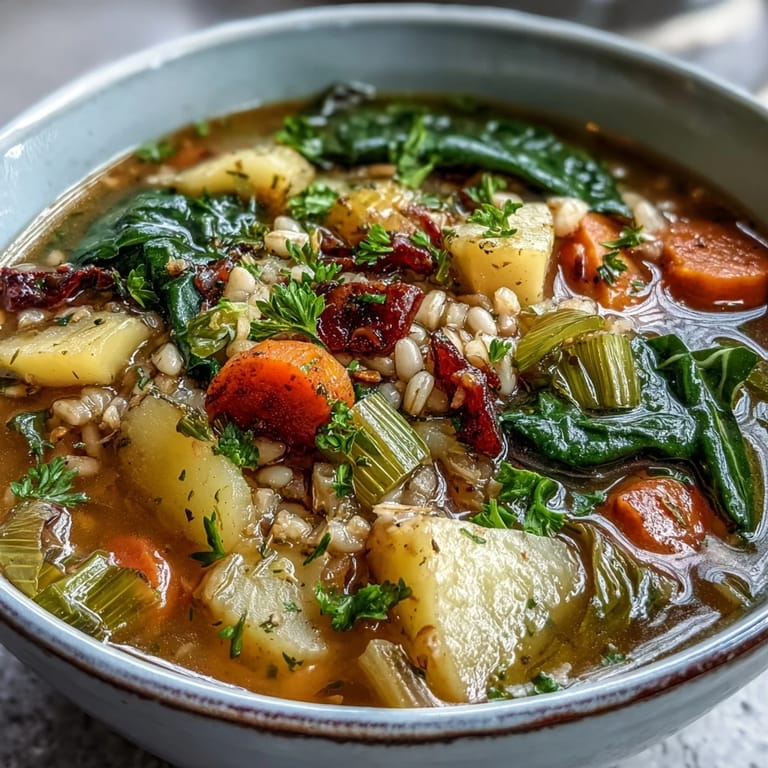
Save There's a moment about forty minutes into cooking when you walk past the pot and realize the kitchen smells entirely different from when you started. That's when you know the soup has transformed from separate ingredients into something that feels whole and welcoming.
The Magic of Seasonal Transitions
Winter soups tend to be dense and roasted; spring soups are bright and delicate. This one lives in the middle, which is exactly where it should be. By pairing hearty root vegetables with tender greens and letting barley become the gentle glue holding everything together, you get a bowl that honors both seasons instead of forcing you to choose between them.
Why Barley Makes the Difference
Most people think of barley as an afterthought grain, but in this soup it becomes the star. As it cooks, it softens into a creamy texture while absorbing the herb-infused broth, turning each spoonful into something satisfying and complete. You don't need cream or butter to feel cared for by a bowl of soup when barley is doing the work.
Serving and Storing Your Soup
This soup tastes wonderful the moment you make it, but it's one of those rare recipes that genuinely improves after a day in the refrigerator. The flavors deepen, the barley becomes even creamier, and when you reheat it gently on the stovetop with a splash of extra broth, it's like a warm hug all over again.
- Store leftovers in an airtight container for up to four days, or freeze for up to three months and thaw overnight.
- Pair it with crusty whole-grain bread and maybe a drizzle of lemon juice right before eating if you want brightness.
- For extra protein, stir in white beans or chickpeas when you add the greens, or add a handful of cooked lentils.
 Save
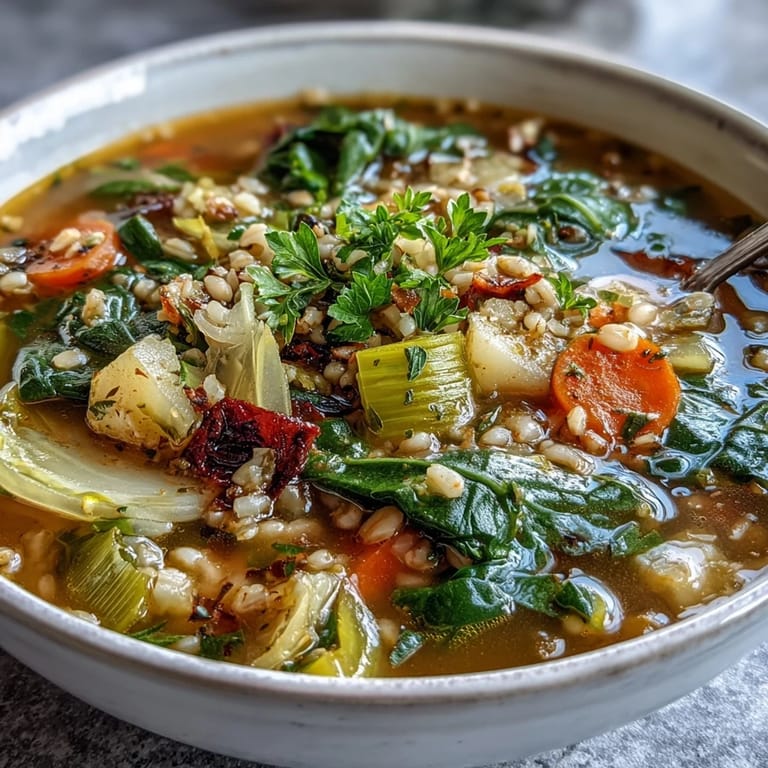
Save This soup reminds me that the best recipes aren't always the most complicated ones; they're the ones that make you feel seen and nourished when you need it most. I hope it does the same for you.
Recipe Guide
- → What vegetables are best for this soup?
A combination of leeks, carrots, parsnips, rutabaga, cabbage, and spinach work harmoniously to provide layered flavors and textures.
- → How do I cook the barley to perfection?
Rinse pearl barley before adding it early in simmering with broth and herbs, then cook gently for about 35 minutes until tender.
- → Can this meal be prepared ahead of time?
Yes, it actually tastes better after resting; store cooled portions refrigerated and reheat gently on the stove.
- → What herbs enhance this vegetable mixture?
Bay leaf, dried thyme, and marjoram add warmth and earthy notes that complement the root and leafy vegetables.
- → Are there suggested ingredient swaps?
Rutabaga can be replaced with potatoes or sweet potatoes, and adding white beans or chickpeas boosts protein content.
- → How should this dish be served?
Serve hot, garnished with fresh parsley, alongside crusty whole-grain bread for a nourishing meal.