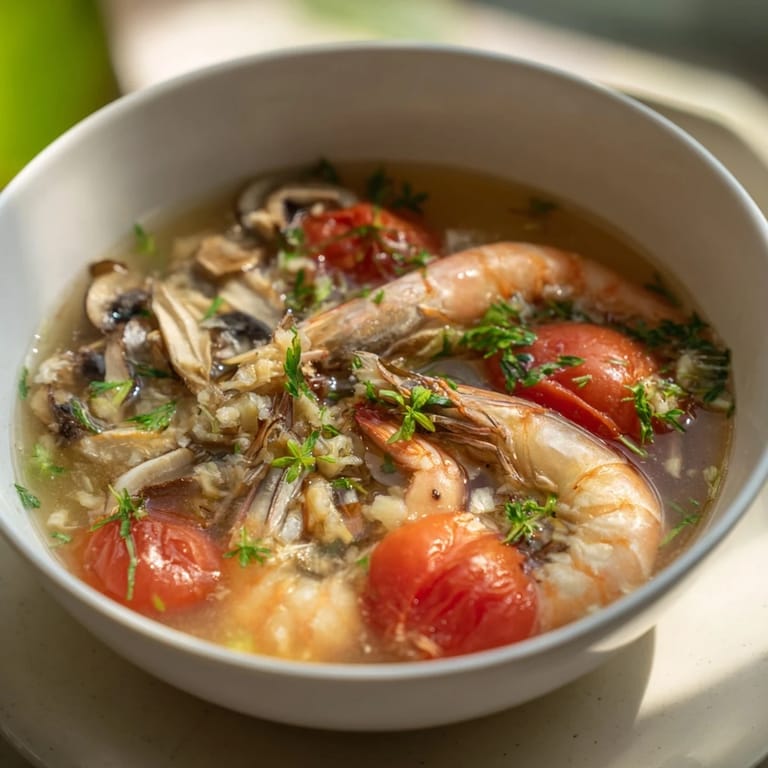
 Save
Save The first time I made tom yum soup, I was standing in a cramped Bangkok kitchen at five in the morning, watching my friend's mother move through the ingredient prep with the kind of effortless grace that comes from making something a thousand times. She handed me a stalk of lemongrass to smell, and I was immediately transported—that bright, grassy sharpness felt like discovery. Years later, I recreate that moment every time I make this soup, chasing that same balance of heat and citrus that somehow feels both comforting and thrilling in a bowl.
I served this to my partner on a Tuesday night after we'd both had the kind of day that leaves you too tired to think straight. He took one spoonful and just paused, and I watched his shoulders relax in a way they hadn't all week. We didn't talk much that evening—we just sat with our bowls and let the lime and chili do the work, and somehow it felt like everything we needed to say was already in there.
Ingredients
- Chicken or vegetable stock (4 cups): This is your foundation—don't skimp on quality here, because every other flavor will rest on it.
- Fresh lemongrass (2 stalks): The magic ingredient that makes people ask what you're making from three rooms away; smash it with the side of your knife to release those oils.
- Kaffir lime leaves (4 leaves): Tear them by hand rather than chopping to keep the oils intact and their flavor bright.
- Fresh galangal (3 slices): It's sharper than ginger and adds a peppery note that ginger can't quite match—if you can't find it, ginger will work, but galangal is worth seeking out.
- Thai bird's eye chilies (2, sliced): These small peppers pack serious heat; start with one if you're unsure, because you can always add more but you can't take it back.
- Large shrimp (250g): Look for pink-gray raw shrimp with a slight smell of the sea—the fresher they are, the better they'll taste in thirty seconds of cooking.
- White mushrooms (150g, sliced): They stay firm enough to hold their shape and don't overpower the broth.
- Tomatoes (2 medium, wedged): The acid here works with the lime to keep everything tasting bright.
- Small onion (1, sliced): It softens into the broth and becomes part of the flavor rather than a distinct ingredient.
- Fish sauce (2 tablespoons): Trust this more than you think you should; it's the depth charge that makes everything taste like tom yum.
- Lime juice (1 tablespoon, plus more): Fresh lime is non-negotiable—bottled tastes flat by comparison.
- Sugar (1 teaspoon): This tiny amount balances the spice and sourness without making anything sweet.
- Chili paste (1 teaspoon, optional): A concentrated deepening agent if you want even more heat and complexity.
- Salt: Taste as you go; you might not need much if your stock is already seasoned.
- Fresh cilantro and green onions for garnish: These add freshness right when you need it most, and they're what transform a good soup into one people remember.
- Extra lime wedges: Let people squeeze their own—everyone's heat and acid tolerance is different.
Tired of Takeout? 🥡
Get 10 meals you can make faster than delivery arrives. Seriously.
One email. No spam. Unsubscribe anytime.
Instructions
- Build your aromatics:
- Pour stock into your pot and bring it to a steady simmer—you want lazy bubbles, not a rolling boil. As soon as it steams, add your smashed lemongrass, torn kaffir leaves, galangal slices, and sliced chilies, then step back and let them infuse for five to seven minutes. The broth will shift from looking like plain stock to something with personality and color.
- Add the vegetables:
- Slide in your mushroom slices, tomato wedges, and onion. Cook for three to four minutes until the mushrooms have softened and the tomatoes have started to break down slightly; you're looking for tender but not mushy.
- Cook the shrimp:
- Once your vegetables are ready, add the shrimp and give it two to three minutes—the second they turn pink and opaque, they're done. Overcooked shrimp becomes rubbery, so watch them carefully.
- Season and balance:
- Stir in fish sauce, lime juice, sugar, and chili paste if you're using it. Take a small spoonful and taste it—this is where you adjust everything to your preference. Some people want more sourness, others more heat; there's no wrong answer.
- Finish and serve:
- Remove from heat and fish out the lemongrass and large galangal pieces if you prefer a cleaner bowl, though they're safe to eat. Ladle into bowls, scatter cilantro and green onions on top, and set lime wedges on the side so people can squeeze as much as they want.
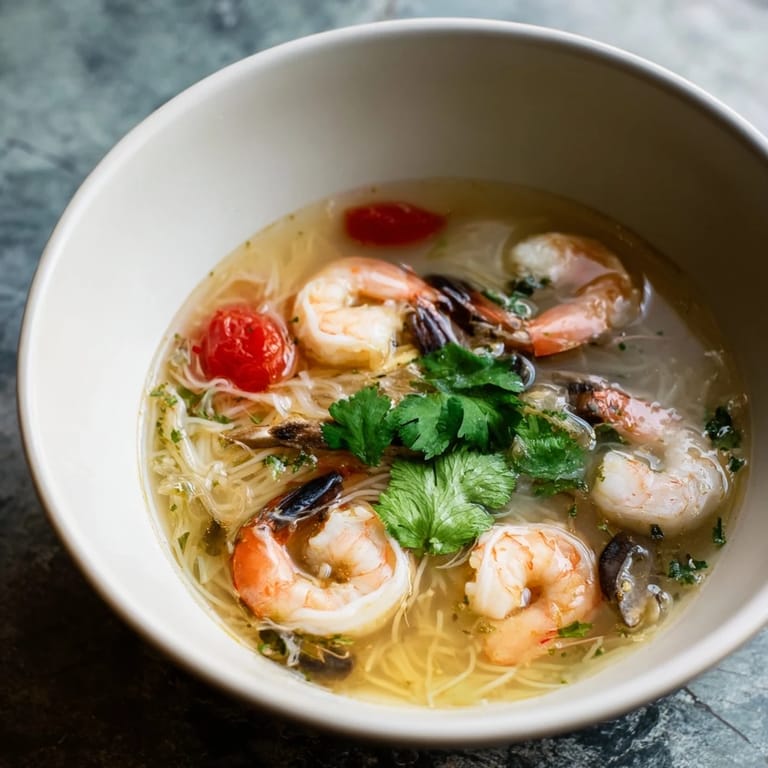 Save
Save My clearest memory of understanding why people love this soup came when my mom made it for my sister during a rough patch. Nothing was wrong exactly, but nothing felt right either. This simple bowl of broth somehow gave her permission to feel better without needing to explain anything, and I realized that food isn't always about taste—sometimes it's about what it does for you when you need it most.
Why This Soup Works Every Time
Tom yum is built on contrast—heat against cold lime, spice against sweetness, aromatic against savory. Every element serves a purpose, and when they're balanced right, something almost magical happens in the bowl. The broth itself becomes more than the sum of its parts, and you end up with something that tastes way more complex than the ingredient list suggests. It's one of those recipes where technique matters less than understanding the balance, which is probably why it's been made the same way in Thailand for generations.
Substitutions and Variations
If shrimp isn't in your plans, firm tofu cut into cubes works beautifully and cooks at the same pace—you won't miss the shrimp at all. For vegetarians, swap the fish sauce for a quality soy sauce or tamari, though you'll lose a little of that umami depth. The chili level is entirely up to you; start conservative and add more fresh chilies in later batches once you know your tolerance. Even changing mushroom types—using oyster or shiitake instead of white—shifts the flavor in interesting directions. Some people add a splash of coconut milk to round out the edges, though that's more tom kha territory than tom yum.
- Serve with jasmine rice to make it heartier, or alongside other Thai dishes to build a bigger meal.
- This soup tastes even better the next day once the flavors have married overnight in the fridge.
- Leftovers reheat gently on the stovetop; never boil them hard or the shrimp will toughen up further.
Pairing and Serving
A crisp Riesling cuts through the heat and citrus in ways that feel almost designed, while a cold lager brings its own kind of relief. If you're skipping alcohol, Thai iced tea with that bright pink color feels right alongside it, or just very cold water with lime since the soup is inherently refreshing. Serve this in wide bowls so people can actually eat the aromatics without fishing around, and bring the extra lime wedges to the table so everyone can adjust the sourness to their mood.
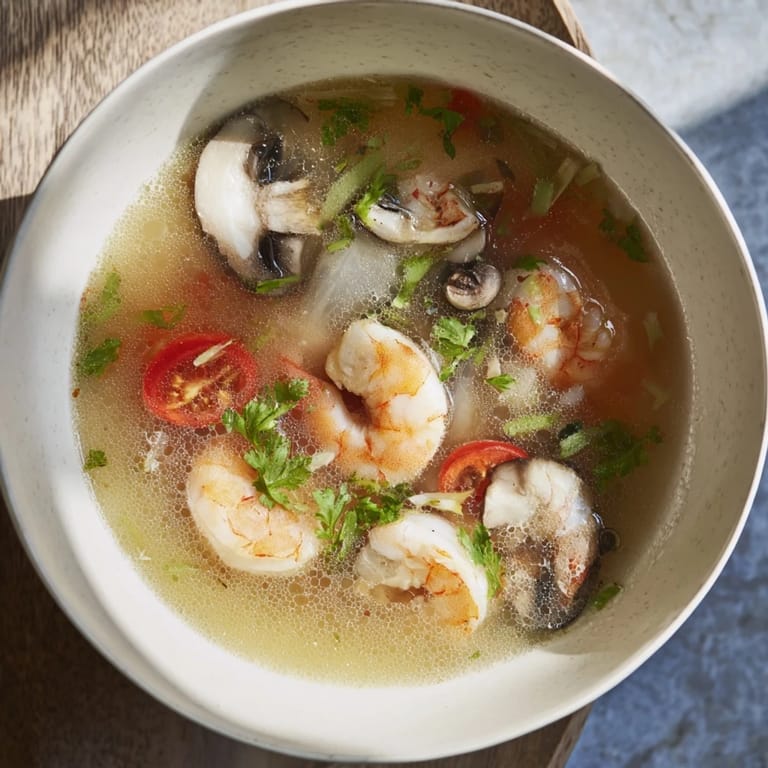 Save
Save Make this soup when you need something that tastes impressive but doesn't demand perfection, or when you want to remind yourself why you love cooking in the first place. It's the kind of dish that brings people closer together, one fragrant, spicy bowl at a time.
Recipe Guide
- → What ingredients create the distinctive flavor?
Lemongrass, kaffir lime leaves, galangal, and Thai chilies combine to give the broth its signature aromatic and spicy profile.
- → Can I substitute the shrimp with another protein?
Yes, tofu can replace shrimp for a vegetarian alternative, supplemented by soy sauce instead of fish sauce.
- → How can I control the spice level?
Adjust the amount of Thai birds eye chilies and chili paste to increase or decrease heat according to preference.
- → What garnishes enhance the finished dish?
Fresh cilantro leaves, green onions, and lime wedges add bright, fresh accents that complement the spicy broth.
- → What pairs well with this dish?
Steamed jasmine rice rounds out the meal, while crisp Riesling or chilled lager complement the flavors nicely.