 Save
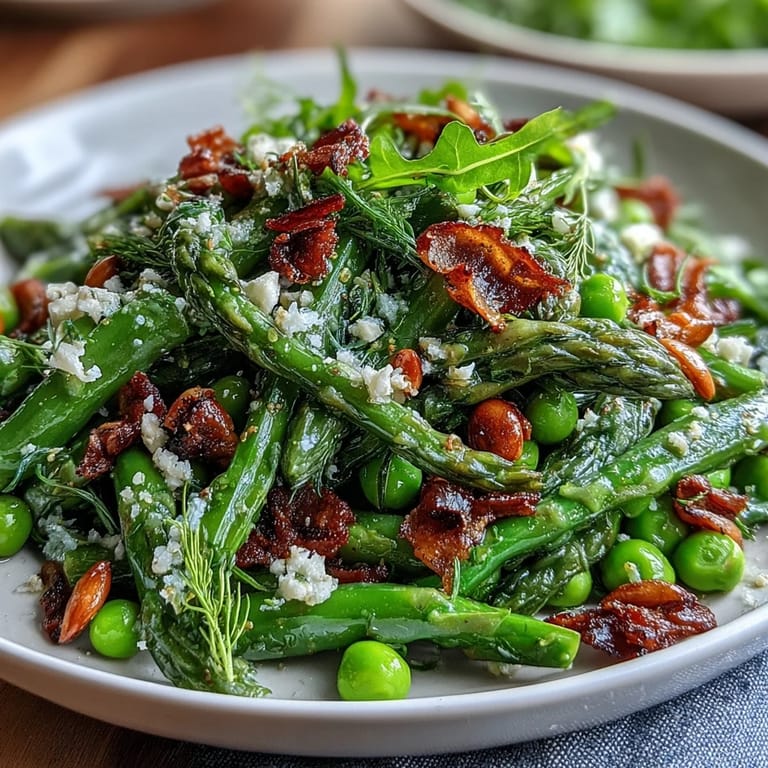
Save There's a moment every spring when I stop at the farmer's market and see those first bundles of asparagus, still dewy and impossibly green, and I know exactly what needs to happen. One afternoon, I stood in my kitchen with a vegetable peeler in one hand and a bunch of asparagus in the other, watching the ribbons curl and fall like delicate green confetti, and thought, why have I never done this before? The texture was nothing like roasted asparagus—it was tender, almost silky, and it begged for something bright and clean to dress it. This salad became my answer to that moment.
I made this for my sister on a Saturday in April when the weather finally turned warm enough to eat lunch outside without a sweater. She took one bite, closed her eyes for a second, and said it tasted like relief—and I knew exactly what she meant. After months of heavy soups and roasted root vegetables, this salad felt like proof that good things were coming back around.
Ingredients
- Fresh asparagus (about 300 g): Look for stalks that are bright green and firm, not limp or splitting—they'll shave into silky ribbons instead of shattering into pieces.
- Fresh or thawed green peas (1 cup): If you can find them fresh from the pod, they're a revelation, but honestly, frozen peas thawed at room temperature work beautifully and taste just as sweet.
- Baby arugula or mixed spring greens (2 cups): The peppery bite of arugula plays off the lemon dressing, but if you prefer something milder, spring mix is equally lovely.
- Radishes (2): They add a sharp, peppery crunch that keeps the whole salad from feeling too gentle—don't skip them.
- Shaved Parmesan cheese (1/4 cup): Use a vegetable peeler on a wedge of real Parmigiano-Reggiano to get those delicate curls that actually taste like cheese instead of powder.
- Toasted pine nuts or slivered almonds (1/4 cup): Toast them yourself if you have five minutes—the difference in flavor between raw and toasted is the difference between background noise and a song you actually want to hear.
- Extra-virgin olive oil (3 tbsp): This is worth the good bottle; it's the backbone of the dressing and carries all the other flavors.
- Freshly squeezed lemon juice (2 tbsp): Bottled lemon juice tastes like regret; fresh juice tastes like spring.
- Lemon zest (1 tsp): This little bit of brightness is where the magic lives—don't leave it out.
- Honey or maple syrup (1 tsp): A tiny bit of sweetness balances the acid and makes the whole dressing sing.
- Dijon mustard (1 tsp): It acts as an emulsifier and adds depth so the dressing doesn't taste one-note.
- Sea salt and freshly ground black pepper: Season generously and taste as you go—you're the boss of your own salad.
Tired of Takeout? 🥡
Get 10 meals you can make faster than delivery arrives. Seriously.
One email. No spam. Unsubscribe anytime.
Instructions
- Shave the asparagus into silky ribbons:
- Hold each stalk at the thicker end and run your vegetable peeler down the length in long, gentle strokes, rotating as you go so you get ribbons all the way around. You'll hear a soft scraping sound, and the peeler will almost glide—that's how you know you're doing it right. Stop when you get close to the woody bottom.
- Gather your vegetables in a bowl:
- Add the shaved asparagus, peas, greens, and sliced radishes to a large bowl and give everything a gentle toss so nothing wilts before the dressing arrives. The pale pink of the radishes and the bright green of the peas should look like someone watercolored them together.
- Whisk the dressing into submission:
- In a small bowl or jar, combine the olive oil, lemon juice, zest, honey, mustard, salt, and pepper, then whisk or shake until it emulsifies and turns slightly creamy. Taste it on your finger—it should make your mouth wake up, bright and alive.
- Dress and toss with intention:
- Drizzle the dressing over the vegetables and toss gently, using the motion of someone tucking in a child rather than someone wrestling an alligator. You want every piece to meet the dressing, but you don't want the delicate asparagus and greens to bruise.
- Finish and serve right away:
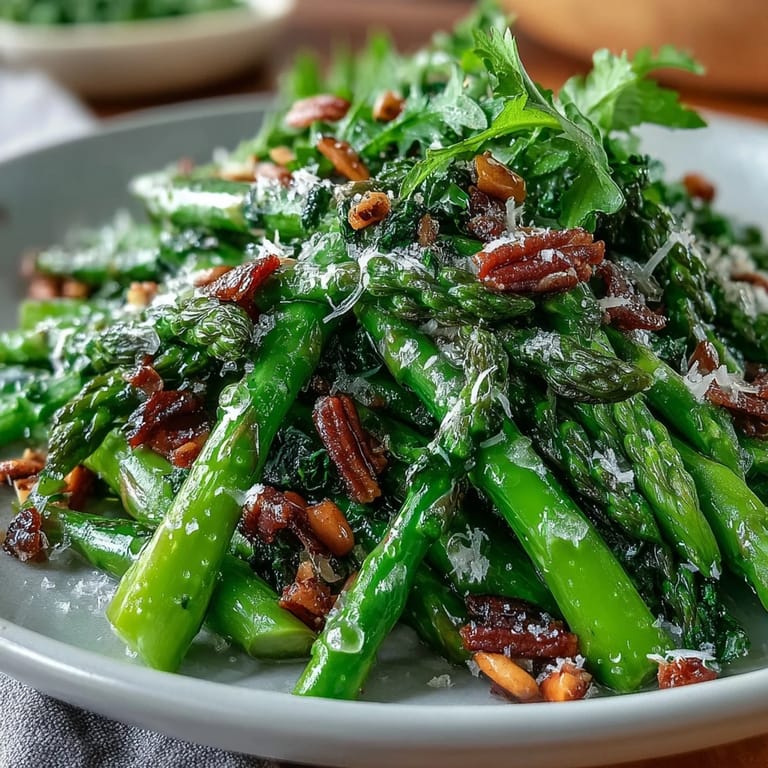
- Scatter the shaved Parmesan and toasted nuts over the top, or toss them in lightly—either way works, but scattered looks more lovely. Eat this while it's still fresh, while the asparagus still has that raw, tender snap.
 Save
Save My neighbor tasted this once and asked for the recipe, then called me a week later to say she'd made it for her daughter's birthday lunch and that eating outside with people she loved, with food this simple and fresh, felt like the whole point of spring finally arriving. That's when I realized this salad is about more than technique or ingredients—it's about the moment when winter finally lets go.
The Magic of Raw Asparagus
Most people roast their asparagus or sauté it until it turns tender, and there's nothing wrong with that. But shaving it raw opened up a completely different possibility—it became delicate instead of substantial, and the vegetable's natural sweetness came through without any of the char or oil-heavy feeling. The first time I served this to someone, they said it tasted like asparagus they'd never met before, and that made me laugh because it's the same vegetable, just seen from a different angle. That's where the real cooking happens sometimes, not in technique but in curiosity.
Building a Dressing That Holds Everything Together
A good dressing is what separates a pile of vegetables from an actual salad, and this one works because it does three things at once: it coats the delicate ingredients without drowning them, it brings brightness from the lemon without making you pucker, and it has just enough honey and mustard to make you keep taking bites. The emulsification is key—when you whisk oil and lemon juice together with mustard, the mustard acts like a bridge, holding them together instead of letting them split apart. I learned this lesson the hard way after years of making vinaigrettes that looked like cloudy bathwater, and now I never skip the mustard.
Variations and Seasons
This salad is a springtime thing, but it also feels like possibility—you can add fresh mint or basil if you want earthiness, toss in some blanched fava beans if the season allows, or swap out the peas for sugar snaps and their satisfying crunch. Some mornings when I've made it for lunch, I've added a soft-boiled egg on top and suddenly it became a proper meal instead of a side dish. The skeleton of the recipe is strong enough to hold whatever you want to lean on it.
- For a vegan version, skip the Parmesan or use a cashew-based alternative that brings a similar richness without the dairy.
- Make extra dressing and save it in a jar in the refrigerator for up to three days—it's also beautiful on grilled fish or stirred into grain bowls.
- If you're feeding someone with nut allergies, the salad is still stunning with just the cheese, or with sunflower seeds toasted until golden instead.
 Save
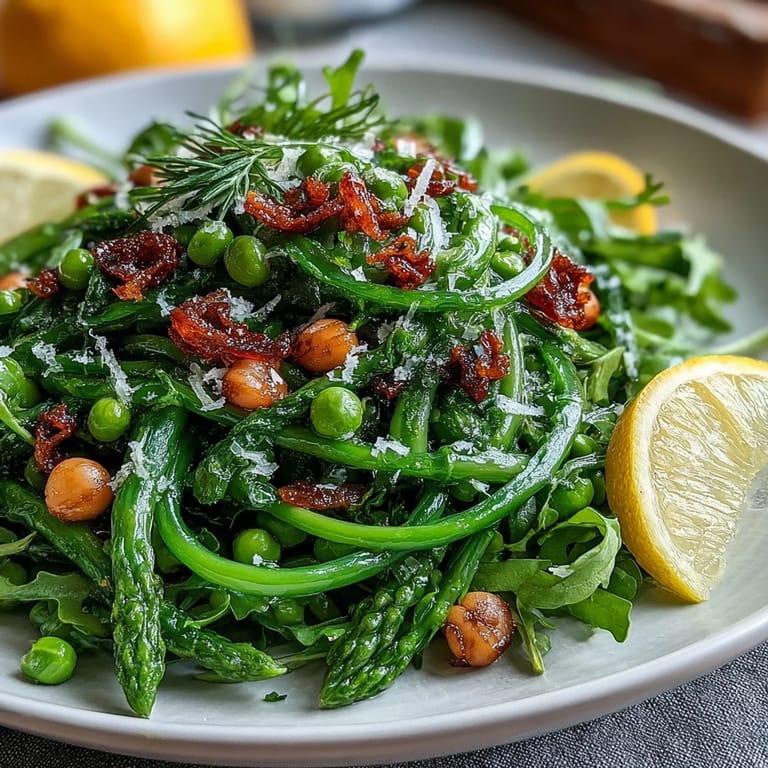
Save This salad tastes like the exact moment when winter finally admits defeat and spring actually arrives. Make it when you can find good asparagus at the market, make it with people you want to sit outside with, and notice how something this simple can still feel like celebration.
Recipe Guide
- → How do you prepare the asparagus for the salad?
Use a vegetable peeler to shave the asparagus stalks into thin ribbons, which helps maintain a tender and delicate texture.
- → Can frozen peas be used instead of fresh?
Yes, thawed frozen peas work well and provide a sweet contrast to the savory elements in the salad.
- → What is the best way to emulsify the lemon dressing?
Whisk together olive oil, lemon juice, zest, honey, Dijon mustard, salt, and pepper vigorously until fully combined and slightly thickened.
- → Are there alternatives to Parmesan cheese in this dish?
Shaved pecorino can be substituted, or omitted for a dairy-free variation, enhancing nutty or fresh flavors respectively.
- → What can be used instead of pine nuts?
Toasted slivered almonds are a great alternative, adding a crunchy texture and nutty aroma.