 Save
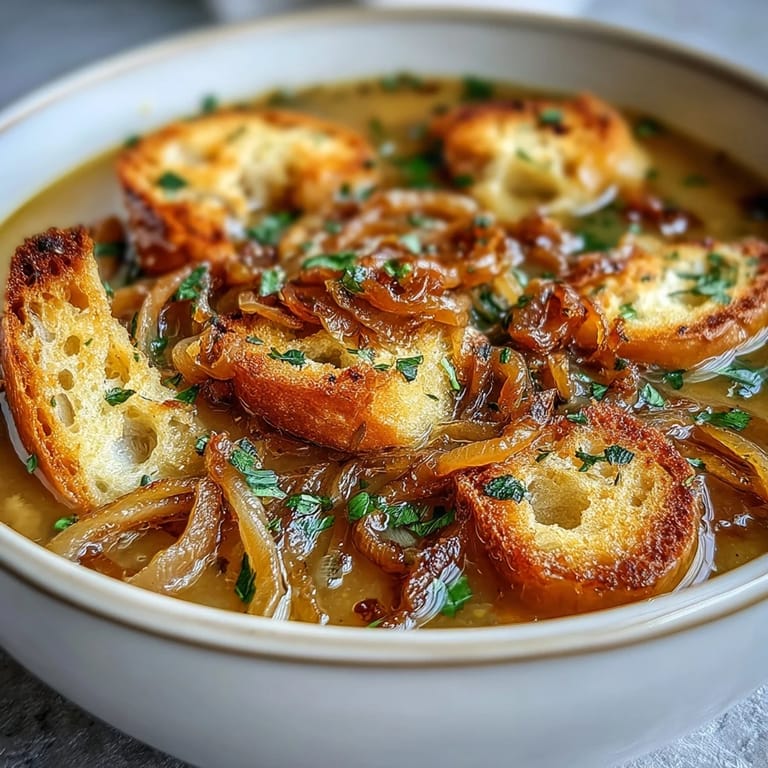
Save There's something almost magical about watching garlic transform in the oven—the whole kitchen fills with this sweet, mellow aroma that bears almost no resemblance to raw garlic's sharp bite. I discovered this soup on a crisp autumn evening when I had three enormous onions staring at me from the counter and absolutely no plan. What started as a quiet experiment with caramelization became one of those rare dishes that tastes like comfort feels, especially when topped with croutons that shatter between your teeth.
I made this for my neighbor last winter when she was feeling under the weather, and watching her face when she tasted it—that moment where you can tell someone is genuinely tasting something rather than just eating—that's when I knew this recipe was worth keeping close. She asked if I'd used some fancy stock or secret ingredient, and honestly, the secret is just time and the willingness to let onions do their thing slowly.
Ingredients
- 3 large yellow onions, thinly sliced: Yellow onions caramelize beautifully and develop a natural sweetness that becomes the soul of this soup—slice them evenly so they cook at the same pace.
- 2 whole heads garlic: Roasting mellows garlic's sharpness into something almost nutty and sweet, completely different from the raw version.
- 2 tbsp olive oil and 2 tbsp unsalted butter: Butter adds richness while olive oil helps prevent burning during the long caramelization.
- 1 large leek, white and light green parts, sliced: Leeks add subtle onion-like depth without overpowering, and they're milder than regular onions.
- 1 celery stalk, diced and 1 medium carrot, diced: These create a gentle aromatic base that rounds out the flavors without competing with the star ingredients.
- 1/2 cup dry white wine: The wine's acidity cuts through the richness and brings brightness—don't skip this step.
- 5 cups vegetable broth: Use broth you actually like tasting on its own, since it's the liquid foundation here.
- 1 tsp soy sauce (optional): A tiny bit adds umami depth that makes people wonder what your secret ingredient is.
- 2 sprigs fresh thyme, 1 bay leaf, 1/2 tsp dried oregano: Fresh thyme is worth it over dried—the oils taste brighter and more alive.
- Salt and black pepper: Season conservatively at first; you can always add more once the flavors concentrate.
- 3 cups day-old baguette, cut into 3/4-inch cubes: Day-old bread is crucial because fresh bread becomes soggy instead of crisp.
- Crouton seasonings (parsley, thyme, garlic powder): These transform plain bread cubes into something that makes people fight over the last handful.
Tired of Takeout? 🥡
Get 10 meals you can make faster than delivery arrives. Seriously.
One email. No spam. Unsubscribe anytime.
Instructions
- Prepare and roast the garlic:
- Preheat your oven to 400°F and slice the tops off both garlic heads with a sharp knife—you want just enough removed to expose the cloves slightly. Drizzle each head with about 1/2 tbsp olive oil, nestle them cut-side up on foil, wrap them loosely, and roast for 40 minutes until the cloves turn soft, golden, and almost jammy inside. Let them cool just enough to handle, then squeeze the roasted garlic from its papery skin into a small bowl—it should slide out like butter.
- Start the caramelization:
- While the garlic roasts, heat 1 tbsp olive oil and the butter in a large, heavy-bottomed pot over medium-low heat until the butter foams gently. Add your thinly sliced onions, leek, celery, and carrot, stirring to coat everything in the oil and butter, then let them cook undisturbed for about 5 minutes before stirring again. This is where patience matters—stir frequently over the next 25 to 30 minutes, letting the onions gradually turn from pale to deep golden brown, almost caramel colored, adjusting your heat if they start to blacken.
- Build the base with wine:
- Pour in the dry white wine, scraping the bottom of the pot with a wooden spoon to lift up all those browned, flavorful bits—this is where so much of the soup's character lives. Let the wine reduce by about half over 3 to 4 minutes, which concentrates its flavor and cooks off some of the alcohol, leaving just the depth.
- Combine and simmer:
- Stir in your roasted garlic, vegetable broth, soy sauce if you're using it, fresh thyme sprigs, bay leaf, and oregano, bringing everything to a boil before reducing the heat to a gentle simmer. Let it bubble softly, uncovered, for 25 minutes so the flavors meld and the broth becomes rich, then fish out and discard the thyme sprigs and bay leaf.
- Make the croutons:
- While the soup simmers, toss your day-old bread cubes in a bowl with 2 tbsp olive oil until every piece glistens, then sprinkle over the fresh parsley, dried thyme or Italian herbs, garlic powder, and a pinch of salt. Spread them on a baking sheet and bake at 400°F for 10 to 12 minutes, giving them a shake halfway through, until they're golden and crispy all over.
- Finish and serve:
- Taste your soup and season with salt and pepper—remember it can always take more, but you can't take it back. If you prefer a smoother soup, use an immersion blender to puree part of it for a creamy texture while keeping some chunks, or blend it all for silky smoothness, then ladle into bowls and crown each one with a generous handful of those warm, crispy croutons.
 Save
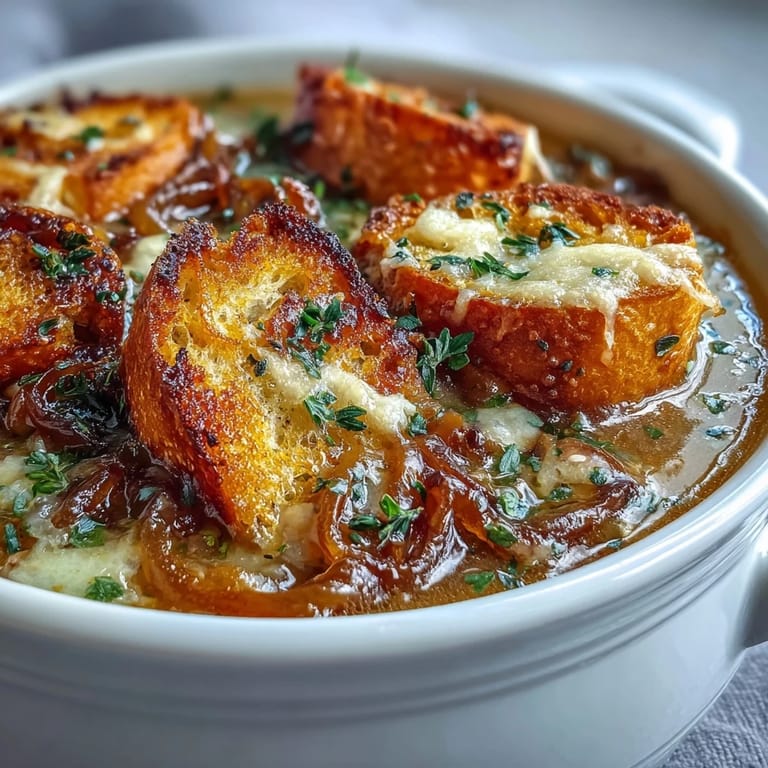
Save There's a moment toward the end of cooking when you taste it and realize this humble soup tastes like something you'd pay real money for at a restaurant, except it's better because you made it and you know exactly what's in it. That's the feeling I'm after with every bowl.
The Art of Caramelization
Caramelizing onions is honestly more about patience than technique—the slow breakdown of their natural sugars creates sweetness and depth that no amount of seasoning can replicate. I learned this the hard way by trying to rush it with high heat, which just gave me burned bits and bitter edges instead of that silky, golden texture you want. The key is medium-low heat, frequent stirring, and trusting that those 25 minutes of work will transform pale sliced onions into something almost unrecognizable in the best way.
Why Roasted Garlic Changes Everything
Raw garlic is sharp and assertive, but roasting mellows it into something almost creamy and sweet—it's the difference between a shout and a warm conversation. The gentle, dry heat of the oven coaxes out sugars and softens the sulfur compounds that make raw garlic so pungent, leaving behind nutty, almost caramel-like notes that make people ask what your secret ingredient is. Once you've tasted roasted garlic, you'll find reasons to roast it for everything from pasta to mashed potatoes.
Building Layers of Flavor
This soup works because it's built in layers rather than thrown together all at once—the garlic roasts while the onions caramelize, the wine reduces to concentrate its acidity, and the broth simmers to pull everything into harmony. Each step adds something different, and by the time you're ladling it into bowls, you've got a soup with real complexity and depth that feels earned. The herb croutons aren't just a topping—they're a textural and aromatic finale that makes each spoonful feel more intentional.
- Always taste before serving and adjust seasoning, since salt needs evolve as the soup reduces.
- Day-old bread makes croutons that stay crisp, not quickly absorbing liquid like fresh bread would.
- A whisper of soy sauce is optional but worth trying—it adds umami depth without tasting salty or Asian.
 Save
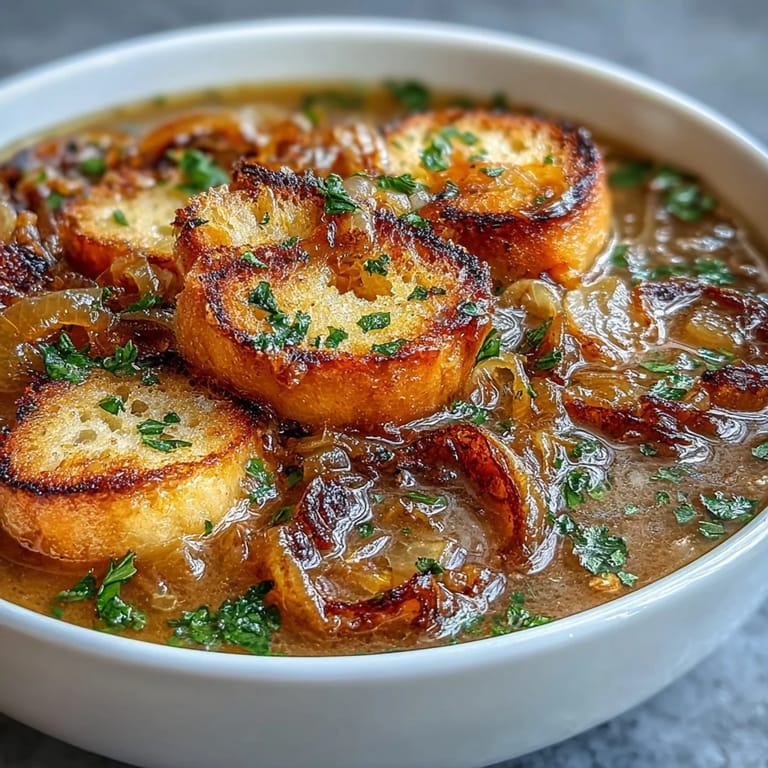
Save This is the kind of soup that makes a quiet evening feel special without requiring any fussing at the last minute—most of the work happens unattended on the stove. Serve it with good bread, a glass of something you enjoy, and you've got something that nourishes more than just your stomach.
Recipe Guide
- → How do I roast garlic for the soup?
Slice the tops off the garlic heads, drizzle with olive oil, wrap in foil, and roast at 400°F for about 40 minutes until soft and golden.
- → What’s the best way to caramelize onions?
Cook thinly sliced onions slowly over medium-low heat with olive oil and butter, stirring frequently until deep golden and sweet, about 25–30 minutes.
- → Can I make the herb croutons ahead of time?
Yes, prepare and bake the herb-seasoned baguette cubes in advance, then store them in an airtight container until ready to serve.
- → How can I adjust the soup for a vegan diet?
Simply omit the butter and use olive oil exclusively in the cooking steps and crouton preparation.
- → Is blending the soup recommended?
Blending part or all of the soup can create a smoother texture, but it’s optional based on your preference.
- → Which wines pair well with this dish?
A dry white wine such as Sauvignon Blanc complements the soup’s flavors nicely when served alongside.