 Save
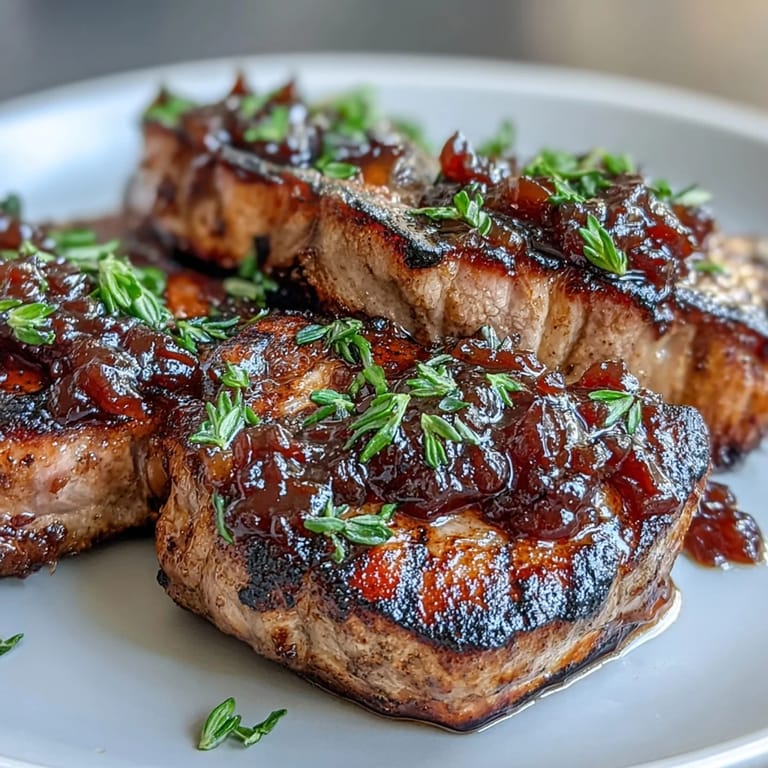
Save A few years back, my neighbor dropped off a bottle of homemade onion jam he'd been experimenting with, and I had no idea what to do with it until lamb chops were on sale at the market. That first sear of the meat in a hot pan, then the way the jam melted into something glossy and almost luxurious when combined with Dijon mustard—it felt like I'd stumbled onto something elegant without even trying. Now whenever I make these chops, that moment comes rushing back: the smell of caramelized onions filling the kitchen, the amber glaze coating each piece of meat, and how something so simple could feel so intentional.
I made this for a dinner party once when a friend mentioned she'd never had lamb before, and I remember her cutting into that first chop, the fork hitting the glaze with that gentle resistance, and then her eyes widening at the combination of sweet and savory. That's the moment I realized this recipe wasn't just about good technique—it was about creating something that makes people slow down and actually taste what's in front of them.
Ingredients
- Lamb chops (8 pieces, 1-inch thick, trimmed): Look for chops with good marbling and ask your butcher to trim the fat cap to about a quarter inch—it renders beautifully and protects the meat while searing.
- Olive oil (1 tablespoon): Use something with a high smoke point, nothing fancy; you just need enough to create a golden crust.
- Kosher salt and freshly ground black pepper: Season generously before searing—this is your only chance to build flavor into the meat itself.
- Unsalted butter (2 tablespoons): The foundation of the jam; it adds richness that oil alone can't replicate.
- Yellow onions (2 large, thinly sliced): The star of this show—their natural sugars caramelize into something almost jam-like, which is why consistency of slice matters more than exact size.
- Brown sugar (2 tablespoons): This accelerates caramelization and deepens the color, but don't add it too early or it'll burn.
- Balsamic vinegar (1/4 cup): The acid cuts through richness and adds complexity; cheaper varieties work fine here since the other ingredients support it.
- Dijon mustard (2 teaspoons): A small amount adds piquancy and helps emulsify the glaze, making it cling to the meat.
- Fresh thyme (1/2 teaspoon or 1/4 teaspoon dried): Herbal backbone that keeps the dish from feeling one-note; dried works just as well if fresh isn't available.
Tired of Takeout? 🥡
Get 10 meals you can make faster than delivery arrives. Seriously.
One email. No spam. Unsubscribe anytime.
Instructions
- Prepare the lamb:
- Pat your chops completely dry with paper towels—moisture is the enemy of browning, and you want that meat to sing in the pan. Season both sides with salt and pepper, being honest about the amount because this seasoning won't happen again.
- Sear until golden:
- Heat olive oil in a large skillet over medium-high heat until it shimmers and smells almost nutty, then lay the lamb chops down with confidence and leave them alone for two to three minutes. You'll hear the sizzle settle into a gentle crackle; that's when you flip, sear the other side, then transfer to a plate and tent loosely with foil so they stay warm.
- Build the onion jam:
- Reduce the heat to medium, add butter to the same skillet (all those browned bits are liquid gold), then add your sliced onions and stir frequently for about ten to twelve minutes. You're looking for them to turn golden and soft, releasing their natural moisture and starting to break down.
- Deepen the caramelization:
- Stir in brown sugar and keep stirring for another two to three minutes until the onions are deeply browned and almost crystalline at the edges. This is where patience matters—rushing this step robs you of the jam's body and flavor.
- Finish the glaze:
- Pour in balsamic vinegar carefully (it might sputter), add Dijon mustard and thyme, then simmer for about two to three minutes, stirring occasionally. The liquid should reduce and coat the onions like a proper jam, not a soup.
- Reunite and glaze:
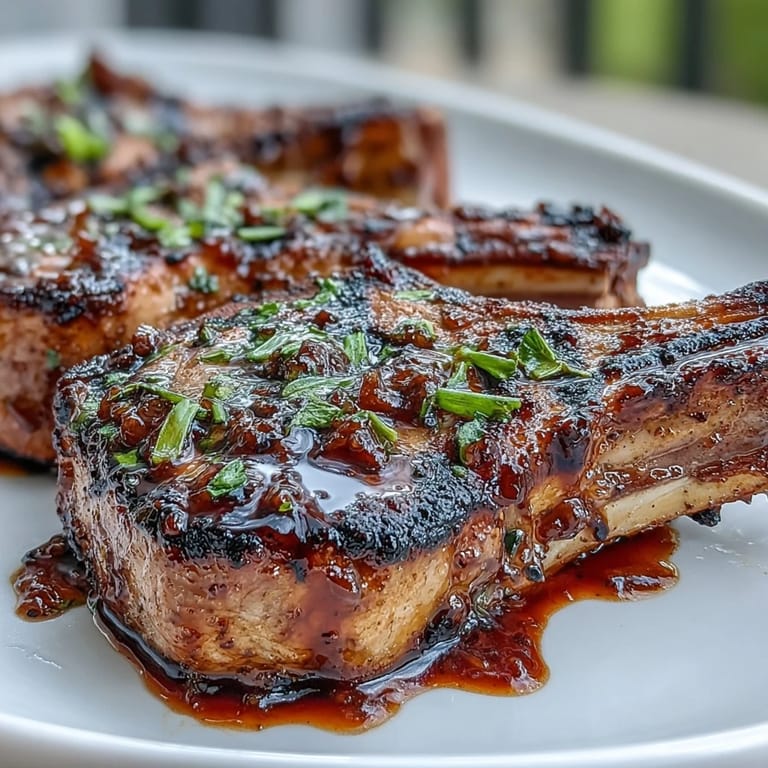
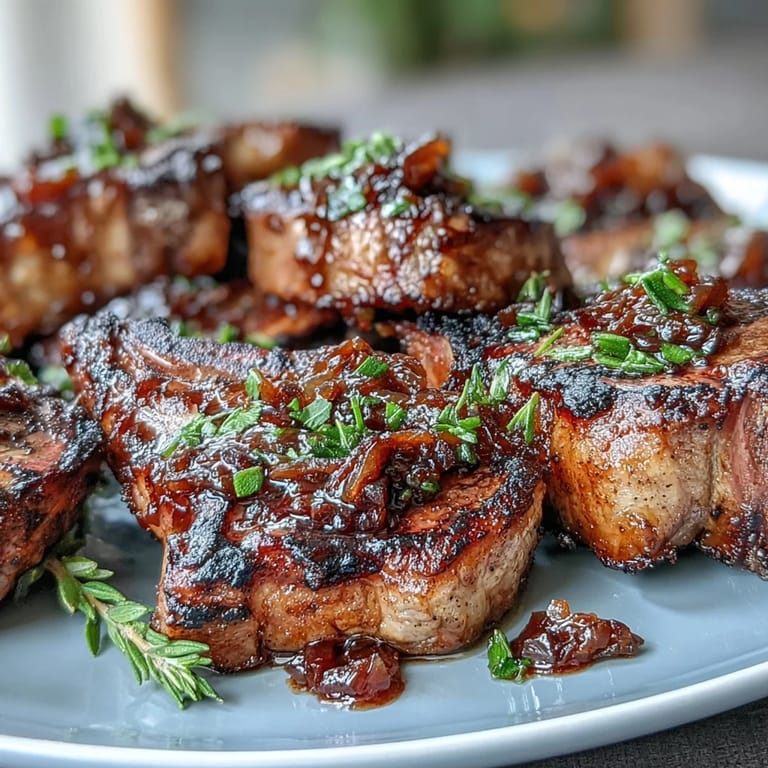
- Return the lamb chops to the skillet, spoon the onion jam over each piece generously, and cook for two to three minutes, turning once. The meat will pick up the glaze, and everything will come together in a glossy, unified way.
- Serve with intention:
- Transfer chops to plates or a serving platter and spoon any remaining jam over the top—it's too good to waste on the pan.
 Save
Save There's a specific comfort in cooking something that bridges elegance and simplicity, and this dish does that effortlessly. I've made it on weeknights when I needed to feel like I'd accomplished something, and I've made it for occasions when I wanted people to know I'd been thinking about them.
Why This Combination Works
The beauty of pairing lamb with onion jam isn't accident—it's chemistry. Lamb's richness needs acidity and sweetness to feel balanced, and the balsamic vinegar provides the first while the caramelized onions and brown sugar handle the second. The Dijon mustard acts as a bridge, its sharp notes preventing the dish from becoming cloying while its emulsifying properties help the glaze cling instead of running off the meat. What you end up with is something that feels complex without being difficult, sophisticated without requiring techniques you don't already know.
Serving and Pairing Ideas
These chops feel right alongside creamy textures that won't compete with the glaze—mashed potatoes soak up the jam beautifully, polenta provides a subtle backdrop, and roasted root vegetables echo the caramelized sweetness without overwhelming the plate. A simple green salad with lemon vinaigrette cuts through the richness and makes the meal feel complete. Cold or slightly chilled red wine, something like a Côtes du Rhône or even a Pinot Noir, becomes almost mandatory once you taste how the tannins interact with the glaze.
Storage and Make-Ahead Options
You can make the onion jam up to two days ahead and refrigerate it—actually, it deepens in flavor after a day, so this is one of those recipes that rewards planning. The lamb chops themselves are best cooked just before serving for texture, but if you need to prepare ahead, sear them early in the day, refrigerate them, then quickly reheat them in the skillet with the jam right before serving. Leftovers (if there are any) taste surprisingly good cold the next day, almost like a sophisticated meat board situation.
- Store leftover jam in an airtight container for up to four days and use it on pork chops, roasted chicken, or even grilled cheese.
- If making ahead, remove lamb from the refrigerator thirty minutes before cooking to bring it closer to room temperature for more even cooking.
- The glaze benefits from a final taste check before serving—a pinch of salt or a whisper more mustard can wake everything up if needed.
 Save
Save This is the kind of dish that reminds you why cooking at home matters—it's not about impressing anyone, it's about understanding that something genuinely delicious doesn't require hours of labor. Make it for yourself on a regular Tuesday, or make it for people who matter; either way, you'll understand why it stays in rotation.
Recipe Guide
- → How do you achieve a tender texture for lamb chops?
Patting the lamb chops dry before searing helps develop a nice crust, while proper seasoning and moderate cooking time prevent toughness.
- → What gives the onion jam its rich sweetness?
Caramelizing sliced onions slowly with brown sugar and butter creates a deep, sweet flavor that balances the savory lamb.
- → Can balsamic vinegar be substituted in the glaze?
Yes, alternatives like red wine vinegar or sherry vinegar can be used, though balsamic adds a characteristic sweetness and depth.
- → Is it necessary to use Dijon mustard in the glaze?
Dijon mustard adds a subtle tang and complexity that enhances the onion jam while complementing the lamb’s richness.
- → What sides pair well with this lamb dish?
Mashed potatoes, polenta, or roasted vegetables are excellent accompaniments that balance the sweet and savory flavors.
- → Can the lamb be marinated to enhance flavor?
Yes, marinating with olive oil, garlic, and rosemary for about an hour before cooking adds extra depth to the meat.