 Save
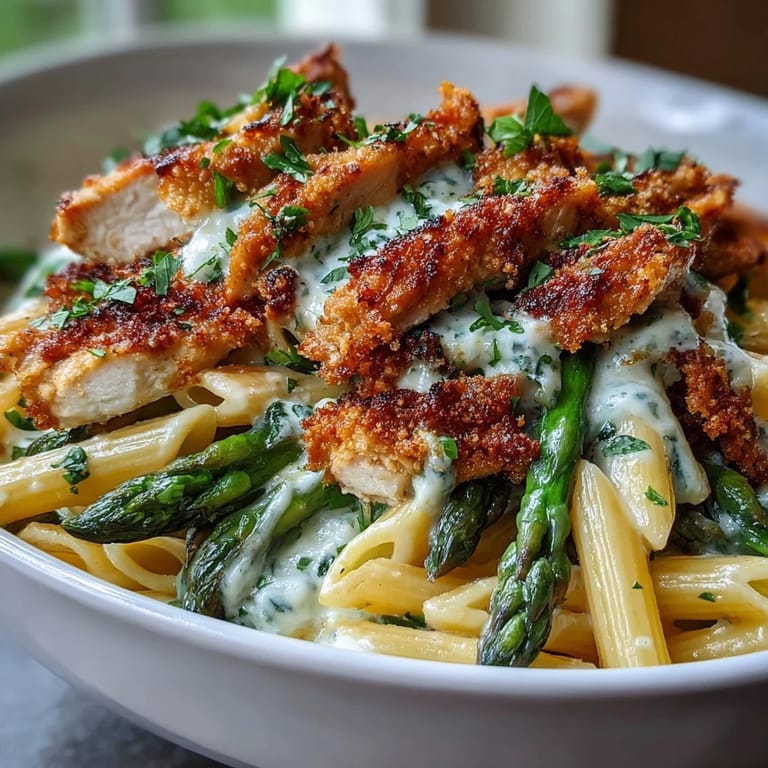
Save There's a moment in every home cook's life when you stop following recipes and start trusting your instincts. For me, it happened on a Thursday evening when I had chicken, asparagus, and pasta in the pantry but nothing that felt quite right individually. I thought about the textures I wanted—something creamy but not heavy, something crispy cutting through the richness—and this dish practically assembled itself. The lemon brought everything into focus, bright and alive against the golden cheese.
I made this for my sister's surprise dinner last spring, and watching her fork through that first bite—pausing to appreciate the contrast between the creamy sauce and the crispy asparagus—made me feel like I'd discovered something worth sharing. She asked for the recipe immediately, which never happens. Now it's become her go-to when she wants to impress without stress.
Ingredients
- Penne or rigatoni (340 g): The ridges catch and hold that lemon-cream sauce beautifully, but honestly, any pasta shape you have works if you're not in the mood to hunt for the exact one.
- Chicken breasts (2 large, sliced into strips): Slicing them thin means they cook fast and stay tender—there's no need to pound them, just use a sharp knife and slice at an angle.
- Asparagus (1 bunch, trimmed and cut into 1-inch pieces): Fresh asparagus snaps when it's good quality, and you want that snap because you're about to roast it until it's almost charred at the edges.
- Panko breadcrumbs (1/2 cup): The secret weapon here—it gets golden and crispy in the oven and doesn't disappear into the sauce like regular breadcrumbs would.
- Parmesan and Asiago cheese (mixed throughout): Asiago has a sharper, nuttier edge than Parmesan alone, but if you only have one, use more of what you have and don't worry about it.
- Unsalted butter (2 tbsp): Unsalted means you control the salt level in your sauce—trust me, this matters more than you'd think.
- Garlic (3 cloves, minced): Fresh garlic, not the jarred kind, makes a real difference in the sauce's brightness.
- Lemon zest and juice: This is the spine of the whole dish—it's what keeps it from feeling heavy.
- Heavy cream (1 cup): Full fat cream, no substitutes here; it's what makes this feel special.
Tired of Takeout? 🥡
Get 10 meals you can make faster than delivery arrives. Seriously.
One email. No spam. Unsubscribe anytime.
Instructions
- Heat your oven and start the pasta water:
- Preheat to 200°C (400°F) and get salted water boiling in a large pot—the saltier it tastes, the better your pasta will be. This is the foundation, so don't rush it.
- Cook the pasta to al dente:
- When the pasta is nearly done but still has a tiny bit of resistance when you bite it, scoop out 1/2 cup of that starchy water before draining. That water is liquid gold for loosening your sauce later.
- Prep and roast the asparagus:
- Toss your trimmed asparagus pieces with olive oil, salt, and pepper on a baking sheet. Mix panko with grated Parmesan and Asiago in a small bowl, then sprinkle it generously over the asparagus—don't be shy, you want that golden-brown crust.
- Roast until crispy and tender:
- Into the oven for 10–12 minutes, watching for that moment when the edges start to caramelize and the crumb topping turns golden. The asparagus should still have a slight resistance when you bite it.
- Cook the chicken while asparagus roasts:
- Season your chicken strips with salt, pepper, and garlic powder. Heat olive oil in a large skillet over medium-high heat and cook the chicken until it's golden on the outside and cooked through, about 5–6 minutes total.
- Build the lemon-cream sauce:
- In the same skillet, melt butter over medium heat, add minced garlic and lemon zest, and let it bloom for a minute—you'll smell the moment it's right. Stir in lemon juice and heavy cream, bringing it to a gentle simmer, then add Parmesan and whisk until silky smooth.
- Bring it all together:
- Add the cooked pasta and chicken back to the skillet, tossing gently to coat everything in that creamy sauce. If it feels too thick, loosen it with splashes of that reserved pasta water until it's luxurious but not soupy.
- Fold in the crispy asparagus:
- Gently toss in the roasted asparagus with its crispy topping—this is where the magic happens, that contrast of creamy and crunchy. Finish with a handful of chopped fresh parsley and serve immediately.
 Save
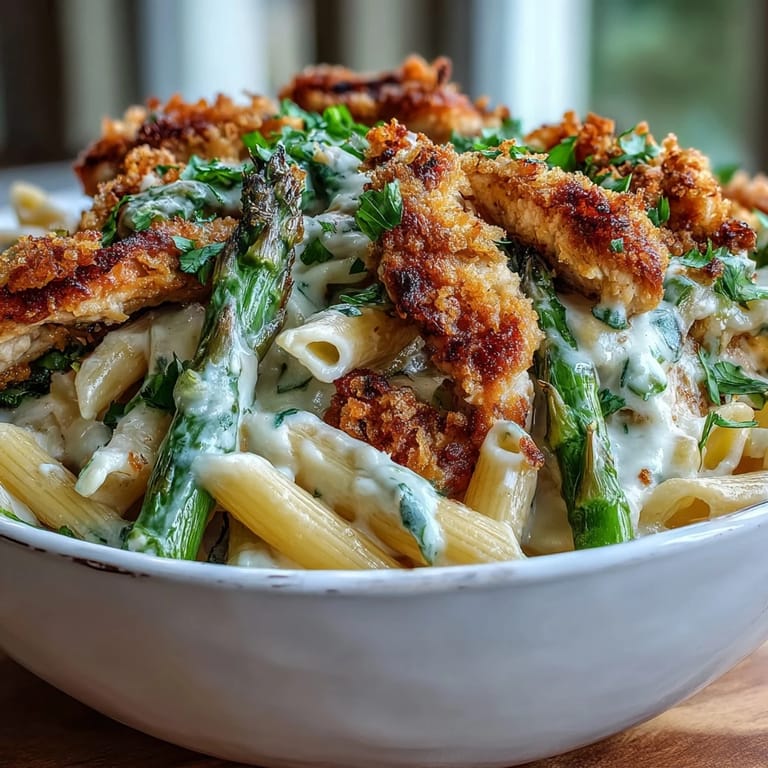
Save The first time my daughter asked to help me make this, I let her zest the lemon and watch the cream turn silky, and she suddenly understood why food matters—not just eating it, but the moment when separate ingredients become something entirely new. That's when a recipe stops being instructions and becomes a memory you make together.
On Lemon in Cream Sauces
Lemon seems delicate against cream, but it's actually fearless. The zest brings a floral, almost grassy note that the juice can't quite reach, so use both—the zest goes in early to infuse the butter, and the juice goes in after to brighten everything at the end. I learned this by accident when I once added all the juice at the beginning and the sauce tasted flat by the time it hit the plate.
Why Asparagus Becomes Better Roasted
Roasting asparagus transforms it completely. The heat concentrates its natural sweetness and creates those slightly charred edges that taste almost like caramelized honey. Boiling or steaming it would leave you with something sad and watery—roasting gives it backbone and personality. That crispy breadcrumb topping isn't just for texture; it's respecting the asparagus enough to make it the star instead of an afterthought.
Finishing Touches and Timing
This pasta is best eaten the moment it's plated, when the sauce still flows like silk and the asparagus topping hasn't surrendered to moisture. If you're cooking for a crowd, time your roasted asparagus to come out of the oven just as you're tossing the pasta and sauce together. Everything should arrive at the table warm and in harmony.
- Serve immediately with fresh parsley scattered on top and a grind of black pepper for one final flourish.
- Pair it with a cold glass of Sauvignon Blanc or Pinot Grigio if you want to mirror those bright, lemony notes.
- Leftover sauce keeps beautifully in the fridge, but eat it within a day and reheat gently with a splash of cream or pasta water to restore its silky texture.
 Save
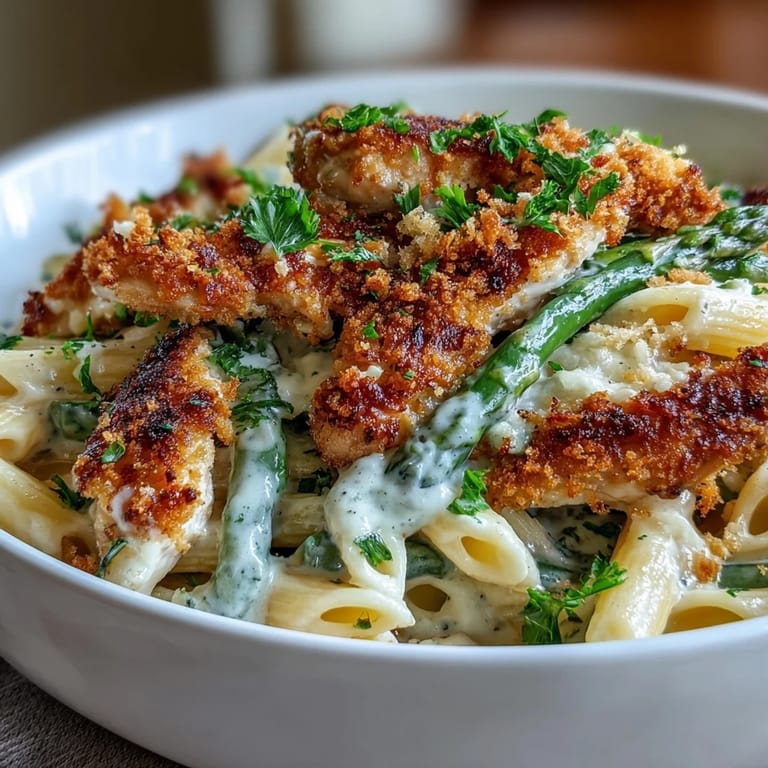
Save This dish reminds me that the best recipes are the ones that feel both impressive and forgiving, that let you play with what's in front of you while still landing somewhere beautiful. Make it once, then make it your own.
Recipe Guide
- → Can I use a different pasta shape?
Yes, penne and rigatoni work excellently, but fusilli, farfalle, or ziti would also hold the creamy sauce well and catch the crispy topping bits.
- → What can I substitute for heavy cream?
Half-and-half creates a lighter sauce, though it will be less thick. For a dairy-free option, full-fat coconut cream works but adds subtle coconut flavor.
- → How do I store leftovers?
Refrigerate in an airtight container for up to 3 days. The crispy topping will soften—reheat in a 350°F oven for 10 minutes to restore texture, adding a splash of pasta water to loosen the sauce.
- → Can I make this gluten-free?
Use gluten-free pasta and substitute panko with gluten-free breadcrumbs or crushed rice crackers. Ensure all other ingredients, particularly pre-grated cheeses, are certified gluten-free.
- → Why is my sauce separating?
High heat can cause cream to curdle. Keep the sauce at a gentle simmer, not a rolling boil. If separation occurs, whisk vigorously off-heat or blend with an immersion blender.
- → Can I use chicken thighs instead?
Absolutely. Boneless, skinless thighs work beautifully and stay juicier longer. Adjust cooking time to 7-8 minutes to ensure they're cooked through.