 Save
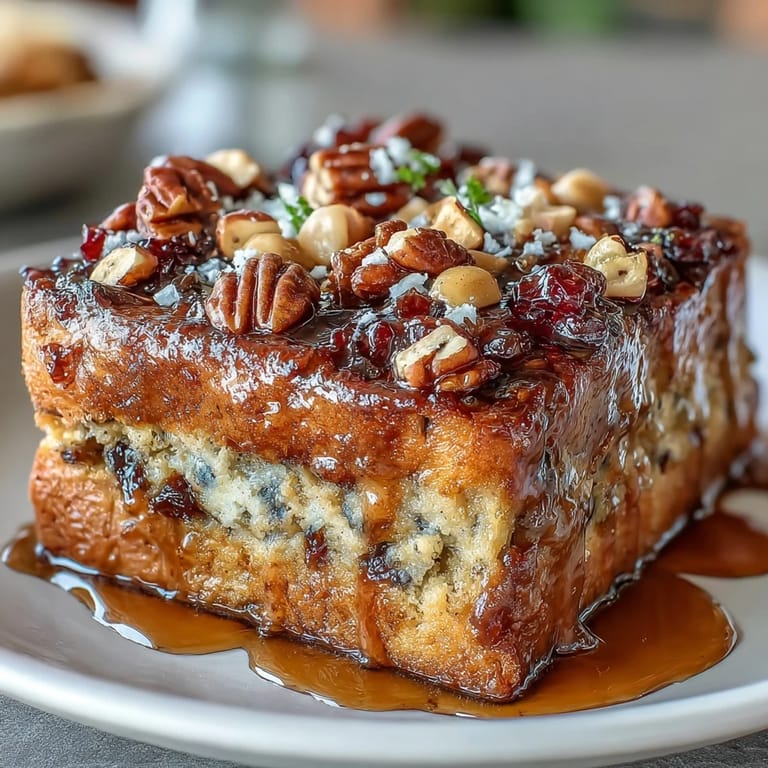
Save The scent of cinnamon twined with caramelized sugar lured me into the kitchen one afternoon, long before I even knew what capirotada was. It was the kind of fragrance that made the house feel warmer almost instantly, the air tinged with anticipation as I passed through. There was music playing faintly in the background and the clatter of pans, a gentle reminder that dessert was in the works. That day, capirotada became less an unknown dish and more a promise I couldn’t resist. Some recipes simply announce themselves before you even taste them.
The first time I baked capirotada for my friends, I almost spilled syrup everywhere while trying to pour evenly. Everyone crowded around the oven, speculating over whether the cheese would actually melt into the pudding. Laughter turned the kitchen into a cozy stage, and I learned that letting the dish rest for a few moments after baking makes sharing it even more rewarding. To this day, capirotada always draws a crowd.
Ingredients
- Bread: Stale bolillo or crusty French bread helps soak up the piloncillo syrup without turning soggy, so letting it sit overnight is my go-to trick.
- Piloncillo (or dark brown sugar): The secret to sticky sweetness and depth, piloncillo is worth tracking down, but brown sugar works in a pinch, as I found out last Lent.
- Cinnamon stick & whole cloves: Their aroma fills the syrup with warmth, and fishing them out before layering avoids surprise bites.
- Raisins and dried apricots/prunes: These give pops of juicy sweetness—sometimes I swap in dried apples for variety.
- Shredded cheese: The melting, savory touch balances the richness, and Monterey Jack barely fights with the dessert if queso fresco isn’t handy.
- Pecans, peanuts, and almonds: Crunch comes from mixing textures; roasting the nuts lightly amplifies their flavor.
- Sweetened coconut flakes & butter: Optional toppings, but coconut adds a gentle chew and butter makes the top crispy golden.
Tired of Takeout? 🥡
Get 10 meals you can make faster than delivery arrives. Seriously.
One email. No spam. Unsubscribe anytime.
Instructions
- Prep the pan and oven:
- Set the oven to 180°C (350°F), then swipe butter generously inside your baking dish so bread won’t stick.
- Toast the bread:
- Spread out the slices and bake them until golden, flipping as the kitchen fills with a nutty aroma; dry, crunchy bread is key.
- Make the syrup:
- Combine water, piloncillo, cinnamon, and cloves in a saucepan—stir as the sugar melts and scents bloom, then strain once thickened and fragrant.
- Layer with care:
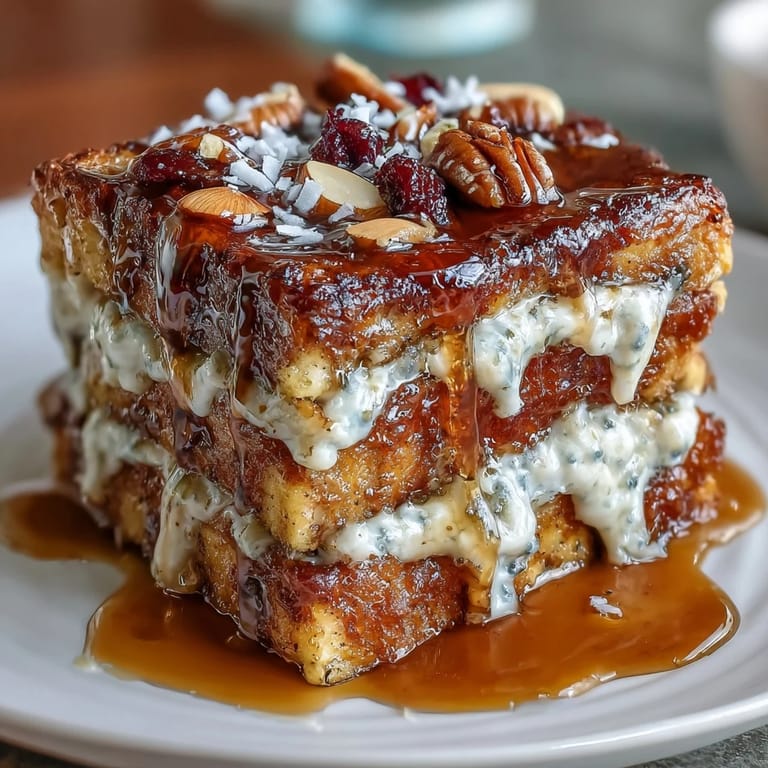
- Line a third of your toasted bread across the dish, scatter fruit, nuts, and cheese, repeating until you layer everything, finishing with cheese and nuts for a hearty topping.
- Soak and top:
- Pour the warm syrup gently across the bread stacks so every piece gets its share, then drizzle melted butter and sprinkle coconut if you like.
- Bake it through:
- Cover tightly with foil, bake for 25 minutes, uncover, and let it crisp for another 10–15 minutes until bubbling and appetizing.
- Let it rest:
- Resist cutting right away—give it 15 minutes to settle and meld flavors for the best texture.
 Save
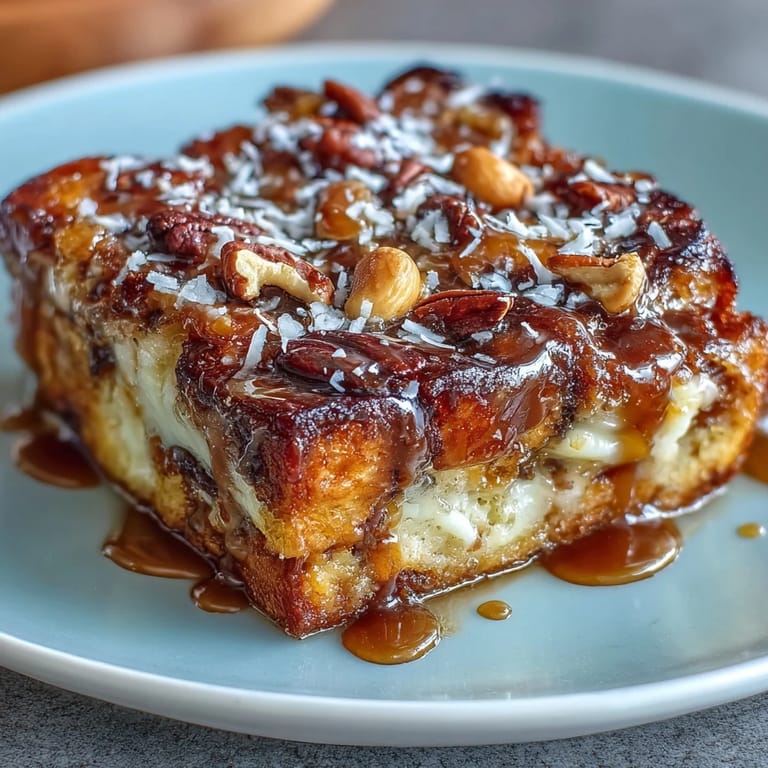
Save I watched my cousin’s eyes widen as the melted cheese stretched between servings, turning capirotada from a simple dessert into a dish we talked about for days. It became our unofficial centerpiece that evening, connecting the stories at the table as well as satisfying the sweet tooth.
Choosing Your Nuts and Fruits
I’ve played around with different combinations—sometimes walnuts and dried cherries, sometimes just raisins and peanuts. The key is balancing chewy with crunchy, and not crowding the layers so every bite still tastes like bread pudding. Freshly toasted nuts make a huge difference in fragrance and flavor. It’s always fun to let guests customize their own section.
What Makes the Syrup Shine
The syrup is the soul of capirotada: piloncillo, cinnamon, and cloves simmer until the kitchen feels festive. I once slipped in a pinch of orange zest and was surprised at how lively everything tasted. Straining is crucial—otherwise a clove sneaks in and throws off a bite. Don’t be shy about simmering a minute longer for extra thickness.
Serving Suggestions & Final Touches
Whether you serve capirotada warm or room temp, it pairs gloriously with coffee or hot chocolate. For fancier gatherings I add vanilla ice cream or a dusting of powdered sugar. Getting creative with toppings never hurts—sometimes extra coconut, sometimes sliced bananas.
- If leftovers get dry, zap individual portions for thirty seconds in the microwave.
- Cover well—capitrotada tastes even better after resting overnight.
- Share big portions; capirotada will disappear faster than you expect.
 Save
Save Capirotada feels like a celebration every time it lands on our table, inviting stories along with second helpings. Enjoy making it your own, and share it generously—it’s meant for company.
Recipe Guide
- → What type of bread works best?
Use bolillo or French bread sliced and slightly stale for ideal texture and absorption.
- → Can I substitute piloncillo?
Dark brown sugar can be used if piloncillo is unavailable, though piloncillo adds authentic flavor.
- → Is it necessary to toast the bread?
Toasting helps the bread absorb syrup without becoming mushy, creating a pleasant bite.
- → Are there nut-free options?
Nuts can be omitted or replaced with seeds for those allergic; always check for other allergens in bread.
- → How should it be served?
Serve warm or at room temperature, alone or with vanilla ice cream, coffee, or Mexican hot chocolate.
- → Can fruit be added?
Bananas, apples, apricots, or prunes can enhance flavor and texture; add them between bread layers.