 Save
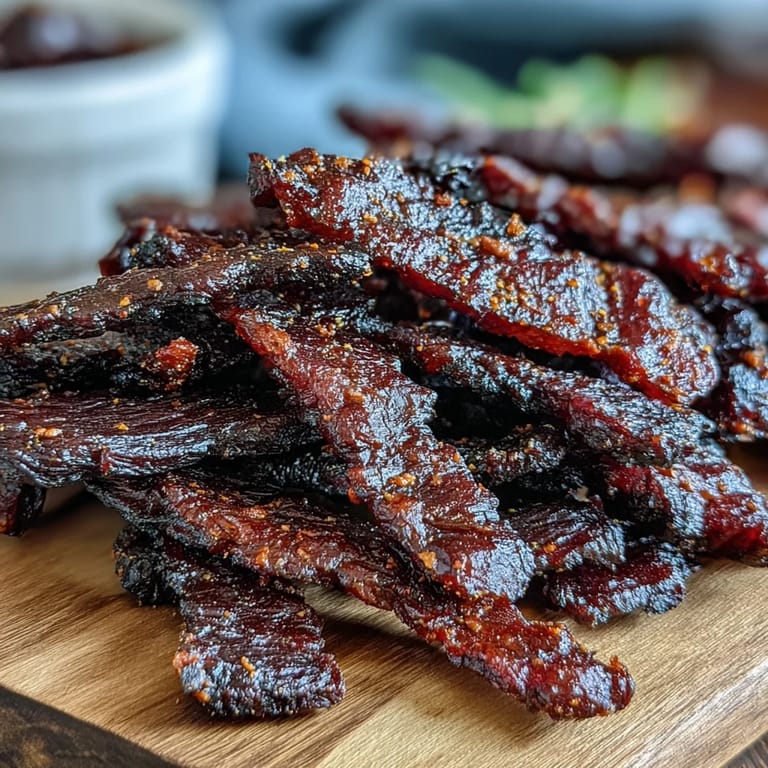
Save My neighbor showed up one Saturday with a batch of homemade jerky that tasted nothing like the gas station bags I'd grown up with—it was sweet, smoky, and had this dark fruit undertone I couldn't quite place. When she mentioned black currant jam as the secret, something clicked. I spent the next month experimenting, learning the hard way that patience with the marinade and low-and-slow smoking made all the difference between tough strips and jerky that actually tasted like something worth savoring.
I made this for a camping trip with friends who are usually jerky skeptics, and watching them slow down mid-conversation to actually taste what they were chewing was the moment I knew this recipe was keeper material. The smoke hung in the air around our fire pit, and someone asked if I'd started a jerky business yet—I took that as the highest compliment.
Ingredients
- Lean beef (top round, flank, or sirloin), thinly sliced against the grain (1.5 lbs): Slicing against the grain is non-negotiable if you want jerky that doesn't feel like chewing leather—it shortens the muscle fibers so each bite gives way instead of fighting you.
- Black currant jam or preserves (1/2 cup): This is your flavor anchor; cheap jam tastes cheap, so find something with actual fruit content and minimal corn syrup if you can.
- Soy sauce (1/4 cup, or tamari for gluten-free): Soy brings umami depth that makes the sweet fruit sing instead of dominate.
- Worcestershire sauce (2 tbsp): A bit of funk from this adds complexity and keeps the jerky from feeling one-dimensional.
- Apple cider vinegar (2 tbsp): The acidity balances richness and helps tenderize the meat slightly.
- Brown sugar (1.5 tbsp): Dissolves smoothly into the marinade and caramelizes slightly during smoking.
- Smoked paprika (1 tbsp): Adds color and a gentle smoke note even before the wood chips enter the picture.
- Garlic powder and onion powder (1 tsp each): Dried aromatics concentrate flavor without adding moisture that would slow drying.
- Black pepper, kosher salt, and cayenne pepper (1/2 tsp, 1/2 tsp, and 1/4 tsp): Cayenne is optional but pushes the profile from gentle to memorable if you like a hint of heat.
- Water (2 tbsp): Helps the jam and spices blend into an even coating rather than clumping.
- Cherry wood chips: Cherry smoke tastes cleaner and slightly fruity compared to hickory or oak; it complements black currant rather than overpowering it.
Tired of Takeout? 🥡
Get 10 meals you can make faster than delivery arrives. Seriously.
One email. No spam. Unsubscribe anytime.
Instructions
- Mix the marinade into a smooth paste:
- Whisk black currant jam, soy sauce, Worcestershire, apple cider vinegar, brown sugar, smoked paprika, garlic powder, onion powder, black pepper, salt, cayenne, and water in a large bowl until the jam breaks down and everything emulsifies into an even coating. You're looking for no visible jam lumps—this takes about a minute of consistent whisking.
- Coat the beef thoroughly and let time do the work:
- Add the thinly sliced beef to the marinade and toss until every piece glistens, then cover and refrigerate for at least 8 hours or overnight. The longer it sits, the deeper the flavors penetrate; overnight marinating is where the magic happens.
- Drain and dry the beef until it stops weeping:
- Pull the beef from the marinade, discard what's left, and pat each piece dry with paper towels—this step feels tedious but wet jerky smokes unevenly and dries slower. You want tacky, not damp.
- Arrange on racks without overlap:
- Lay beef slices in a single layer on wire racks or dehydrator trays so air circulates underneath and around each piece. Overlapped jerky steam-cooks instead of smoke-drying, which defeats the whole purpose.
- Set up your heat source to a gentle 160°F:
- Whether you're using a smoker or oven, this low temperature is key—any hotter and the outside cooks before the inside dries, any cooler and you risk bacteria. If smoking, add cherry wood chips according to your smoker's instructions now.
- Smoke or dehydrate for 4–6 hours, flipping halfway:
- Halfway through, flip each piece so the other side gets equal exposure to smoke and heat. You're done when the jerky bends without snapping but has no visible moisture when you cut into it.
- Cool completely before storing:
- Let the jerky sit at room temperature for at least an hour so residual heat doesn't create condensation inside your storage container. This prevents mold and keeps it shelf-stable.
 Save
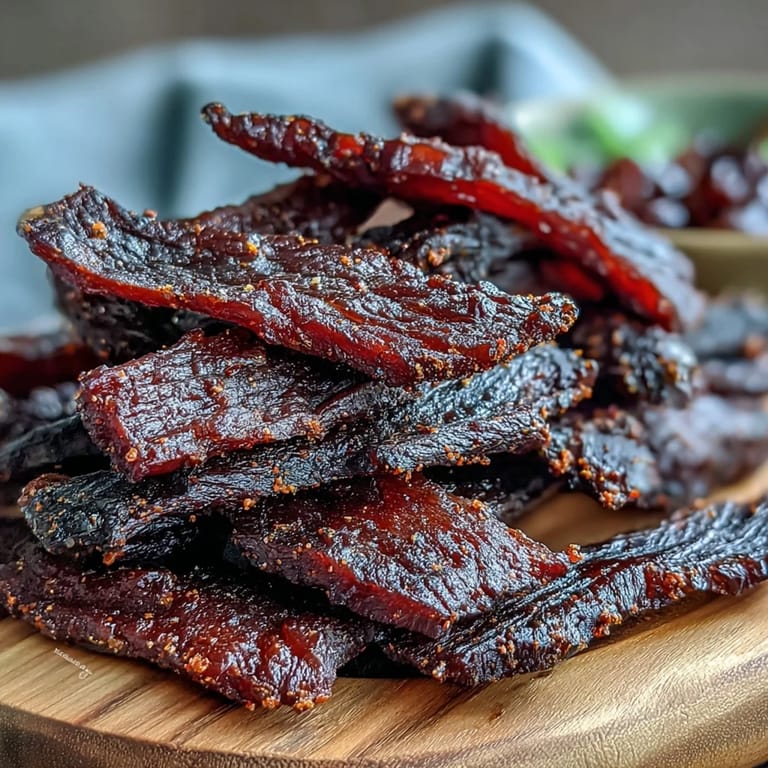
Save A friend kept jerky from this batch in her desk drawer for a month and said it got her through afternoon slumps way better than candy did, mostly because each piece made her actually pause instead of mindlessly chew. That's when I realized this wasn't just a snack recipe—it was the kind of thing that makes people slow down and notice what they're eating.
The Black Currant Magic
Black currant isn't something most of us reach for, but in jerky it's a revelation—it's tart enough to cut through savory beef, sweet enough to balance smoke, and sophisticated enough that people taste it and feel like they've discovered something. The first time I tried this combination I was skeptical, thinking jam in jerky sounded gimmicky, but the fruit doesn't make it candy-like; instead it adds a subtle berry depth that makes the smoke taste more pronounced.
Smoking vs. Oven Drying
Smokers give jerky that irreplaceable deep flavor, but ovens work fine if that's what you have—just know the taste will be milder and more straightforward. If you're using an oven, crack the door slightly so moisture escapes and air circulates, and place a pan of water on a lower rack to prevent the jerky from drying too fast and becoming brittle. With a smoker, that first 2 hours of smoke exposure does the flavor heavy lifting, so you can finish the last 2–4 hours without wood if you want to prevent oversmoking.
Storage and Shelf Life
Properly dried jerky lasts about 2 weeks in an airtight container at room temperature, longer if you refrigerate it, and a full month if you vacuum-seal it. I learned the hard way that moisture is jerky's enemy, so make sure your storage container is bone-dry before packing it full, and keep it away from direct sunlight or humidity. If you notice any mold or off-smell, toss the batch—jerky's affordable enough that it's not worth the risk.
- Store in airtight containers with a food-grade silica packet if you're in a humid climate.
- Vacuum-sealing extends life dramatically and takes up less freezer space than you'd think.
- If jerky ever feels damp or sticky, it wasn't dry enough and needs to go—no second-guessing.
 Save
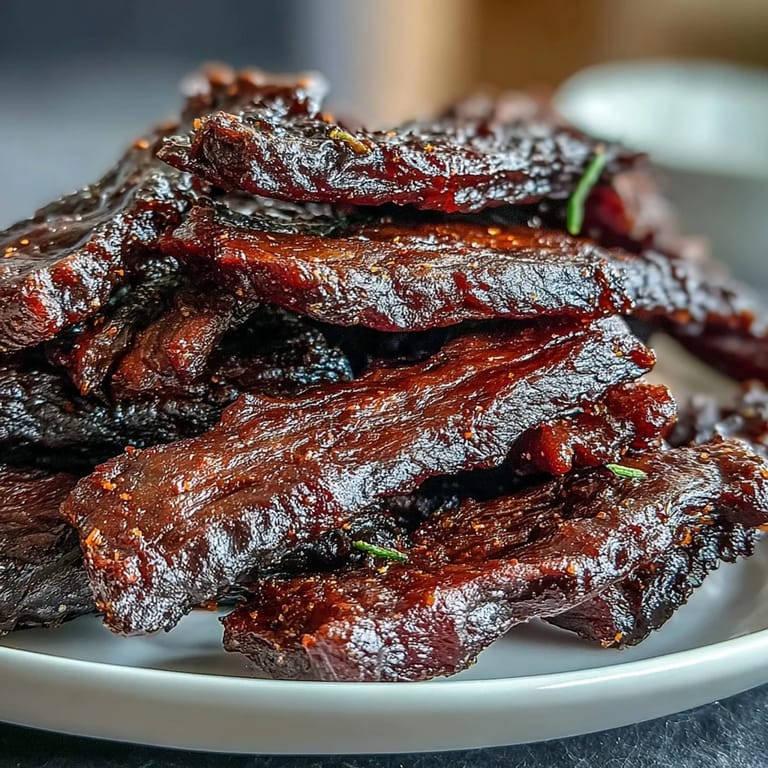
Save This jerky reminds me that some of the best discoveries come from small experiments and neighbor recommendations, and that taking time with something—whether it's an 8-hour marinade or a patient afternoon of smoking—usually pays off in flavor. Make a batch, share it with someone skeptical about homemade jerky, and watch their face change when they taste it.
Recipe Guide
- → What cut of beef is best for this preparation?
Lean cuts such as top round, flank, or sirloin work best, sliced thinly against the grain for tenderness.
- → How long should the beef marinate for optimal flavor?
Marinating for at least 8 hours or overnight allows the black currant marinade to fully infuse the meat with flavor.
- → Can I adjust the smoke intensity?
Yes, smoke for the first 2 hours and then finish dehydrating without smoke to reduce smokiness while maintaining flavor.
- → What smoking wood is recommended?
Cherry wood chips impart a subtle, sweet smoke that complements the tangy marinade nicely.
- → How should the finished product be stored?
Store in an airtight container refrigerated for up to 2 weeks or vacuum-sealed for up to 1 month.
- → Is this suitable for gluten-free diets?
Use tamari instead of regular soy sauce and verify labels of marinade ingredients to maintain gluten-free status.