 Save
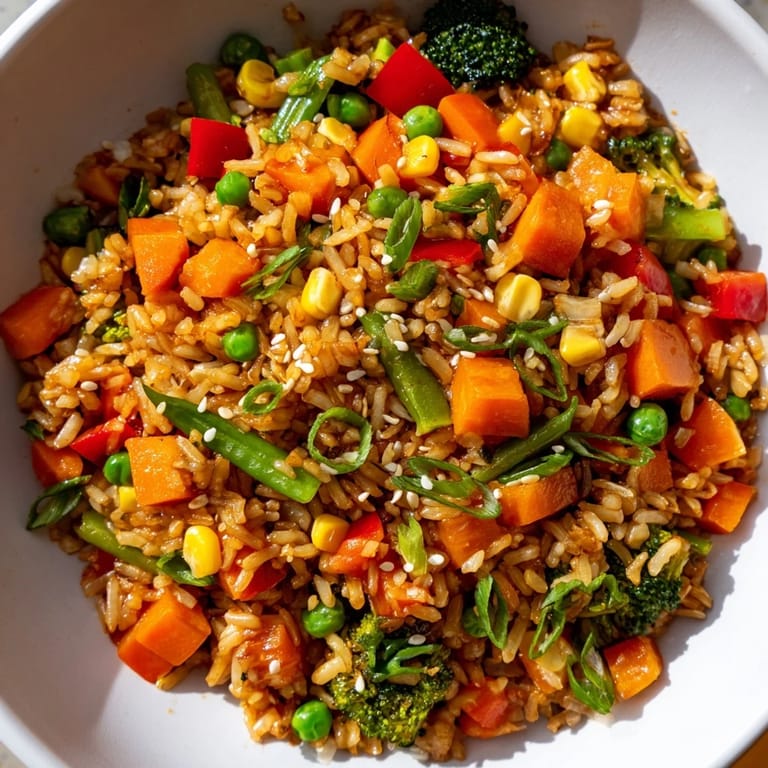
Save There's something about the sound of rice hitting a hot wok that still makes me smile. I discovered vegetable fried rice on a weeknight when my fridge was nearly empty and I had a container of leftover jasmine rice staring at me. What started as a desperate attempt to use up vegetables turned into something so vibrant and satisfying that it became my go-to meal whenever I needed comfort without fuss. The magic isn't in any secret ingredient—it's in understanding that cold rice and high heat are your best friends.
I made this for my roommate on a rainy Tuesday after she'd had a brutal day at work. The moment she smelled the garlic and ginger hitting the oil, I watched her shoulders actually relax. She sat at the counter while I worked the spatula, and by the time I served it up with those scattered green onions, she was already reaching for seconds. That's when I realized this dish does something special—it feeds people in the way they actually need.
Ingredients
- Cooked jasmine or long-grain rice (3 cups, day-old and cold): Day-old rice is non-negotiable here because fresh rice releases too much moisture and turns everything mushy. The cold rice grains stay separate, giving you that signature texture.
- Carrots, diced (1 cup): They add both sweetness and that satisfying crunch if you don't overcook them.
- Bell pepper, diced (1 cup): Use whatever color feels right—I love the brightness of red or yellow, though green works just fine.
- Frozen peas, thawed (1 cup): Frozen peas are actually perfect here because they're already cooked and won't fall apart.
- Broccoli florets, small (1 cup): Keep them small so they cook through without turning to mush.
- Sweet corn kernels (1/2 cup): Fresh or frozen both work, and they add a subtle sweetness that balances the soy sauce.
- Green beans, chopped (1/2 cup): They contribute a slight earthiness and texture contrast.
- Green onions, sliced (3, with some reserved for garnish): The fresh ones you add at the end taste completely different from cooked ones—don't skip this contrast.
- Garlic, minced (2 cloves): This is where your first layer of flavor comes from; don't skip or rush this step.
- Ginger, minced (1-inch piece): Fresh ginger adds warmth and a slight sharpness that makes everything taste alive.
- Soy sauce (3 tbsp): Use tamari if you need gluten-free, and taste as you go because salty sauces vary by brand.
- Sesame oil (1 tbsp): A little goes a long way—it's an aromatic finishing oil, not a cooking oil.
- Vegetable oil (1 tbsp): This is your cooking oil for the high heat; any neutral oil works.
- Toasted sesame seeds (1 tsp, optional): They add a subtle nuttiness and look beautiful scattered on top.
- White or black pepper (1/2 tsp): White pepper gives a cleaner taste, but use what you have.
- Salt, to taste: You'll adjust this at the end based on how salty your soy sauce is.
Tired of Takeout? 🥡
Get 10 meals you can make faster than delivery arrives. Seriously.
One email. No spam. Unsubscribe anytime.
Instructions
- Get your wok screaming hot:
- Place a large wok or deep skillet over medium-high heat and let it warm for a minute until a drop of water sizzles immediately. This temperature is essential for stir-frying—it's what gives vegetables that tender-crisp texture and keeps rice from sticking.
- Wake up the aromatics:
- Add your vegetable oil, then immediately follow with the minced garlic and ginger. Stir constantly for about 30 seconds until the smell hits you—that's your signal they're just right. Don't let them brown or they'll taste bitter.
- Char the harder vegetables:
- Toss in your carrots, bell pepper, broccoli, green beans, and corn all at once. Keep everything moving with your spatula for 3 to 4 minutes until the vegetables are tender but still have some snap when you bite them. This is where you build flavor through contact with the hot pan.
- Add the quick-cooking vegetables:
- Stir in the peas and most of the green onions, then cook for just 1 minute. You're not trying to cook them further—they're already cooked—you're just warming them through and incorporating them.
- Introduce the rice with confidence:
- Turn your heat up to high and add all that cold rice at once. Use your spatula to break up any clumps as you stir, working constantly for 2 to 3 minutes until the rice is heated all the way through and the grains are moving freely around the pan.
- Season and finish:
- Drizzle the soy sauce and sesame oil over everything, then sprinkle with pepper. Toss constantly for about 30 seconds so every grain gets coated. Taste a spoonful and add more salt or soy sauce if needed—this is your moment to adjust.
- Plate and garnish:
- Transfer to a serving bowl or directly to plates. Scatter the reserved fresh green onions over the top and sprinkle with sesame seeds if you're using them. Serve while it's still steaming.
 Save
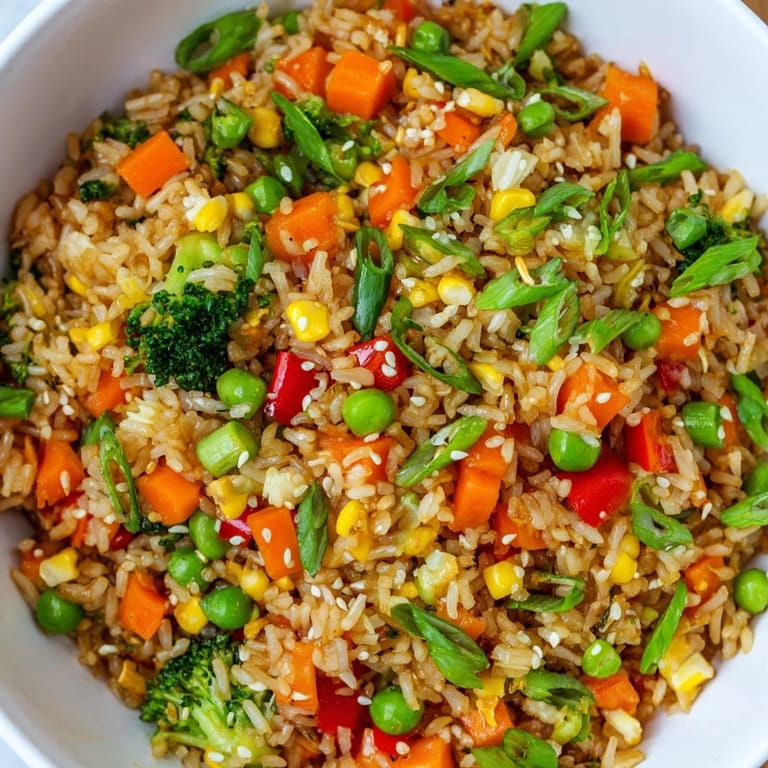
Save I remember making this for a potluck and having someone ask for the recipe before they'd even finished eating. What struck me wasn't that it was fancy—it's honestly one of the simplest things I cook—but that it felt personal, like whoever made it actually cared about the details. That's when I understood that fried rice isn't about complexity; it's about respecting simple ingredients and the technique that brings them together.
Why Cold Rice Matters
The first time I made fried rice with fresh, warm rice, I ended up with something that looked like porridge. I was confused until someone explained that warm rice releases moisture as it cooks, which steam-cooks the grain instead of letting it fry. Day-old rice that's been chilled is drier, so each grain stays separate and gets a slight golden edge where it touches the hot pan. That's the texture everyone's chasing when they order fried rice from a good restaurant.
Making It Your Own
The beauty of fried rice is that it's endlessly flexible. I've made it with mushrooms and snap peas when carrots ran out, with cashews for crunch, with a scrambled egg stirred in for richness. The technique stays the same—high heat, cold rice, vegetables in order of cooking time—but the variations let you cook what's actually in your kitchen instead of what a recipe demands. Some nights I add a teaspoon of chili sauce for heat, other nights I keep it pure so the vegetable flavors shine.
Serving and Pairing
I serve this as a complete meal on its own, but it's equally happy as a side dish next to something like pan-seared tofu or grilled chicken. A simple cucumber salad or a quick pickle cuts through the richness beautifully. Cold leftover fried rice is also wonderful the next day for lunch—just reheat it gently in a pan with a splash of soy sauce to refresh it.
- For protein, scrambled eggs stirred in at the end or crispy tofu cubes add substance without fussiness.
- A drizzle of chili oil or a dash of sriracha transforms the whole mood if you're craving heat.
- Don't skip the fresh green onions and sesame seeds at the end—they're the difference between good and memorable.
 Save
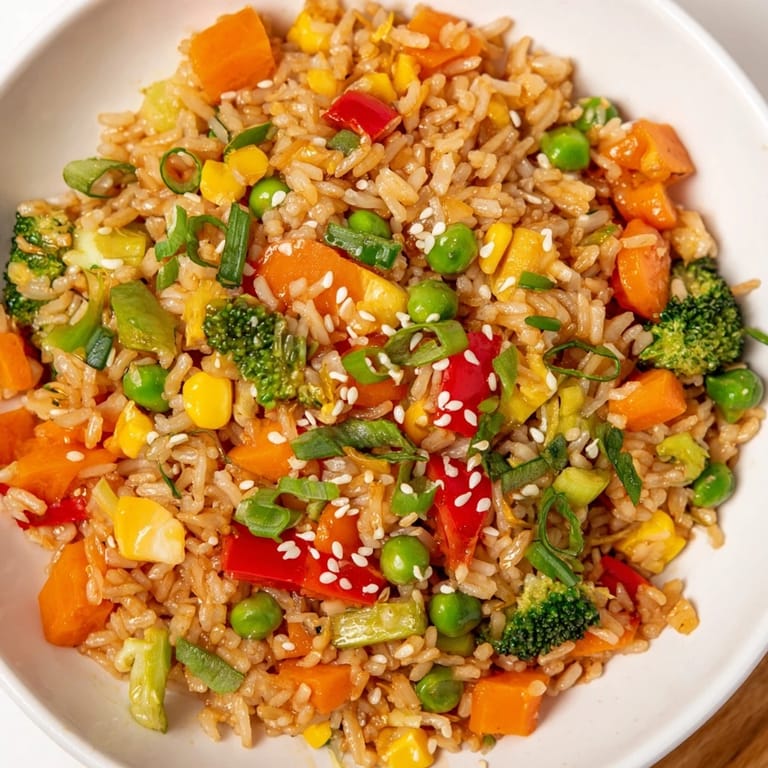
Save There's comfort in a dish this simple and this good. It asks for nothing fancy, yet somehow always feels like someone made an effort.
Recipe Guide
- → What type of rice works best for this dish?
Day-old jasmine or long-grain rice is ideal as it fries well without clumping, delivering a light and fluffy texture.
- → Can I substitute the vegetables used?
Absolutely, feel free to swap or add vegetables like mushrooms, zucchini, or snap peas depending on seasonal availability and preference.
- → How do I achieve a good stir-fry texture?
Use a hot wok or skillet, cook vegetables until crisp-tender, and toss the rice quickly to heat evenly without becoming mushy.
- → Is there a way to add protein to this dish?
Add scrambled eggs, tofu cubes, or your preferred protein to enhance nutrition and make it more filling.
- → What seasoning options enhance the flavor?
Soy sauce and sesame oil are key flavor contributors; you can also add white or black pepper, garlic, ginger, and a sprinkle of toasted sesame seeds for depth.