 Save
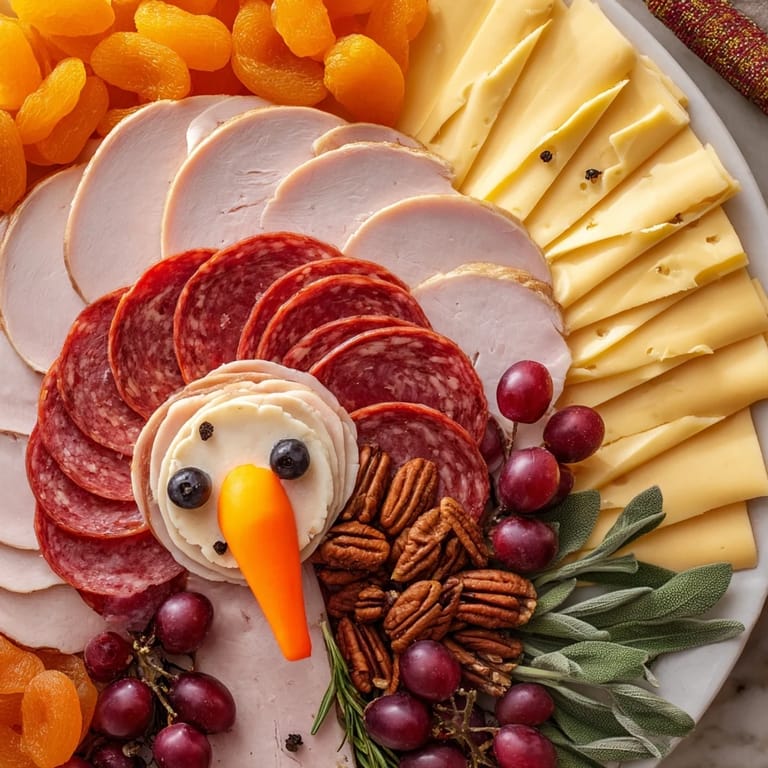
Save I'll never forget the Thanksgiving when my sister challenged me to create something that would make everyone stop and smile before they even took a bite. That's when the Turkey Tail Fan was born—a charcuterie board so striking, with its fanned meats and cheeses arranged like actual turkey feathers, that guests started taking photos before reaching for a single cracker. It became the centerpiece conversation starter that year, and now it's our family's favorite way to begin the holiday feast.
I remember watching my nephew, who's usually glued to his phone, actually put it down to help me arrange the final details of the board. He carefully positioned each sage leaf and debated where the red grapes should go for maximum visual impact. That's when I realized this board was more than just food—it was a way to bring people together around the simple joy of creating something beautiful with your hands.
Ingredients
- Smoked turkey breast, thinly sliced (100 g): This is the star of your tail feathers, and the smoke adds a depth that makes people pause and ask what they're tasting. Slice it thin enough to drape naturally, but thick enough that it doesn't tear—about the thickness of deli counter slices
- Salami, thinly sliced (100 g): Choose a good quality salami with visible peppercorns and a rich color; it adds visual contrast to the board and a hint of spice that wakes up the palate
- Prosciutto, thinly sliced (100 g): This is the delicate element that catches light and shimmers on the board, almost translucent—ask your deli counter to slice it paper-thin
- Sharp cheddar cheese, sliced (150 g): Sharp cheddar has a assertive flavor that stands up to the salty meats and complements the sweetness of dried fruit beautifully
- Swiss cheese, sliced (100 g): The holes in Swiss cheese aren't just charming—they create visual interest and catch light in unexpected ways as you arrange the board
- Gouda cheese, sliced (100 g): Gouda brings a subtle sweetness and creamy texture that bridges the savory and sweet elements of your board
- Round butter crackers (1 cup): These classic rounds become your secondary tail layer and provide a neutral canvas that lets other flavors shine
- Whole wheat crackers (1 cup): The nuttier flavor and earthier color add depth and give guests with different preferences something to reach for
- Seeded baguette slices (1 cup): Toast these lightly if you have time—they hold up better and the seeds add textural interest that guests will notice
- Dried apricots (1/2 cup): Their warm golden color mimics the russet tones of a real turkey and provides pops of sweetness that balance the salty meats
- Red grapes (1/2 cup): Fresh grapes offer bright color contrast and a juicy burst that cleanses the palate between bites
- Pecan halves (1/2 cup): These add a buttery richness and crunch that makes the board feel more substantial and luxurious
- Fresh rosemary and sage sprigs: These aren't just garnish—their aromatic oils release as people reach past them, creating a multi-sensory experience
- Small round cheese ball (for the head): Choose one with a smooth, creamy texture that holds detail well when you add the turkey's features
- Whole black peppercorns (2): These become the turkey's eyes and should be positioned to give your creation a sense of personality and direction
- Small piece of red bell pepper (for wattle): The wattle is surprisingly important—it's what makes people immediately recognize this as a turkey rather than just a pretty board
- Thin carrot slice (for beak): A natural color that completes the turkey's face and ties the whole artistic concept together
Tired of Takeout? 🥡
Get 10 meals you can make faster than delivery arrives. Seriously.
One email. No spam. Unsubscribe anytime.
Instructions
- Choose Your Canvas:
- Select a large round or oval serving board—think bigger than you think you need. You want room for the tail to fan out majestically with space between each element so people can actually access what they want without dismantling your artwork
- Build the Tail Foundation:
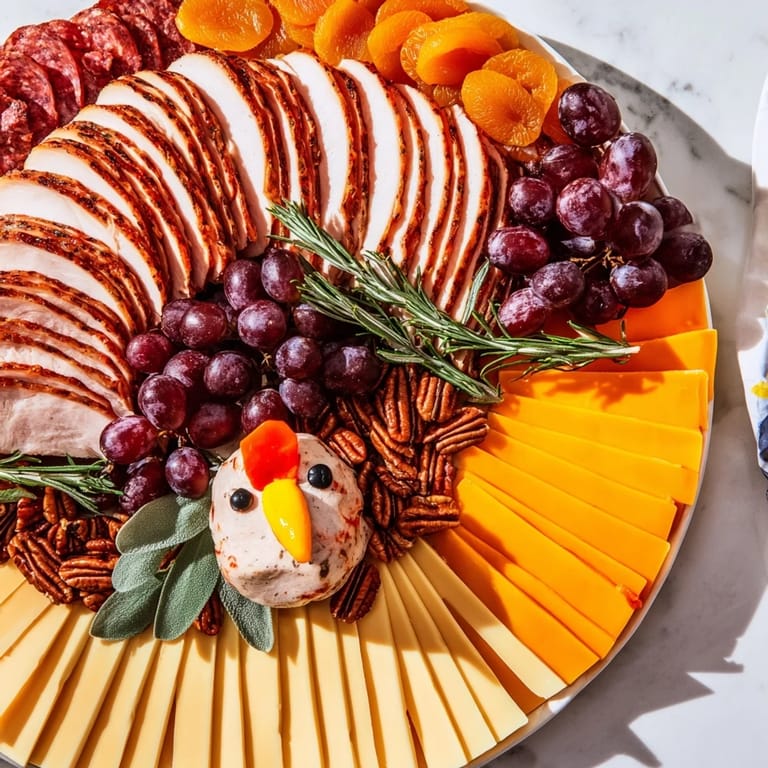
- Start with your meats, laying them in overlapping rows along the upper half of the board. Imagine you're creating the outer ring of a peacock's tail—each slice should cascade into the next, creating movement and drama. Drape the prosciutto with especially theatrical flair; its delicate nature catches light beautifully
- Layer in the Cheese Feathers:
- Now add your cheese rows directly beneath the meats, maintaining that same curved, fanning pattern. The sharper cheddar, creamy gouda, and holey Swiss create visual variety, and arranging them in order helps guide the eye across the board like actual feather layers
- Fill with Texture and Color:
- Cluster your dried apricots, grapes, and pecan halves strategically around the cheese and crackers. Think about color balance—the golden apricots work beautifully against the orange cheddar, and the red grapes create visual punctuation marks
- Add Verdant Details:
- Scatter your fresh rosemary and sage leaves around the base of the tail feathers. These herbs should feel organic and flowing, not stiff or overly placed. They'll release their aroma as guests reach across them, adding to the sensory experience
- Create the Turkey's Head:
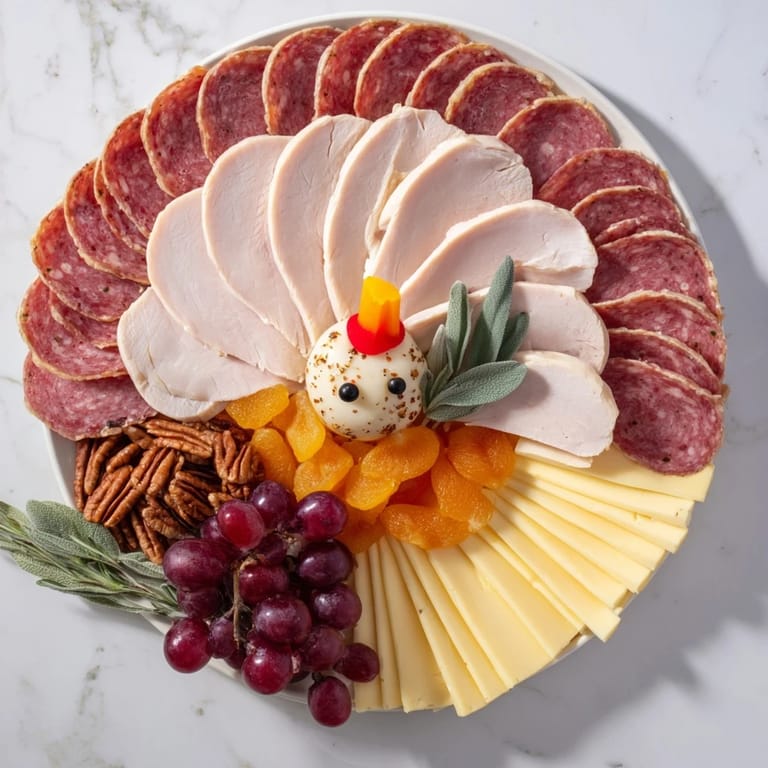
- Position your cheese ball at one end of the board to serve as the turkey's head. This is your anchor point—everything flows from here
- Add the Facial Features:
- Press the black peppercorns into the cheese ball for eyes, position your red bell pepper piece as the wattle (usually at the bottom front of the head), and tuck your carrot slice in as the beak. Step back and look—your turkey should feel alive and expressive
- Final Polish and Serve:
- Take a moment to adjust any elements that catch your eye, smooth out any cheese wrinkles, and ensure every element is accessible. Serve immediately while the cheese is still cold and the board feels fresh and inviting
 Save
Save The best part happened when my mother-in-law, who's usually critical about everything, got quiet while looking at the board. Then she said, 'This is too beautiful to eat,' but ate three slices of the prosciutto anyway. That moment taught me that food isn't just about taste—it's about creating something that makes people feel like they're part of something special, something worth savoring.
The Art of Arrangement
Creating a charcuterie board that resembles a turkey tail is less about following rules and more about understanding basic design principles. Your eye naturally wants to follow curves and patterns, so as you layer each element, imagine you're creating actual feather formations. The overlapping creates depth, making the board look more substantial and three-dimensional. Think about your color transitions—move from warm oranges and reds in the meats to golden yellows in the cheese, creating a natural gradient that mimics real feather coloring. The gaps between elements aren't wasted space; they're breathing room that lets each component stand out while maintaining the overall composition.
Make It Your Own
The beauty of this board is that it's endlessly adaptable to what you have on hand and what your guests actually enjoy. If someone at your table is vegetarian, simply omit the meats and add roasted vegetables like caramelized sweet potato slices or herb-roasted mushrooms to create that same visual richness. For gluten-free guests, swap the regular crackers for gluten-free varieties—honestly, no one will know the difference. The real trick is maintaining the visual impact; the arrangement matters more than the specific ingredients.
Elevating the Experience
Pairing the Turkey Tail Fan with the right beverages transforms it from an appetizer into an experience. A crisp Sauvignon Blanc cuts through the richness of the cheeses and meats beautifully, while sparkling apple cider offers a festive alternative that doesn't feel alcoholic. If you're feeling adventurous, pomegranate seeds add jewel-like pops of color and tartness, while fig slices create an elegant sophistication that elevates the whole presentation. The key to these additions is restraint—a handful of pomegranate seeds or three or four fig slices creates impact without overwhelming the original design.
- Keep everything chilled until the last possible moment; cold cheese slices don't break and meats hold their shape better
- Arrange your board no more than an hour before serving to maintain freshness and prevent elements from drying out
- Position the board where it can be viewed from multiple angles—it's meant to be admired as much as eaten
 Save
Save This board taught me that the most memorable holiday moments aren't always about complicated cooking or traditional recipes—sometimes they're about creating something beautiful with your hands and sharing it with people you love. I hope your Turkey Tail Fan becomes as beloved in your home as it has in mine.
Recipe Guide
- → What types of meats are used for the turkey tail board?
Smoked turkey breast, salami, and prosciutto thinly sliced are layered to create the savory tail feathers.
- → Which cheeses complement the meats on this board?
Sharp cheddar, Swiss, and gouda cheeses provide rich and varied flavors alongside the meats.
- → How are the fruits and nuts incorporated?
Dried apricots, red grapes, and pecan halves are grouped around the cheeses and crackers to add sweetness and crunch.
- → What garnishes enhance the visual appeal?
Fresh rosemary and sage leaves add green accents and aromatic freshness at the base of the tail arrangement.
- → How is the turkey head detail created?
A small cheese ball is decorated with black peppercorn eyes, a red bell pepper wattle, and a carrot slice beak to mimic a turkey's head.
- → Can this board be adapted for dietary preferences?
For a vegetarian version, omit meats and add roasted vegetables or more cheese varieties; gluten-free crackers can also be used.