 Save
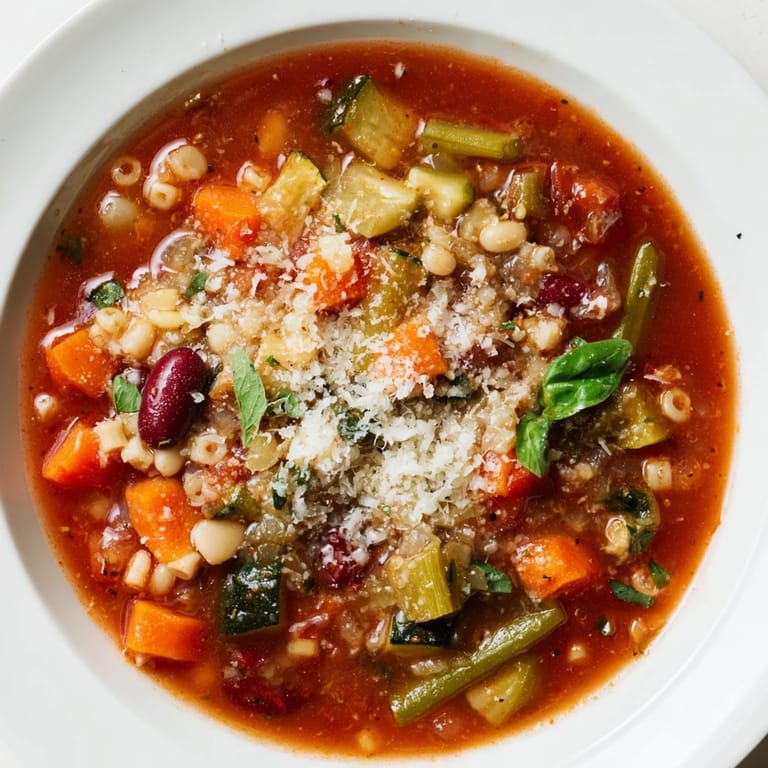
Save There's something about a bowl of minestrone that transports me back to my grandmother's kitchen on a chilly October afternoon, the smell of tomatoes and basil filling every corner while she stirred this soup without ever looking at a recipe. I must have watched her make it a hundred times, yet the first time I tried it myself, I nearly burned the garlic because I got distracted arranging vegetables on the cutting board. What started as nervousness turned into my favorite weeknight comfort, and now it's the soup I reach for whenever I want the kitchen to smell like home.
I made this soup for my neighbor last winter when she was recovering from surgery, and watching her face light up over that first spoonful reminded me why home cooking matters. She asked for the recipe three times, which I thought was funny because there's no magic to it—just good ingredients treated with patience.
Ingredients
- Olive oil: Use a quality oil you'd actually eat on bread; it's your foundation.
- Onion, carrots, and celery: This holy trinity builds flavor from the very first minute, so don't skip the proper sautéing.
- Garlic: Add it after the softer vegetables so it doesn't burn and turn bitter on you.
- Zucchini and green beans: These keep the soup bright and add texture; fresh is always better if you can swing it.
- Diced and crushed tomatoes: The combination of both gives you body and smooth richness instead of relying on one texture.
- Vegetable broth: This is where you can taste the difference between a store brand and a good one—treat yourself a little.
- Oregano and thyme: Dried herbs are fine here since they'll have time to bloom in the simmering broth.
- Tomato paste: This small amount concentrates the tomato flavor without making the soup acidic.
- Small pasta: Ditalini or elbow macaroni work best because they don't get lost in a spoonful.
- Cannellini beans: Rinsing them removes the starchy liquid that can muddy your broth.
- Fresh basil and parsley: Add these at the very end to preserve their bright, clean flavor.
- Parmesan cheese: Optional but wonderful, and it transforms a simple bowl into something special.
Tired of Takeout? 🥡
Get 10 meals you can make faster than delivery arrives. Seriously.
One email. No spam. Unsubscribe anytime.
Instructions
- Start with the foundation:
- Warm your olive oil in a large pot and add the onion, carrots, and celery together. Let them soften for about 5 minutes, stirring occasionally—you want them tender but not colored, and your kitchen should start smelling incredibly welcoming.
- Build the depth:
- Stir in the minced garlic along with the zucchini and green beans, cooking for another 3 minutes until you can smell the garlic's sweetness. This is when you realize you're actually cooking something, not just chopping.
- Create the broth:
- Add both cans of tomatoes, your vegetable broth, the oregano, thyme, salt, pepper, red pepper flakes, and tomato paste. Stir everything well until the tomato paste dissolves into the broth, then bring it to a boil—this should take about 5 minutes.
- Let it simmer:
- Once it's boiling, turn the heat down and let it bubble gently for 15 minutes uncovered. This is when you can sit down for a minute, the hardest part of cooking being done.
- Add the pasta and beans:
- Stir in the pasta and drained cannellini beans, then simmer for another 10 to 12 minutes until the pasta is tender but not mushy. Taste it as you go—pasta finishes faster than you think.
- Finish with fresh herbs:
- Turn off the heat and stir in your fresh basil and parsley, letting them wilt slightly into the warm soup. This is when it goes from good to something you'll actually crave.
 Save
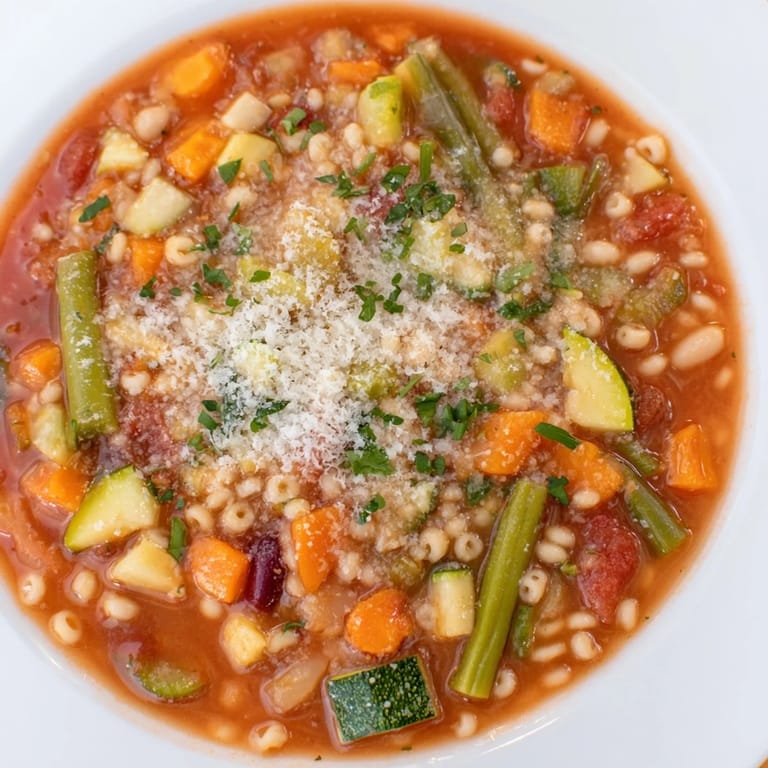
Save There's a moment in cooking this soup when all the separate elements finally come together—the broth darkens, the flavors deepen, and somehow it tastes like it took hours even though you're not even halfway through. That transformation is what keeps me coming back to this recipe.
Why This Soup Wins Every Time
Minestrone is the kind of soup that adapts to whatever you have on hand without losing its identity. I've made it with spinach instead of green beans, added diced bell peppers, thrown in some kale—it always works because the tomato and herb base is strong enough to hold everything together. The pasta makes it hearty enough for a main course, but the vegetables keep it from feeling heavy, which is why I can eat a full bowl and still feel good about it.
Serving and Storage
Serve this soup hot with crusty bread for scooping up the broth, and pass around a small bowl of Parmesan cheese so people can customize their own. It reheats beautifully and actually tastes better the next day when everything has had time to mingle and get cozy with each other.
Make It Your Own
The beauty of minestrone is that it's a template more than a strict recipe, which means you have permission to play with it. Seasonal vegetables work best—whatever looks good at the market is probably what you should be buying for this. If you're feeding someone vegetarian, this is already perfect, but if someone in your group eats vegan, just skip the Parmesan and they'll still get something nourishing and delicious.
- For gluten-free versions, swap the pasta for a gluten-free alternative and it works just as well.
- Add a handful of fresh spinach or kale right before serving for extra greens and nutrition.
- If you prefer it vegan, simply omit the Parmesan cheese at the end.
 Save
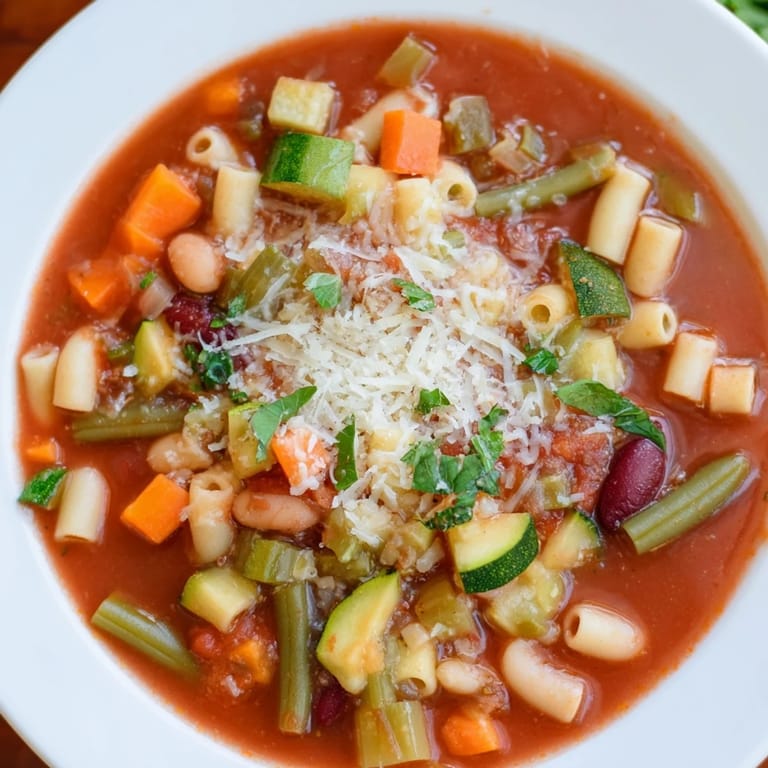
Save This soup has a way of becoming more than just dinner—it's a gift you can give someone, a memory you build with repetition, and a reminder that the best cooking doesn't need to be complicated to be meaningful. Make it often enough and it becomes yours.
Recipe Guide
- → What type of pasta works best in this soup?
Small pasta shapes like ditalini or elbow macaroni are ideal as they cook evenly and blend well with the vegetables and broth.
- → Can I make this soup gluten-free?
Yes, simply swap regular pasta for a gluten-free alternative to suit dietary needs without sacrificing texture.
- → What fresh herbs enhance the flavor most effectively?
Fresh basil and parsley are added at the end to brighten flavors and complement the tomato base beautifully.
- → Is it possible to make this dish vegan-friendly?
Omit the Parmesan cheese or use a vegan substitute to maintain its rich taste while keeping it plant-based.
- → How can I add more greens to the soup?
Spinach or kale can be stirred in during the final cooking minutes for extra color, nutrients, and texture.
- → What are some tips for seasoning?
Adjust salt, pepper, and optional red pepper flakes to taste to balance the savory tomato broth and highlight the herbs.