 Save
Save I discovered this bowl on a quiet Tuesday evening when I was tired of my usual weeknight routine and craving something that felt both comforting and exciting. The inspiration hit while I was scrolling through videos of people assembling beautiful rice bowls with such care, and I thought about how salmon with an orange glaze might sing differently than the sweet versions I'd made before. The gochujang caught my attention because it promised that subtle heat and depth I've been chasing in home cooking lately. Something about the combination of citrus and Korean chili paste made my intuition whisper that this would work, so I grabbed what I had and started experimenting.
I made this for my friend Sarah on a Friday night when she mentioned she was exhausted from work and craving something fresh but substantial. Watching her take that first bite and close her eyes while the flavors registered was one of those small cooking victories that reminds me why I love feeding people. She asked for the recipe immediately, which made me realize this wasn't just dinner for me anymore—it was something worth repeating and sharing.
Ingredients
- Salmon fillets (2, about 150 g each): Choose fillets with good color and a fresh smell; removing the skin yourself keeps the flesh tender and lets the glaze stick beautifully.
- Gochujang (2 tbsp): This fermented chili paste is the soul of the glaze—it brings umami and gentle heat without overwhelming the dish.
- Fresh orange juice (2 tbsp): Squeeze it yourself if you can; the brightness cuts through the richness and activates all the other flavors.
- Soy sauce (1 tbsp): A touch of saltiness and depth that makes the glaze cling to the salmon.
- Honey (1 tbsp): Balances the spice and helps create that coveted sticky finish when you broil.
- Rice vinegar (1 tsp): A whisper of acidity that prevents the glaze from feeling one-dimensional.
- Toasted sesame oil (1 tsp): Just a drizzle, but it transforms the glaze with a toasted, nutty warmth.
- Fresh ginger and minced garlic (1 tsp and 1 clove): These wake up your palate and add complexity that store-bought glazes can't touch.
- Short-grain rice (2 cups cooked): Warm rice absorbs the glaze beautifully and provides the cushion for everything else.
- Cucumber, avocado, nori, sesame seeds, and scallions: These toppings add texture, color, and freshness that make each bite interesting.
Tired of Takeout? 🥡
Get 10 meals you can make faster than delivery arrives. Seriously.
One email. No spam. Unsubscribe anytime.
Instructions
- Set the stage:
- Preheat your oven to 200°C (400°F) and line a baking tray with parchment paper. This small step prevents sticking and makes cleanup effortless later.
- Season the salmon:
- Pat the salmon dry if needed, then sprinkle salt and pepper on both sides. Place the fillets on the prepared tray, skin-side down, giving them space to breathe in the oven.
- Build your glaze:
- In a mixing bowl, whisk together the gochujang, fresh orange juice, soy sauce, honey, rice vinegar, sesame oil, ginger, and garlic until the mixture is smooth and no lumps of chili paste remain. This is your liquid gold—taste it and adjust if it feels too spicy or not bright enough.
- First glaze and bake:
- Brush half of your glaze over the salmon, coating it evenly. Bake for 12 to 14 minutes, watching until the flesh turns opaque and flakes easily when pressed with a fork.
- Prep while waiting:
- As the salmon bakes, cook your rice if you haven't already, slice the cucumber thinly, cube the avocado, and have the nori, sesame seeds, and scallions ready to go.
- Sticky finish (optional but worth it):
- Once the salmon is cooked through, brush the remaining glaze over the top and slide the tray under the broiler for 1 to 2 minutes until the glaze becomes glossy and slightly caramelized. Watch closely so it doesn't burn.
- Assemble with intention:
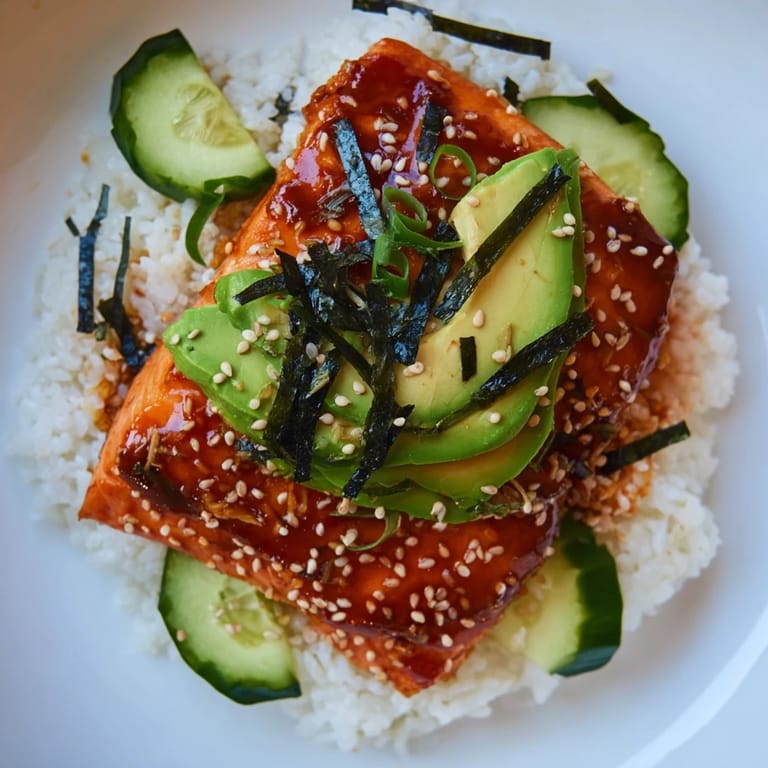
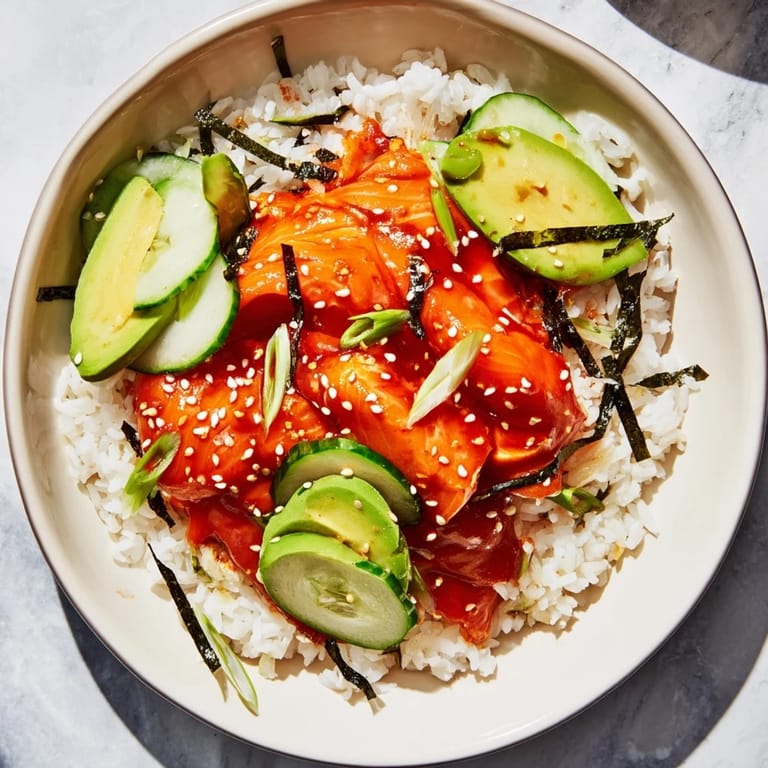
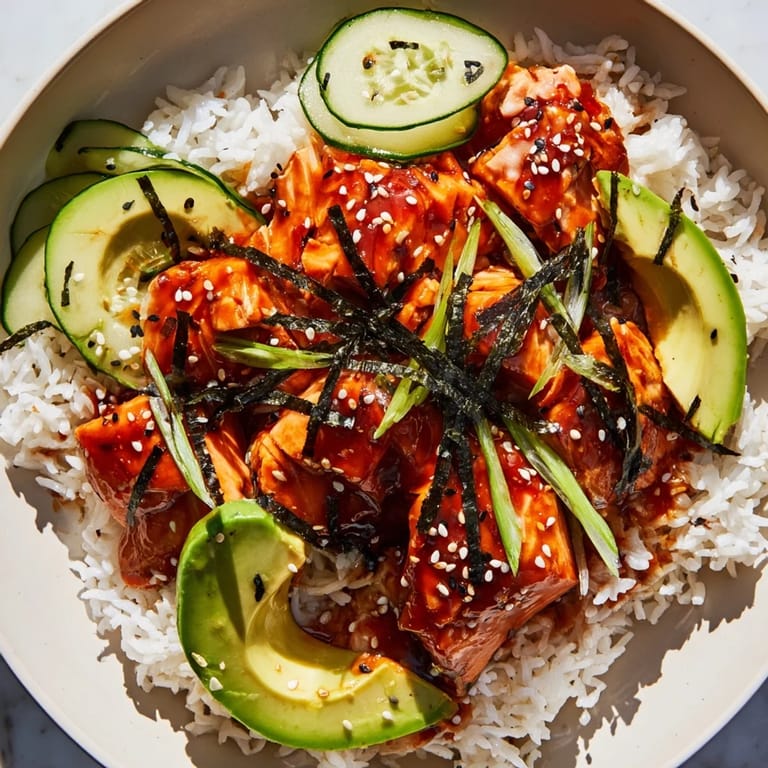
- Divide the warm rice between two bowls, top each with a glazed salmon fillet, then arrange the cucumber, avocado, and nori strips around it. Scatter sesame seeds and scallions over everything.
- Eat while warm:
- Serve immediately so the rice stays fluffy and the salmon retains its warmth and moisture.
 Save
Save I remember the kitchen smelling like toasted sesame oil and caramelized citrus, and realizing that sometimes the simplest meals carry the most satisfaction. This bowl has become the answer to my weeknight question of what to make when I want something that feels special but doesn't demand hours of my time.
Understanding the Glaze
The magic of this dish lives in the glaze, which works because each ingredient has a specific job. Gochujang brings umami and heat, orange juice adds brightness and acidity, honey provides sweetness and helps with caramelization, and sesame oil adds the toasted depth that makes people ask what that amazing flavor is. When I first made this, I tried substituting mirin for honey, thinking it would be more authentic, but the result felt sticky without the complexity I wanted. The combination here is deliberately balanced—spicy, sweet, sour, and nutty all in one brush stroke.
Building Your Bowl
There's something satisfying about arranging a bowl rather than plating individual components. The rice provides warmth and absorbs the glaze that drips from the salmon, the cucumber brings coolness and crunch, the avocado adds creaminess and richness, and the nori strips tie everything to its Korean inspiration. I've found that slicing the cucumber thin and the avocado just before serving keeps everything crisp and prevents browning. The order doesn't matter as much as making sure you have a bit of everything in each spoonful.
Variations and Add-Ons
This bowl is flexible enough to bend with what you have on hand or what you're craving that day. I've added pickled ginger for extra tang, shredded carrots for color, and steamed edamame for protein and texture. Some nights I top it with a soft-cooked egg, which adds richness and makes it feel more substantial. The foundation is strong enough to support your creativity without falling apart.
- Swap the salmon for extra-firm tofu if you want a vegetarian version; the glaze works just as beautifully.
- Add pickled vegetables, shredded beets, or roasted sweet potato for different seasons and moods.
- A poached or soft-boiled egg turns this into an even more luxurious weeknight meal.
 Save
Save This bowl has become my go-to when I want to feel like I'm taking care of myself without fussing too much. It reminds me that some of the best meals are the ones that balance health, flavor, and simplicity all at once.
Recipe Guide
- → How do I achieve the sticky glaze on the salmon?
Brush the salmon fillets with the orange-gochujang sauce before baking and again after cooking, then briefly broil to create a glossy, sticky finish.
- → Can I substitute any ingredients in the glaze?
Yes, you can adjust honey for sweetness or replace soy sauce with tamari for gluten-free options while preserving the glaze's balance.
- → What type of rice works best for this bowl?
Short-grain rice provides a sticky, fluffy texture that perfectly complements the glaze and toppings in this dish.
- → What are good topping alternatives for added crunch?
Try adding pickled ginger, shredded carrots, or edamame to enhance texture and bring more vibrant colors and flavors.
- → How can I make this dish vegetarian?
Swap salmon with firm tofu and follow the same glazing and baking method to enjoy a delicious plant-based version.