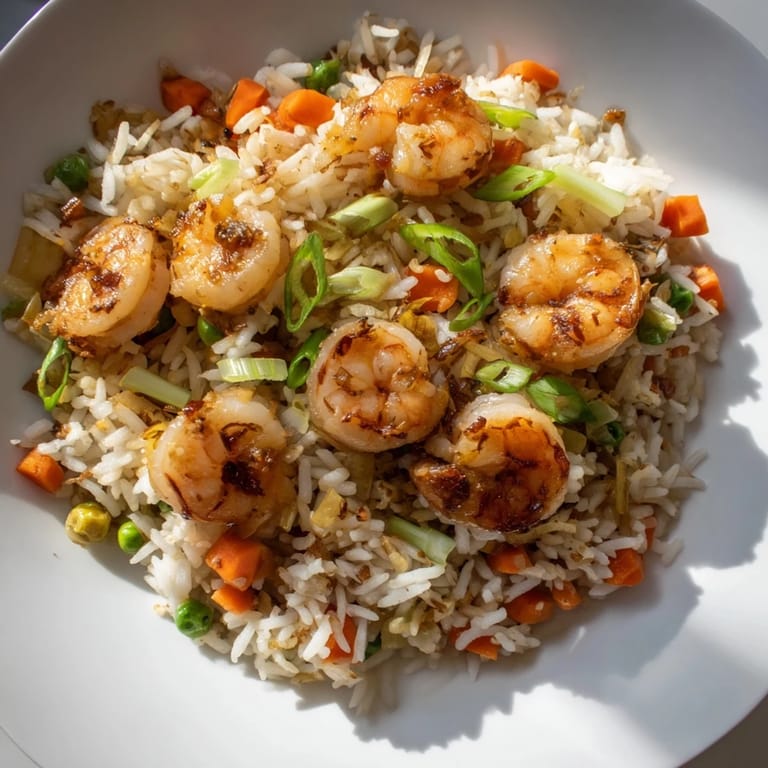
 Save
Save There's something about the sound of shrimp hitting a hot wok that announces dinner is coming. I discovered this garlic fried rice on a Tuesday evening when I had leftover jasmine rice and a craving for something that didn't require ordering takeout. The kitchen filled with that unmistakable garlic aroma within seconds, and I realized I'd stumbled onto something too easy to be this delicious. Now it's become my go-to when I want restaurant-quality flavors without the wait.
I made this for my partner on a random Friday when we were both tired of our usual rotation, and watching their face light up at the first bite reminded me how a simple dish done right can feel like real cooking. The garlic kept perfuming the entire apartment for hours afterward, which honestly felt like a bonus.
Ingredients
- Raw shrimp, peeled and deveined (300 g): Fresh or frozen works equally well, but thaw completely and pat them dry so they sear properly instead of steaming.
- Cooked jasmine rice, day-old and chilled (4 cups): This is non-negotiable—fresh warm rice will turn mushy and stodgy, while cold rice grains separate beautifully in the heat.
- Carrot, diced (1 medium): Adds natural sweetness and a slight crunch that balances the salty sauce.
- Onion, finely chopped (1 small): Gets soft and sweet as it caramelizes slightly in the oil.
- Spring onions, sliced (3): Most goes in during cooking, but save some for garnish where the fresh onion flavor really shines.
- Frozen peas, thawed (1/2 cup): They warm through in seconds and add little pops of sweetness and color.
- Garlic, minced (4 cloves): This is what transforms ordinary fried rice into something crave-worthy—don't skip it or reduce it.
- Soy sauce (2 tbsp): The backbone of the whole dish; taste as you go because brands vary in saltiness.
- Oyster sauce (1 tbsp): Adds umami depth that you can't quite name but definitely taste.
- Sesame oil (1 tsp): Just a touch—it's potent and a little goes a long way in flavor.
- White pepper (1/2 tsp): Adds warmth without the visible specks of black pepper.
- Vegetable oil (2 tbsp): Use a neutral oil with a high smoke point so it doesn't burn during the high heat cooking.
Tired of Takeout? 🥡
Get 10 meals you can make faster than delivery arrives. Seriously.
One email. No spam. Unsubscribe anytime.
Instructions
- Prepare the shrimp:
- Pat them completely dry with paper towels and season lightly with salt—this small step makes them cook faster and develop better color. Wet shrimp releases moisture that prevents proper searing.
- Sear the shrimp:
- Heat 1 tablespoon of oil in your wok over medium-high heat until it shimmers, then add the shrimp and let them sit undisturbed for about a minute before stirring. They'll go from gray to pink in 2 to 3 minutes total, and you want to pull them out the moment they're just cooked through or they'll toughen.
- Build the flavor base:
- In the same wok with the remaining oil, sauté the onion and carrot first for a minute to soften them slightly, then add the garlic and cook just until fragrant—about 30 seconds. The garlic can burn quickly, so watch it carefully.
- Wake up the rice:
- Add the chilled rice and use your spatula to break apart any clumps, then stir-fry for a couple of minutes until it's heated through and starts to pick up light color from the hot wok. You're essentially toasting it lightly.
- Season and combine:
- Pour in the soy sauce, oyster sauce, and sesame oil while tossing constantly so every grain gets coated evenly. The rice should smell incredible at this point.
- Finish and serve:
- Stir in the peas and most of the spring onions, then gently fold the shrimp back in and cook just long enough to warm everything through—about a minute. Taste it and add more soy sauce if it needs it, then serve immediately with extra spring onions and lime wedges on the side.
 Save
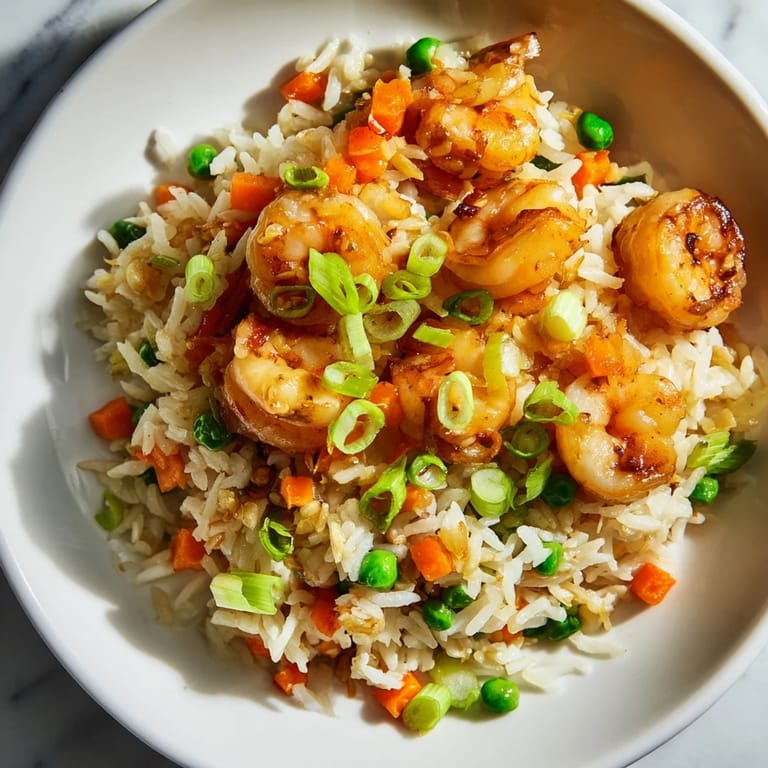
Save The best part about this dish is how it proved to me that restaurant-quality food doesn't require secret ingredients or hours of fussing. It's about technique, heat, and actually tasting as you go.
The Secret to Perfect Shrimp
Shrimp is one of those proteins that goes from tender to rubber in about 30 seconds, so understanding when it's done is crucial. When the shrimp curves into that little C shape and turns pink all the way through, it's perfect—pull it out immediately and don't second-guess yourself. If you're nervous about timing, remember that shrimp will keep cooking slightly from residual heat even after you remove it from the pan, so it's better to err on the side of slightly underdone.
Why Fried Rice Needs to Be Cold
Warm rice is filled with moisture that makes each grain stick to its neighbors, which is lovely for a rice bowl but disaster for fried rice. When you refrigerate cooked rice overnight, the starches crystallize and the moisture evaporates, so each grain stays separate and has a chance to get crispy edges when it hits the hot oil. I used to skip this step thinking I was saving time, but those meals never had that magical restaurant quality—now I plan ahead and always make extra rice the night before.
Simple Swaps That Actually Work
The beauty of fried rice is its flexibility—I've made this with chicken, tofu, and even just vegetables on nights when I don't have shrimp on hand, and it's never disappointed. You can swap any vegetable you have hanging around, add a fried egg on top for richness, or even throw in some cashews or peanuts for crunch. The garlic and soy sauce are what make it taste like itself, so those are the elements you really want to keep.
- Cooked chicken breast diced small or leftover rotisserie chicken works beautifully as a substitute for shrimp.
- Crispy tofu cubes give you that protein element and a satisfying texture that plays well with the rice.
- A fried egg cracked on top right before serving adds a luxurious richness that feels special without any extra effort.
 Save
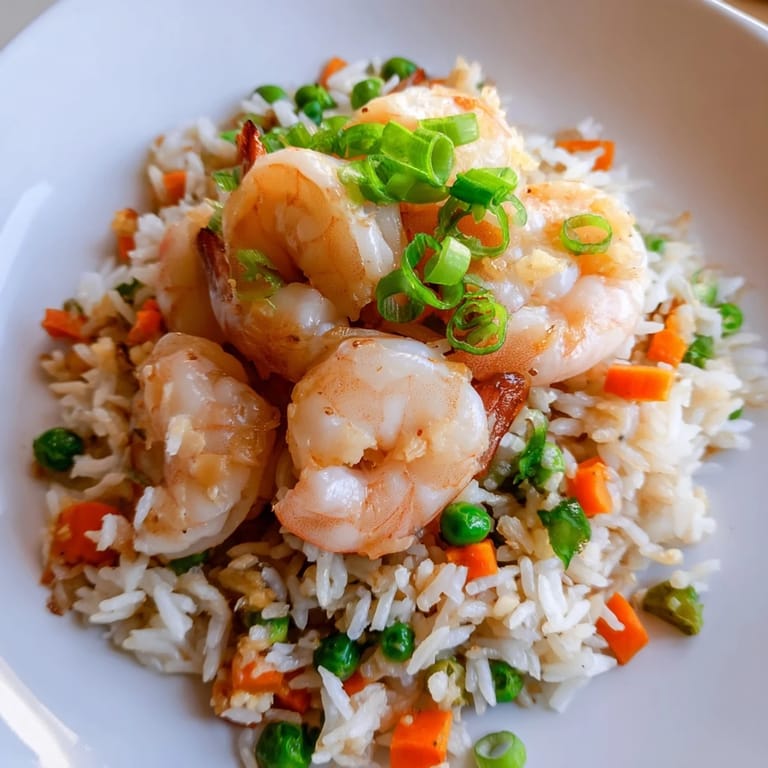
Save This dish has become my weeknight superpower—it tastes impressive enough to share but simple enough that I don't feel stressed making it after a long day. That's when you know a recipe has truly earned a permanent spot in your rotation.
Recipe Guide
- → What type of rice works best in this dish?
Day-old jasmine rice, which is preferably chilled, provides the ideal texture for stir-frying and prevents clumping.
- → How do I keep the shrimp tender when cooking?
Cook shrimp briefly over medium-high heat until just pink to retain tenderness and avoid overcooking.
- → Can this dish be made with other proteins?
Yes, chicken or tofu can be substituted for shrimp to accommodate different dietary preferences.
- → What vegetables complement the flavors here?
Diced carrots, onions, spring onions, and peas add sweetness, crunch, and freshness to balance savory notes.
- → How can I enhance the aroma of this dish?
Using fresh minced garlic, sesame oil, and a squeeze of lime at the end brightens the overall flavor profile.
- → What tools are best for preparing this meal?
A large wok or skillet with a spatula ensures quick, even cooking and easy stirring during the process.