 Save
Save There was a farmers market morning when I picked up a heap of glossy red peppers, their skin still warm from the sun, and decided on impulse to roast them. What started as curiosity about why roasted peppers tasted so different from raw ones turned into the realization that charring them releases this deep, almost caramel-like sweetness. That led me to hummus, and suddenly I wasn't making the same recipe everyone else had, but something that felt like my own discovery. Roasted red pepper hummus became the reason people asked for my recipe at potlucks.
I made this for a small dinner party where someone mentioned they were tired of the same old appetizers, and I remember watching their face light up when they tasted it. They couldn't believe something so velvety and rich didn't have cream or butter in it. That moment made me understand why this hummus has stayed in my regular rotation ever since.
Ingredients
- Red bell peppers: Fresh peppers develop incredible depth when roasted, but jarred ones save time and work just as well if you're pressed.
- Chickpeas: The base of everything creamy here, and canned chickpeas are perfectly acceptable despite what purists say.
- Tahini: This sesame paste is what gives hummus its signature texture, so don't skip it or substitute with peanut butter.
- Extra-virgin olive oil: Use something you'd actually taste on its own, because it matters here more than you might think.
- Lemon juice: Fresh lemon brightens everything and prevents the hummus from tasting flat or one-dimensional.
- Garlic, cumin, and smoked paprika: These three work together to build warmth and complexity without overpowering the peppers.
- Salt and water: Salt is your seasoning tool, and cold water is how you dial in the exact texture you want.
Tired of Takeout? 🥡
Get 10 meals you can make faster than delivery arrives. Seriously.
One email. No spam. Unsubscribe anytime.
Instructions
- Roast the peppers (if starting fresh):
- Heat your oven to 425°F and split the peppers in half lengthwise, scooping out seeds as you go. Place them skin-side up on a baking sheet and let them char in the oven for about 20 minutes until the skins blister and blacken in spots. Once they come out, cover the hot pan with a bowl or foil to trap the steam, which loosens the skin and makes peeling effortless.
- Combine everything in the food processor:
- Add your cooled roasted peppers, drained chickpeas, tahini, lemon juice, minced garlic, olive oil, and all your spices into the bowl. Don't worry about the proportions being perfect right now, just get everything in there.
- Blend until silky:
- Run the food processor until the mixture goes from chunky to completely smooth, stopping to scrape down the sides whenever bits cling to the edges. This usually takes a minute or two, depending on how powerful your machine is.
- Add water gradually for texture:
- If the hummus feels too thick, add cold water one tablespoon at a time and blend briefly between additions until you reach that perfect creamy, scoopable consistency. Too thin, and you've added too much; too thick, and it feels more like paste than dip.
- Taste and adjust:
- This is where you get to play. Taste a small spoonful and decide if it needs more salt, more lemon, or even a touch more garlic depending on what your palate tells you.
- Serve with style:
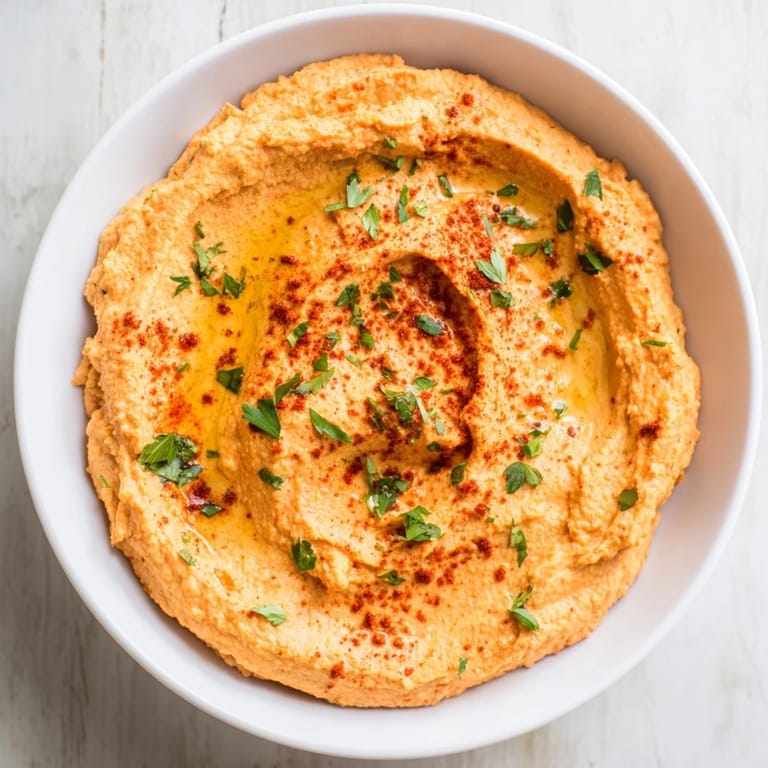
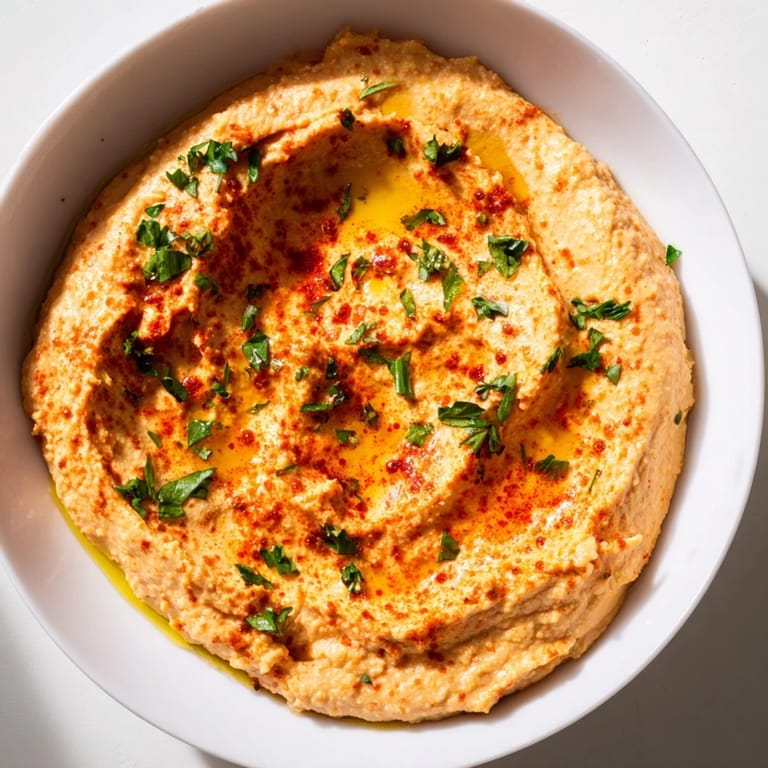
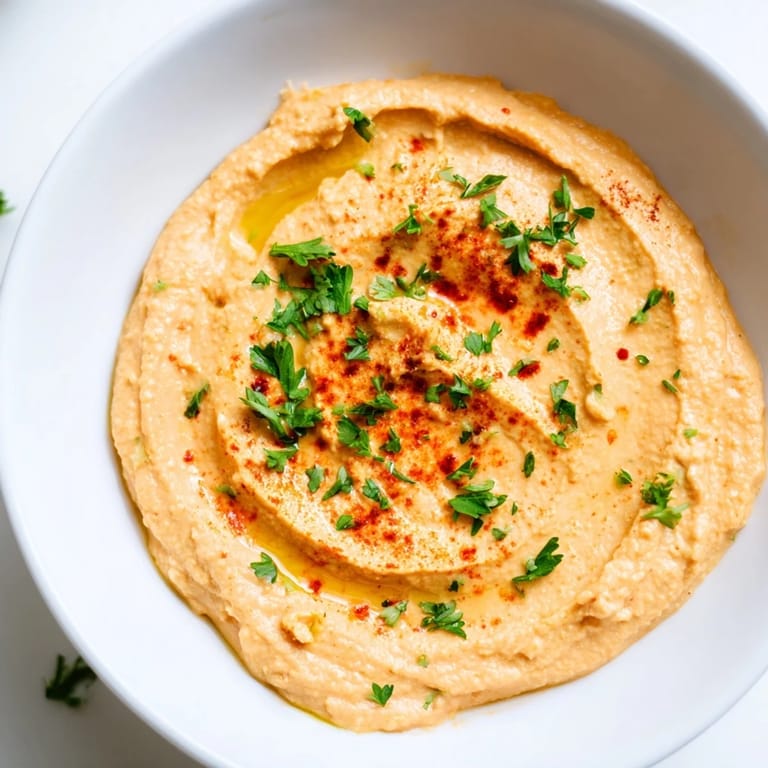
- Transfer everything to a serving bowl, drizzle generously with olive oil, and add a final sprinkle of smoked paprika or fresh parsley if you have it on hand. Put it out with pita, crackers, or fresh vegetables and watch it disappear.
 Save
Save One afternoon, my nephew came into the kitchen while I was scooping hummus into a bowl, and he asked if it was the red one. He'd been asking for it by that description for months. That's when I realized this wasn't just a recipe I made, it was something people actually looked forward to.
When Fresh Peppers Matter
Roasting fresh peppers yourself takes more time, but the flavor development is noticeably richer than jarred. The charring process brings out natural sugars and creates a smoky depth that can't quite be replicated. If you're making this for a special occasion or when you have a bit of spare time, fresh peppers are worth the effort.
How to Store It
Keep your hummus in an airtight container in the refrigerator, and it'll stay fresh for about five days. Before serving after storage, let it come to room temperature for a few minutes and give it a gentle stir, because the oils sometimes separate slightly. You can also freeze it for up to three months if you want to make a double batch.
Variations and Pairings
This hummus is adaptable in ways that make it feel like a different dish each time you make it. A pinch of cayenne transforms it into something with a gentle heat, while a handful of fresh mint adds brightness. Serve it as part of a mezze board with olives and cheese, swirl it into soups, or use it as a sandwich spread instead of mayo.
- Add roasted garlic instead of raw garlic if you want the flavor without the sharpness.
- Stir in a handful of fresh herbs like parsley, dill, or cilantro at the very end for extra freshness.
- Use smoked paprika generously if you love that deep, charred flavor and want it to be the star.
 Save
Save This hummus has become one of those recipes I make without thinking, the way you might reach for your favorite jacket. It shows up at parties, weeknight snacks, and quiet moments when I just want something satisfying. That's the mark of a recipe worth keeping.
Recipe Guide
- → How do I roast red peppers properly?
Slice peppers in half, remove seeds, and place cut side down on a baking sheet. Roast at 425°F (220°C) for 20 minutes until skins are charred, then steam in a covered bowl for 10 minutes before peeling.
- → Can I use jarred roasted red peppers instead of fresh?
Yes, jarred roasted red peppers work well and save time. Be sure to drain them before blending to avoid excess moisture.
- → What is the purpose of tahini in this blend?
Tahini adds a creamy texture and a rich, nutty flavor that complements the chickpeas and peppers perfectly.
- → How can I adjust the consistency if the blend is too thick?
Gradually add cold water, one tablespoon at a time, blending until the desired creamy consistency is reached.
- → What spices enhance the smokiness of this dish?
Adding smoked paprika and ground cumin enhances the depth and smoky flavor, while optional cayenne pepper can add a subtle heat.