 Save
Save My neighbor handed me a jar of homemade black currant jam one afternoon, the kind with seeds that catch between your teeth, and I stood in my kitchen wondering what on earth to do with it. Then it hit me: what if I took that nostalgic peanut butter and jelly sandwich feeling and turned it into something you'd serve on an actual plate? This cake became my answer, and now whenever I make it, people ask why they've never thought to combine these flavors before.
I made this for my book club on a rainy Tuesday, worried it might feel too casual or strange, but watching everyone go quiet after the first bite told me everything. One person actually closed her eyes, and another asked for thirds, which never happens with cake at our gatherings. That's when I knew this wasn't just a clever idea—it was something people actually needed in their dessert rotation.
Ingredients
- All-purpose flour (1 1/2 cups): This is your structure; measure it by spooning into the cup and leveling off, not by scooping straight from the bag, which compacts it and throws off your ratios.
- Baking powder and baking soda (1 tsp and 1/2 tsp): These two work together to give the cake its tender crumb; don't skip the baking powder thinking the soda alone will do the job.
- Salt (1/4 tsp): A pinch that seems small but enhances both the peanut butter and balances the sweetness beautifully.
- Unsalted butter and creamy peanut butter (1/2 cup and 3/4 cup): The dream team; make sure your peanut butter is at room temperature so it creams smoothly with the butter, no lumps allowed.
- Granulated sugar (1 cup): This dissolves into the batter and keeps the cake moist throughout baking.
- Eggs (2 large): Room temperature eggs incorporate air into the batter more efficiently, giving you a lighter cake.
- Vanilla extract (1 tsp): The quiet backbone that makes everything taste more like itself.
- Whole milk (1/2 cup): Creates moisture and tender crumb; don't substitute with water thinking it'll save calories because the texture will suffer.
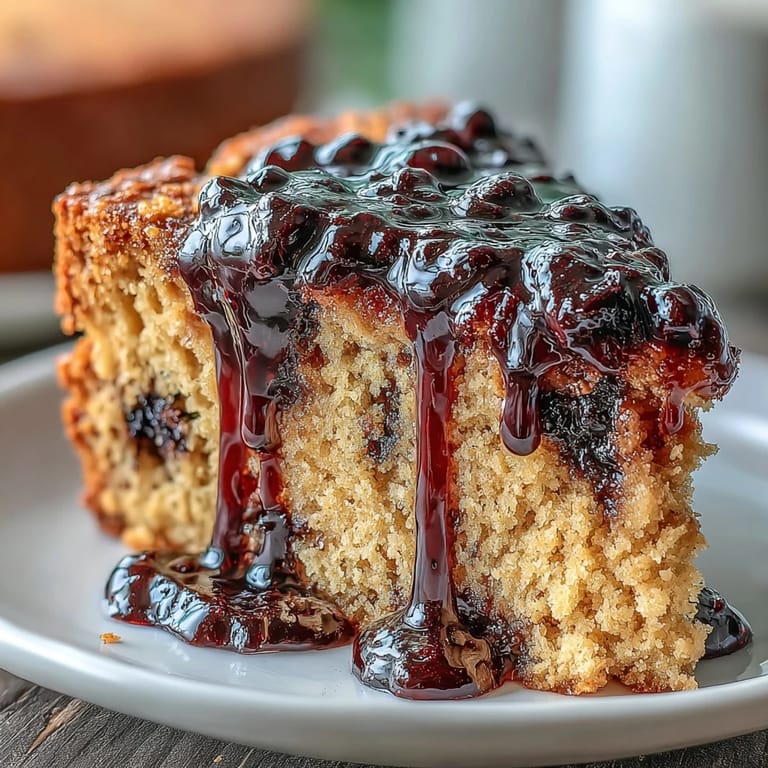
- Black currant jam (1/2 cup): The star of the show; use a preserves style with visible fruit if you can find it, as it creates pockets of flavor throughout the cake.
- Fresh or frozen black currants (1 cup) and sugar (1/3 cup) for the sauce: Frozen works just as well as fresh here, sometimes even better because the freezing process breaks down the cell walls and releases more juice.
- Water and lemon juice for the sauce (2 tbsp and 1 tsp): The water helps the currants release their juices, while the lemon juice prevents the sauce from tasting one-note sweet.
Tired of Takeout? 🥡
Get 10 meals you can make faster than delivery arrives. Seriously.
One email. No spam. Unsubscribe anytime.
Instructions
- Heat your oven and prepare the pan:
- Set the oven to 350°F and grease your 8-inch cake pan with butter, then line the bottom with parchment paper so your cake releases without drama. This step takes two minutes but saves you from the heartbreak of a stuck cake.
- Whisk your dry ingredients:
- Combine the flour, baking powder, baking soda, and salt in a medium bowl, whisking them together thoroughly so the leavening agents distribute evenly. This prevents pockets of baking soda taste in your finished cake.
- Cream the butter and peanut butter:
- Beat the softened butter and peanut butter together until smooth and completely combined, about two minutes with an electric mixer. Listen for the sound to change from chunky to silky; that's your cue you're ready for the next step.
- Add sugar and beat until fluffy:
- Gradually add the sugar while beating, continuing until the mixture looks pale and increases in volume, roughly three to four minutes. You're essentially whipping air into the mixture, which creates lift in the finished cake.
- Incorporate eggs one at a time:
- Add each egg individually, beating well after each addition before adding the next, then mix in the vanilla extract. Each egg adds moisture and richness, but they need to be fully incorporated so the batter stays smooth.
- Alternate adding flour mixture and milk:
- Begin with a third of the flour mixture, then half the milk, then another third of flour, then the remaining milk, ending with the final flour portion, mixing just until combined after each addition. Overmixing at this stage develops gluten and makes the cake tough, so stop as soon as you don't see streaks of flour.
- Layer the batter and jam:
- Spread half the batter into your prepared pan, then spoon the black currant jam evenly over it, leaving a half-inch border so the jam doesn't touch the sides of the pan. Gently spread the remaining batter over the jam layer, being careful not to swirl them together too much.
- Bake until golden and set:
- Bake for 30 to 35 minutes until the top is golden brown and a toothpick inserted in the center comes out clean or with just a few moist crumbs. The cake will smell absolutely incredible about 25 minutes in, but resist the urge to open the oven door.
- Cool with patience:
- Let the cake cool in the pan for 10 minutes, then turn it out onto a wire rack to cool completely. This waiting period is crucial because the cake continues to cook slightly and sets properly, so you won't have a crumbly disaster when you slice it.
- Make the black currant sauce:
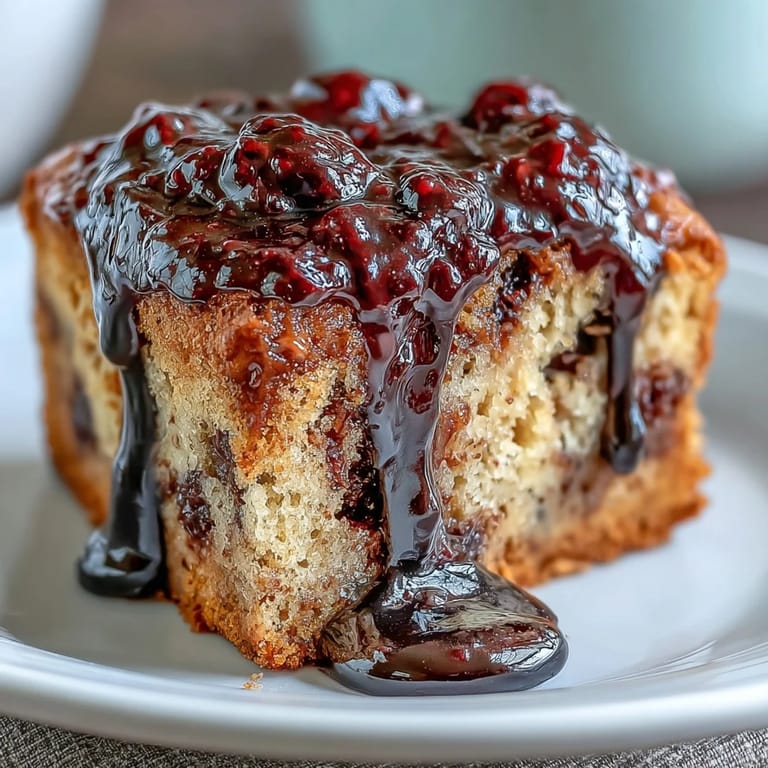
- Combine the black currants, sugar, and water in a small saucepan and bring to a boil, then reduce heat and simmer for 8 to 10 minutes until the mixture thickens and becomes syrupy. Stir in the lemon juice at the end and let it cool slightly before serving, as the sauce will thicken more as it cools.
 Save
Save I served this cake to my daughter's friend who said she didn't like peanut butter, and then watched her eat two slices before asking for the recipe. That moment crystallized something for me: sometimes a dish works because it respects what you already love while gently introducing something new, no apologies needed.
Why Black Currants Are Worth Hunting For
Black currants have this tart, almost wine-like flavor that most people have never experienced because they've been banned in many American states for decades due to agricultural concerns. Now that bans are lifted in most places, finding them feels like discovering a secret ingredient that's been hiding in plain sight. The flavor is nothing like blackberries or black raspberries; it's deeper, earthier, and weirdly sophisticated in a way that elevates simple desserts into something memorable.
The Peanut Butter Cake as Your Foundation
This cake is sturdy enough to hold the jam filling without getting soggy, but tender enough that you don't need a knife to eat it—a fork does the job perfectly. The key is the ratio of butter and peanut butter, which creates a naturally moist crumb that stays soft even a day later, which is rare for homemade cakes. I've found that this same cake base works beautifully with other fruit jams too, so once you master it, you've unlocked a whole category of simple but impressive desserts.
Serving, Storage, and Sauce Strategy
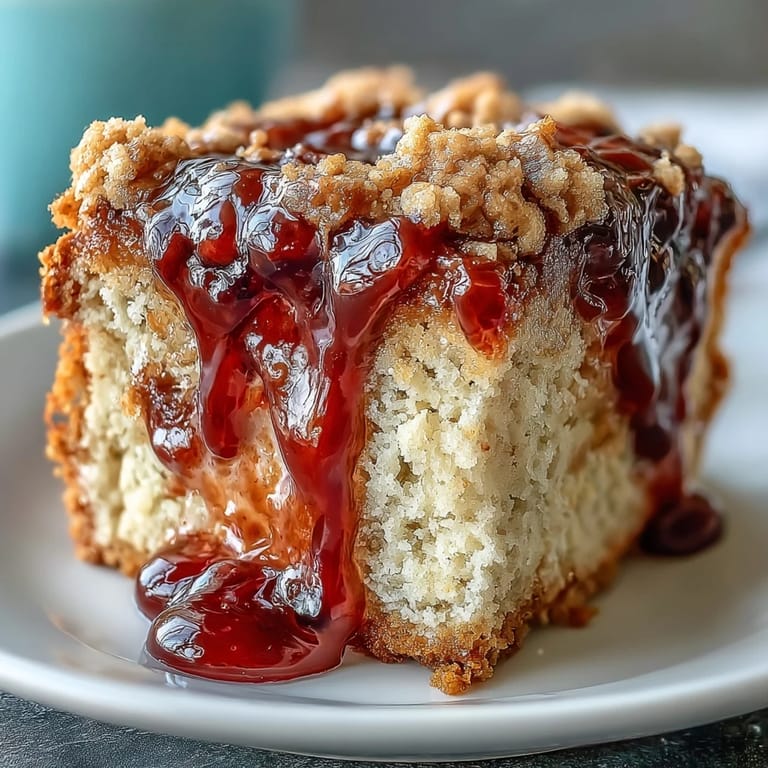
Drizzle the sauce over individual slices just before serving, so the cake stays dry and the sauce stays glossy instead of soaking in and making everything soggy. The cake itself keeps well in an airtight container for three days, and the sauce can be made up to two weeks ahead and stored in the refrigerator, warming it gently before serving. If you want to get ahead, assemble the whole cake the day before you serve it, cover it loosely with plastic wrap, and let the flavors get to know each other overnight.
- Cold milk is the traditional pairing: Trust the simplicity here; the coldness and slight vanilla sweetness balance the tartness of the currants perfectly.
- If you can't find black currants, frozen is actually better than fresh: The freezing process concentrates their flavor, so don't wait for fresh when frozen will deliver better results.
- This cake freezes beautifully for up to a month if wrapped well: Thaw it at room temperature and the texture returns completely unchanged.
 Save
Save Every time I make this cake, I think about that neighbor and her jar of black currant jam, how a small act of sharing led to something I now make for people I care about. That's what food does when you're paying attention.
Recipe Guide
- → Can I use other fruit jams instead of black currant?
Absolutely. Raspberry, blackberry, or strawberry jam work beautifully. The tartness of berries balances the rich peanut butter perfectly.
- → Should the cake be served warm or at room temperature?
Both ways are delicious. Warm cake enhances the jam's gooey texture, while room temperature allows flavors to meld. Drizzle sauce just before serving either way.
- → How should I store leftovers?
Keep covered at room temperature for up to 2 days. For longer storage, refrigerate in an airtight container for 4-5 days. Bring to room temperature before serving for best texture.
- → Can I make this cake gluten-free?
Yes. Substitute all-purpose flour with a 1-to-1 gluten-free flour blend. Ensure other ingredients, particularly baking powder and vanilla extract, are certified gluten-free.
- → Is the black currant sauce necessary?
Not essential, but highly recommended. The sauce adds an extra layer of fruitiness and visual appeal. You could also serve with whipped cream or vanilla ice cream instead.
- → Can I use natural peanut butter?
Natural peanut butter works, though the cake may be slightly denser. Creamy commercial peanut butter creates a lighter, fluffier texture due to added stabilizers.