 Save
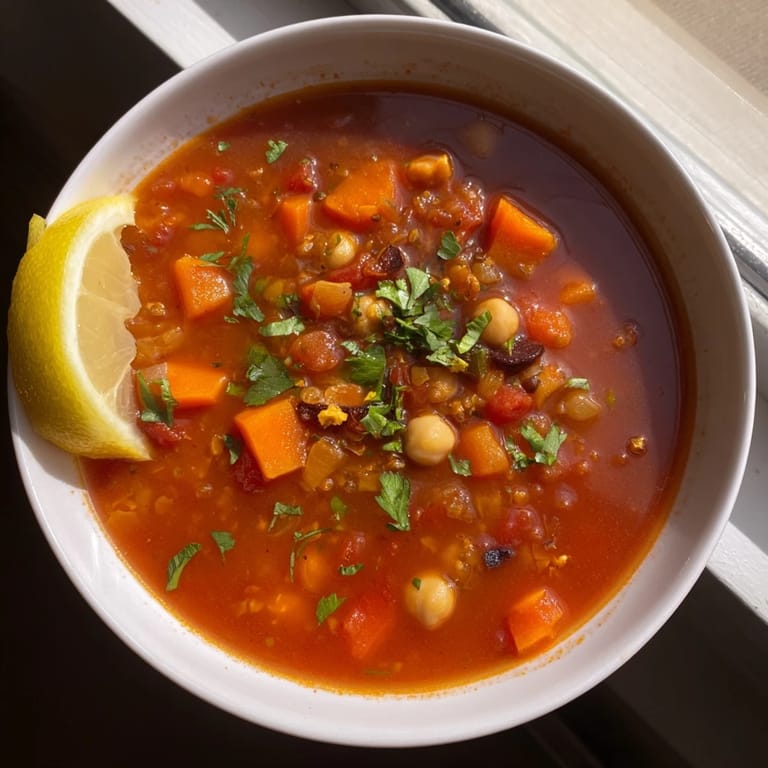
Save The first time I tasted harira, I was sitting in a modest kitchen in Marrakech during Ramadan, watching my host's mother stir a enormous pot with practiced, unhurried movements. She didn't measure anything—just knew when the spices hit that perfect moment of fragrance, when the soup had developed enough body to coat the back of a spoon. Years later, I recreated it at home on a cold evening, and that same warmth filled my kitchen, transporting me back instantly.
I made this for a dinner party during the first snowfall, and I remember my friend standing at the stove, mesmerized by how the tomato and spices transformed the broth into something almost jewel-like. Someone asked for seconds before finishing their first bowl, which never happens. That's when I knew this wasn't just comfort food—it was the kind of dish that quietly wins people over.
Ingredients
- Chickpeas: Use soaked dried ones if you have time—they hold their shape better than canned and absorb the spices more deeply, though canned work beautifully in a pinch.
- Lentils: Red or brown both work; red ones dissolve slightly and thicken the broth naturally, which I prefer.
- Olive oil: A good one matters here since it's one of the few fats carrying flavor.
- Tomato paste: This concentrates the umami; don't skip it even though it seems like a small amount.
- Spice blend: Cumin, cinnamon, ginger, turmeric, and paprika create the signature warmth—measure them out before you start, the way chefs do.
- Dried apricots: They dissolve into the broth and add a subtle sweetness that balances the spices without tasting dessert-like.
- Fresh cilantro and parsley: Stir these in at the very end so they stay bright and don't turn dark or lose their vibrancy.
- Lemon juice: A squeeze at the finish lifts everything, making the flavors sing instead of sitting flat.
Tired of Takeout? 🥡
Get 10 meals you can make faster than delivery arrives. Seriously.
One email. No spam. Unsubscribe anytime.
Instructions
- Build your aromatics:
- Heat olive oil and sauté the onion, celery, and carrots until they're soft and translucent, about 6–8 minutes. You're not looking for color here, just that sweet, mellow softness that forms the base of everything.
- Toast the spices:
- Add minced garlic and all your spices, stirring constantly for just a minute until the kitchen fills with that intoxicating fragrance. This brief cooking step brings the spices alive without burning them.
- Create your base:
- Stir in tomato paste and cook for another minute, then add the chopped tomatoes, chickpeas, lentils, and apricots. Mix until everything is coated and distributed evenly.
- Simmer gently:
- Pour in vegetable broth, bring to a boil, then reduce heat and let it simmer uncovered for 45–50 minutes, stirring occasionally. The chickpeas and lentils should be completely tender, and the broth will deepen in color and richness.
- Finish with brightness:
- Stir in cilantro, parsley, and a generous squeeze of lemon juice. Taste and adjust salt and pepper—the lemon makes a surprising difference in how all the flavors come together.
- Optional richness:
- If you like a heartier soup, stir in cooked vermicelli or rice right before serving so it doesn't get mushy.
 Save
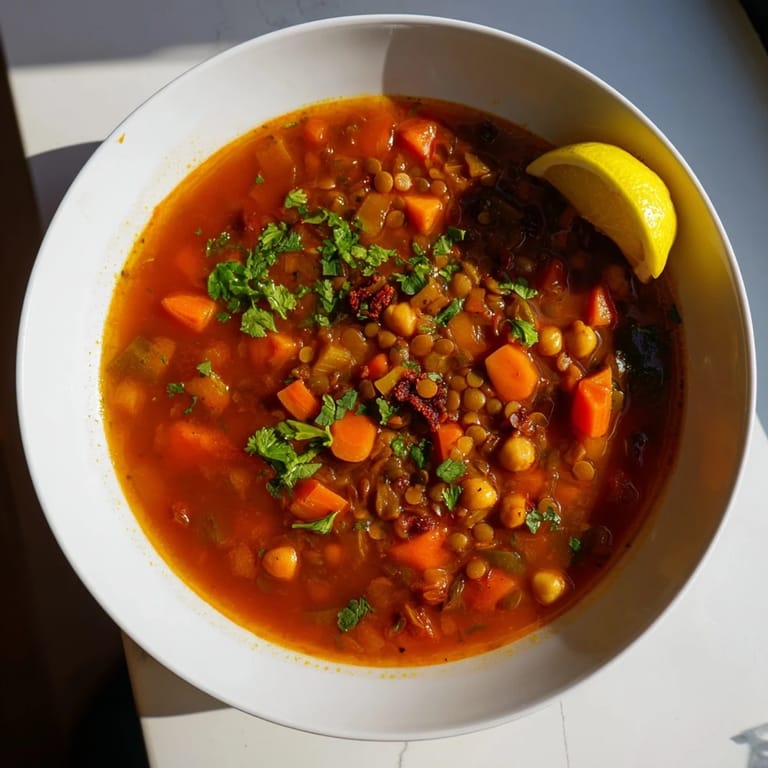
Save What I love most about this soup is that it's equally at home on a quiet Tuesday evening or at a table full of people celebrating something. My neighbor once called it 'the soup that brings everyone together,' and I've thought about that phrase every time I've made it since.
The Magic of Spice Layering
Harira's warmth comes from how the spices work together rather than any single one dominating. The cinnamon adds an almost imperceptible sweetness, the ginger brings a gentle heat that builds as you eat, and the turmeric gives it that golden hue that's part of the soup's identity. I learned early on that adding them all at once to cold oil loses their complexity—they need that hot oil to bloom and release their essential oils, which is why you toast them briefly after the aromatics are soft.
Customizing Your Bowl
While the base is wonderful as-is, this soup absolutely invites personalization. Some people add harissa paste for a spicy kick, others a pinch of saffron for luxury. I've made it with vegetable broth one week and switched to chicken broth the next without missing a beat. The beauty is that it's forgiving enough to absorb whatever you add while staying true to itself, which is the hallmark of a truly great recipe.
Storage and Serving
This soup tastes even better the next day once the flavors have had time to meld and settle, which makes it perfect for batch cooking. It keeps in the refrigerator for up to four days and freezes beautifully for up to three months—though I rarely have any left that long.
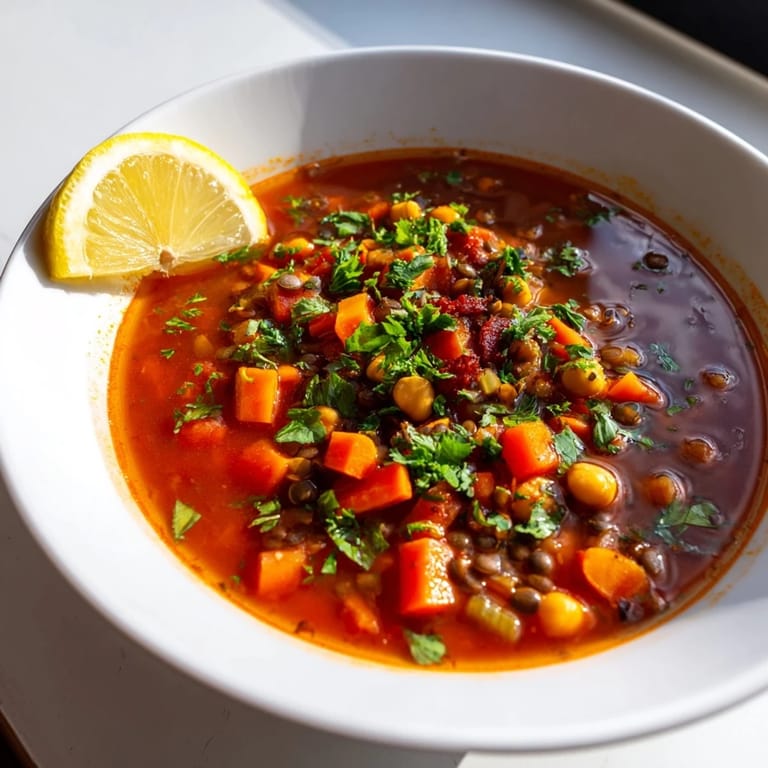
- Ladle into bowls and top with fresh cilantro, a squeeze of lemon, and perhaps some crunchy vermicelli if you want texture.
- Serve with warm bread for dipping, which is how it's traditionally eaten and which honestly transforms the whole experience.
- If reheating, add a splash of broth or water to loosen it back to a spoonable consistency.
 Save
Save This is the kind of soup that becomes part of your regular rotation not because you're chasing trends, but because it works. It's nourishing without being heavy, full of flavor without being complicated, and it somehow tastes like home no matter where you're eating it.
Recipe Guide
- → What makes Harira distinctively North African?
Harira combines regional spices like cumin, cinnamon, turmeric, and ginger with fresh herbs and legumes, reflecting North African culinary traditions.
- → Can I use canned legumes instead of dried ones?
Yes, canned chickpeas and lentils save preparation time; just drain and rinse them before adding to the soup.
- → How is the soup thickened naturally?
The combination of lentils, chickpeas, and slow simmering naturally thickens the soup, creating a hearty texture without additives.
- → What role do apricots play in this dish?
Chopped dried apricots add a subtle sweetness that balances the savory and spiced elements in the soup.
- → Are there optional garnishes to enhance flavor?
Fresh lemon wedges, extra cilantro or parsley, and adding cooked vermicelli or rice can enrich both flavor and texture.
- → How can I adjust the spice level?
Adding cayenne pepper increases heat, while omitting it keeps the soup mild yet aromatic with warming spices.