 Save
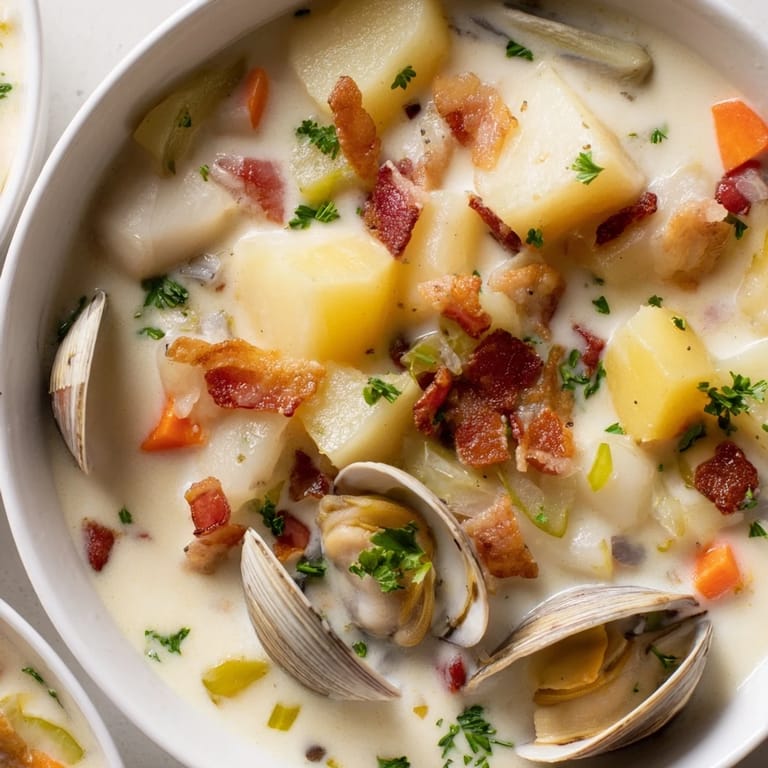
Save There's something about a bowl of New England clam chowder that stops time. The first time I really tasted it properly wasn't in a fancy restaurant—it was in a cramped kitchen on a foggy November morning when my neighbor handed me a thermos and said, "Trust me." One spoonful and I understood why people drive hours for it. That creamy broth studded with tender clams and yielding potatoes became my obsession, and after making it dozens of times, I finally figured out why some versions taste thin and forgettable while others feel like home in a bowl.
I made this for my sister on her first visit home after moving away, and she was quiet for an entire spoonful—the good kind of quiet. She asked if I'd learned to cook differently, and I realized it wasn't the cooking that changed, it was knowing that a bowl of soup could actually say the things you're nervous to speak aloud. That's when I stopped thinking of this as just a recipe and started thinking of it as an excuse to gather people you miss.
Ingredients
- Fresh littleneck clams (2 lbs): These medium-sized clams are reliable and sweet without being oversized or tough; always buy the day you're cooking and smell for a briny, ocean-like scent that means they're alive and fresh.
- Clam juice (1 cup bottled or reserved): This is your flavor foundation, so using the liquid from steaming your clams is always better than bottled alone, though bottled adds depth when you need more volume.
- Russet potatoes (2 medium, about 2 cups diced): Their starch thickens the chowder naturally as they soften, and they hold their shape better than waxy potatoes if you don't overcook them.
- Yellow onion, celery, and carrot (1 medium each, finely chopped): This aromatic base should be cut small enough to vanish into the soup while still infusing every spoonful with sweetness and depth.
- Garlic (2 cloves, minced): Add this after the softer vegetables so it doesn't brown and turn bitter, a mistake I made enough times to learn the hard way.
- Heavy cream and whole milk (1½ cups and 1 cup): Using both instead of all cream gives you richness without that cloying feeling, and the milk helps the soup feel more like comfort than indulgence.
- Unsalted butter (2 tbsp): This is your cooking fat after the bacon renders, and it helps build the roux that thickens everything.
- All-purpose flour (2 tbsp): This thickens the soup when combined with butter into a roux, so whisk it constantly to avoid lumps.
- Bacon (2 slices, diced): Cook this first and keep the fat—it's liquid gold for sautéing the vegetables and adding a subtle savory note that people can never quite identify.
- Bay leaf and dried thyme: These quiet herbs do the real work, infusing the broth without announcing themselves; fish out the bay leaf before serving.
- Salt and freshly ground black pepper: Taste as you go because the clam juice and bacon already bring saltiness, and you'll need less than you'd expect.
- Fresh parsley (2 tbsp chopped) and oyster crackers: Parsley adds brightness right before serving, and oyster crackers are optional but they're there if someone wants texture and comfort in one bite.
Tired of Takeout? 🥡
Get 10 meals you can make faster than delivery arrives. Seriously.
One email. No spam. Unsubscribe anytime.
Instructions
- Steam the clams until they open:
- Rinse each clam under cold water and scrub the shells with a stiff brush to remove sand and grit. In a large pot with a lid, add the clams and 2 cups of cold water, then turn the heat to high and bring everything to a rolling boil—you'll hear them rattling against the pot. Cover immediately, reduce heat to medium, and let them steam for 5 to 7 minutes until the shells crack open like little treasure boxes. Discard any clams that refuse to open; they're not safe to eat.
- Remove the clam meat and reserve the liquid:
- Once they're cool enough to touch, gently pry open each shell and remove the tender meat, chopping it into bite-sized pieces. Strain the cooking liquid through a fine sieve lined with cheesecloth or a coffee filter to catch any sand, then set both the clam meat and this liquid aside—this is liquid gold for your chowder.
- Cook the bacon and build your aromatic base:
- In a large Dutch oven or heavy-bottomed pot, lay the diced bacon over medium heat and let it render slowly until the edges turn crispy and brown. Scoop out the bacon with a slotted spoon and set it aside, but leave every drop of that fat behind. Add the butter to the warm bacon fat, then tumble in your chopped onion, celery, carrot, and garlic, stirring occasionally until everything softens and becomes fragrant, about 5 minutes.
- Make a roux and add the clam liquid:
- Sprinkle the flour over the vegetables and stir constantly for about 1 minute—you're creating a paste that will thicken the soup without lumps. Gradually pour in your reserved clam cooking liquid and bottled clam juice, stirring slowly and making sure to scrape up all the browned bits stuck to the bottom of the pot, since those carry the deepest flavors.
- Simmer the potatoes until tender:
- Add the diced potatoes, bay leaf, and dried thyme, then increase the heat slightly and bring the whole pot to a gentle simmer. Let it bubble quietly for 10 to 12 minutes, stirring occasionally, until you can easily pierce the largest potato piece with a fork. If the potatoes are too firm, the soup will taste raw; if they're too soft, they'll dissolve and the chowder loses texture.
- Add the clams, bacon, and cream:
- Reduce the heat to low—this next part is crucial because boiling cream will cause it to break and look grainy. Stir in the chopped clams, reserved bacon, heavy cream, and whole milk, then let everything warm through gently for 5 to 10 minutes, stirring occasionally so nothing sticks to the bottom.
- Season and serve:
- Fish out and discard the bay leaf, then taste a spoonful and season carefully with salt and pepper—remember that the clam juice and bacon already add salt, so you'll likely need less than you think. Ladle the chowder into bowls, scatter fresh parsley over the top, and serve immediately with oyster crackers on the side if you like.
 Save
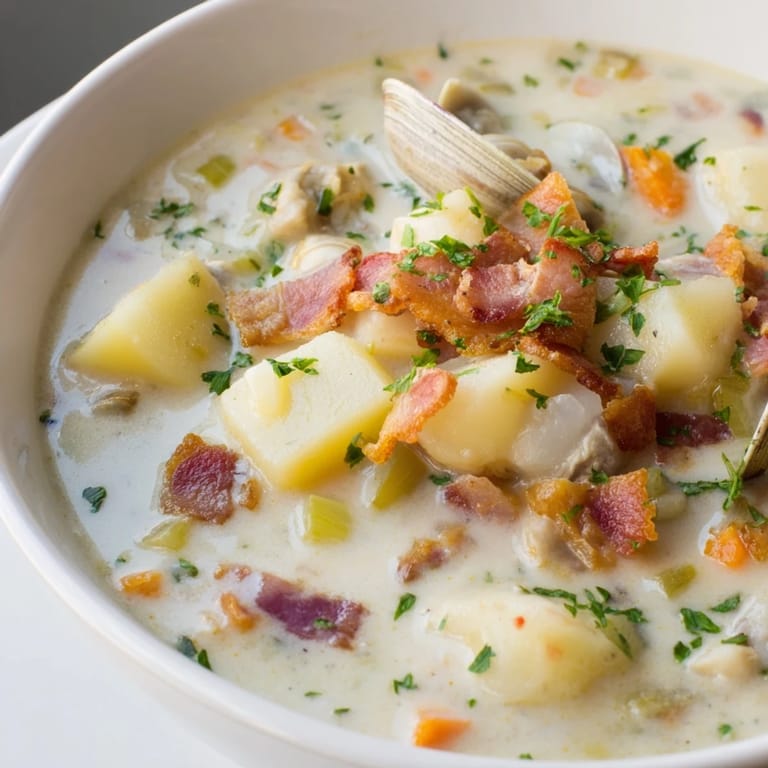
Save The last time someone asked me for this recipe, I realized I wasn't just sharing ingredients and steps—I was handing over permission to make something that tastes like it took all day, even when it barely takes an hour. That's the real magic of a good chowder.
Finding Your Perfect Clams
Not all littleneck clams are created equal, and the quality of your clams determines everything about this soup. Hunt for clams that feel heavy for their size and smell unmistakably of the ocean—if there's any hint of ammonia or sulfur, keep walking. The best clams come from fishmongers who get them fresh daily, and they're worth the extra effort to find. If you can't get fresh clams, frozen clams in their shells work, though canned clams should only be your backup plan since they lose some of their delicate sweetness.
The Roux Is Your Foundation
That mixture of butter and flour might seem like a small detail, but it's the difference between silky soup and watery soup that disappoints. When you add the flour to the hot butter and vegetables, you're not just coating it—you're gently cooking out any raw flour taste while the heat and fat create a paste that will thicken the liquid evenly. Stir constantly so nothing burns or clumps, and add your liquid slowly at first, whisking as you go, so the flour fully dissolves before you commit to adding everything at once. I learned this watching my grandmother who never measured the flour but somehow always knew exactly when the paste looked right.
Making It Your Own
New England clam chowder has deep roots and traditions, but your kitchen is where it becomes your own. Some people swear by a splash of white wine stirred in before adding the cream, others add a pinch of cayenne or smoked paprika for warmth without heat. I've made versions lighter with half-and-half instead of cream and milk, and they taste just as good, only different. The skeleton of the recipe stays the same, but the soul comes from your hands and your taste buds knowing what makes you happy.
- Try stirring in a splash of dry white wine after you add the clam liquid for a subtle brightness that plays against the richness.
- A light dusting of smoked paprika just before serving adds depth without heat, or a tiny pinch of cayenne if you want warmth that sneaks up on you.
- For a lighter version, replace the heavy cream and whole milk with 2½ cups of half-and-half, and you'll get something creamy and still deeply satisfying.
 Save
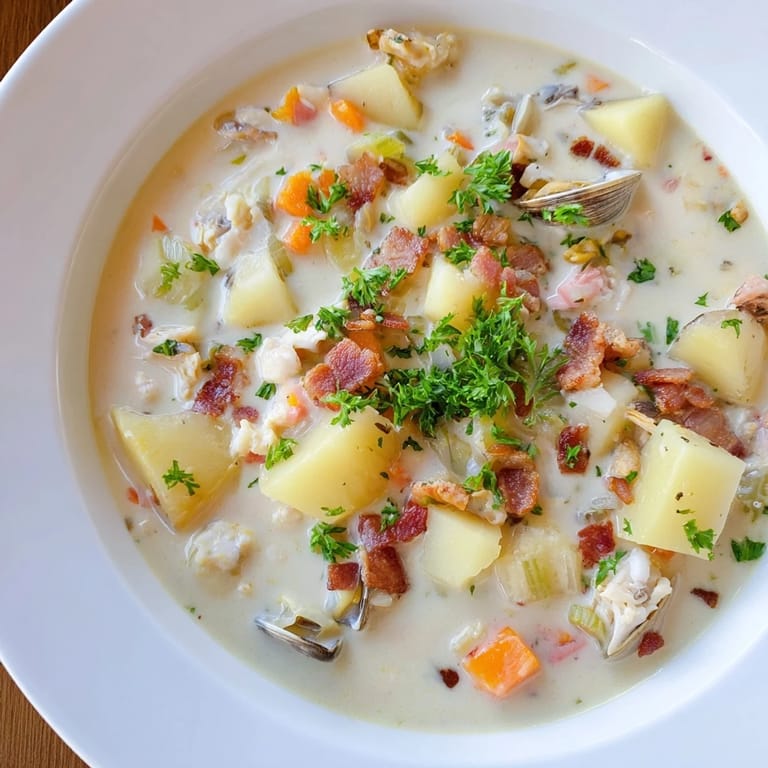
Save There's a reason this soup has survived centuries and crossed oceans with people who missed home—it's honest food that tastes like it knows exactly what it's supposed to be. Make it for someone you love.
Recipe Guide
- → How do you clean and prepare littleneck clams?
Rinse clams under cold water and scrub their shells to remove grit. Steam them until they open, discard any unopened ones, then remove the meat for use.
- → What is the purpose of making a roux in this chowder?
The roux thickens the broth, creating a creamy base that blends the flavors of sautéed vegetables, clams, and cream beautifully.
- → Can I substitute ingredients for a lighter version?
Yes, replacing heavy cream and milk with half-and-half reduces richness while maintaining smoothness.
- → What herbs enhance the flavor of this dish?
Bay leaf and dried thyme add subtle aromas that complement the clams and vegetables, elevating the chowder’s flavor.
- → How should leftover chowder be stored?
Keep leftovers in an airtight container in the refrigerator for up to 2 days; reheat gently to avoid curdling the cream.
- → What side pairs well with this chowder?
Oyster crackers or crusty bread provide a perfect textural contrast and enhance the enjoyment of the creamy broth.