 Save
Save The first time I truly understood what made Moroccan food sing was standing in my friend Aisha's kitchen in Marrakech, watching her layer phyllo sheets with the kind of practiced grace that only comes from making something a hundred times. She was preparing pastilla, and I was mesmerized by the way she moved between the delicate pastry and a filling that smelled like a spice market at dawn. When we pulled it from the oven golden and crackling, and she dusted it with powdered sugar and cinnamon, I realized this wasn't just a recipe—it was a edible paradox, where sweet and savory dance together on the same plate.
I made this for a small gathering last autumn, and what struck me most wasn't the compliments—though there were many—but the quiet moment when everyone paused mid-bite, genuinely surprised by the sweetness dusting the top mingling with the savory filling. One guest asked if I'd made it myself, and I realized that pastilla has a way of making the cook feel a little bit like a magician.
Ingredients
- Bone-in chicken thighs (1.5 lbs): They stay moist and flavorful during the long simmer, and the bones infuse the cooking liquid with richness you won't get from white meat.
- Onions and garlic (2 onions, 3 cloves): These form the aromatic base; finely chopping them ensures they dissolve into the sauce and flavor every shred of chicken.
- Warm spices (ginger, cinnamon, turmeric, nutmeg, black pepper): Each one builds on the last; don't skip any because they create the signature Moroccan depth.
- Saffron threads (1/2 tsp, optional): If you have it, soak it first to unlock its subtle floral note that elevates the whole dish.
- Toasted almonds (1/2 cup): Toast them yourself just before adding to the filling—they add crunch and a nutty sweetness that plays beautifully against the meat.
- Fresh herbs (parsley and cilantro): These brighten the richness of the filling and should be added after cooking to preserve their fresh taste.
- Phyllo sheets (10 sheets): Work with them cold straight from the package, and keep unused sheets covered with a damp towel so they don't dry out and crack.
- Unsalted butter (melted, for brushing): This is what creates that legendary crispness; don't skimp, and brush generously between each layer.
- Powdered sugar and cinnamon (for dusting): The sweet finish is essential—it's what makes pastilla uniquely itself, so don't treat it as optional.
Tired of Takeout? 🥡
Get 10 meals you can make faster than delivery arrives. Seriously.
One email. No spam. Unsubscribe anytime.
Instructions
- Build your aromatic base:
- Heat olive oil in a large Dutch oven over medium heat and sauté your finely chopped onions and garlic until they turn translucent and smell sweet. This takes about 3-4 minutes and sets the foundation for everything that follows.
- Brown the chicken with spices:
- Add your chicken thighs directly to the onion mixture along with all the warm spices—ginger, cinnamon, turmeric, nutmeg, black pepper, and saffron if using. Brown the chicken on all sides for about 5 minutes; you want to hear it sizzle and smell those spices toasting lightly.
- Simmer until tender:
- Pour in chicken stock, cover the pot, and let it bubble gently for 30-35 minutes until the chicken is so tender it falls from the bone. The kitchen will smell absolutely incredible during this time.
- Shred and reduce:
- Remove the chicken, let it cool enough to handle, then shred the meat and discard the bones and skin. Return the pot to the heat and let that cooking liquid reduce down to about 1 cup of slightly thickened, concentrated sauce—this concentrates all those flavors.
- Fold in the finishing touches:
- Once the mixture cools, stir in your toasted almonds, chopped parsley, and cilantro. The filling should smell fresh and complex at this point.
- Scramble eggs gently:
- In a separate pan, melt butter and add beaten eggs with a pinch of salt, stirring slowly until they're just set but still soft and custard-like. Fold these into the cooled chicken mixture—the warmth will bring everything together while keeping the texture tender.
- Layer with phyllo:
- Preheat your oven to 375°F. Brush a 10-inch round baking dish with melted butter, then lay down phyllo sheets one at a time, brushing each generously with butter and letting the edges overhang the pan.
- Fill and fold:
- Spread the chicken-egg filling evenly across your phyllo base, then fold those overhanging sheets over the top. Layer 4 more buttered phyllo sheets on top, tucking edges carefully into the pan, and finish with one final buttered sheet on top.
- Bake until golden:
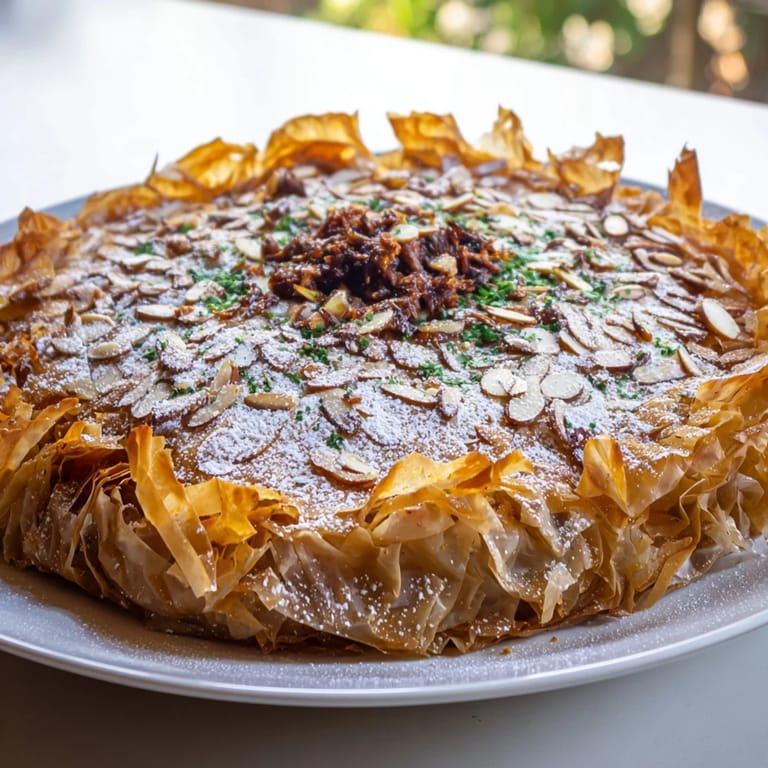
- Bake for 35-40 minutes until the top is deep golden brown and you can hear the phyllo crackle when you move the pan. Let it rest for 10 minutes before the final step.
- The sweet finishing touch:
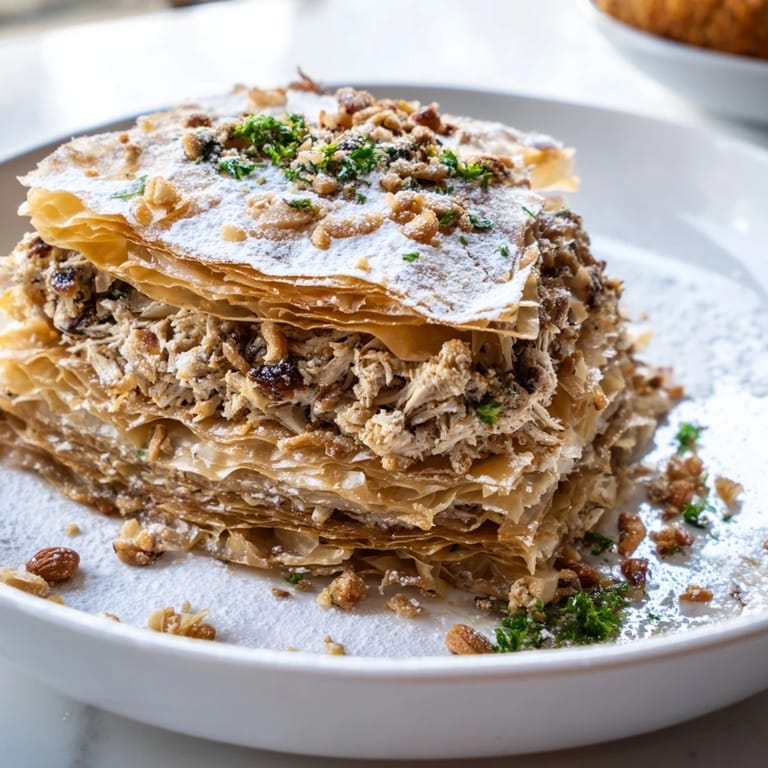
- Dust the warm pastilla generously with powdered sugar and cinnamon—this is signature and essential, not decoration.
 Save
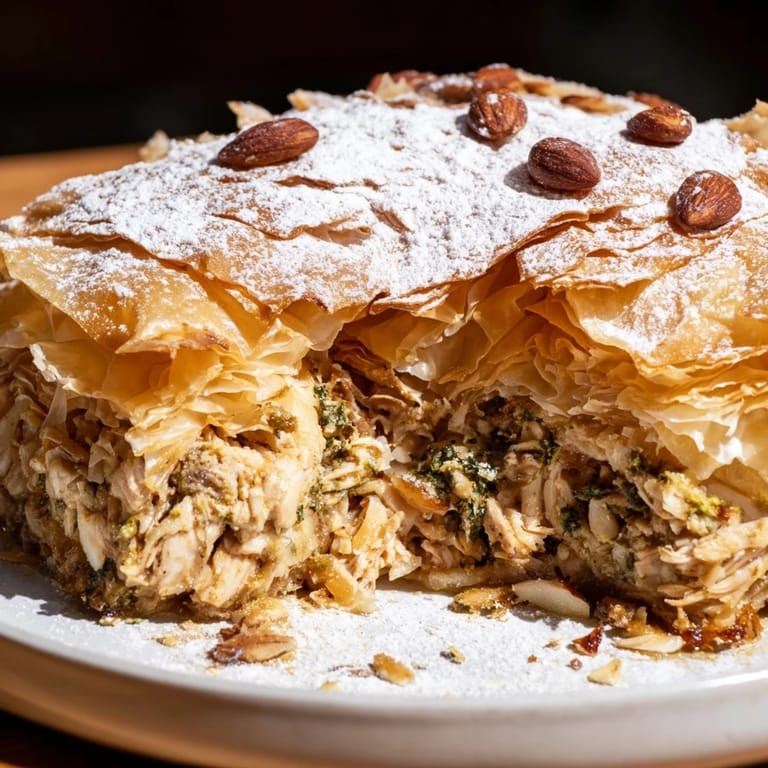
Save There's a moment when you pull pastilla from the oven and that phyllo shatters under your knife, revealing the tender filling within, when you understand why this dish has survived centuries and traveled across continents. It's not just the flavors—it's the experience of tasting something that feels both elegant and deeply personal at once.
The Sweet and Savory Magic
Pastilla works because it breaks every rule about flavor pairing that Western cooking teaches us, yet it feels completely natural. The dusting of powdered sugar and cinnamon isn't a garnish; it's an integral part of the dish. When you eat pastilla, that sweetness plays against the savory meat and eggs, and somehow it all makes sense. The first time you taste this combination, your brain needs a moment to catch up to your palate.
Why This Dish Matters in Moroccan Cooking
Pastilla represents something important in Moroccan cuisine—the layering of techniques and flavors that build complexity from simple ingredients. Traditionally made with pigeon, it's equally stunning with chicken, and that flexibility is part of its beauty. What makes it special isn't any single component but the way they come together: the spiced meat, the soft eggs, the crispy phyllo, and that unexpected sweetness all playing their parts.
Making It Your Own
Once you've made pastilla once, you'll find yourself wanting to adjust it slightly each time. Some cooks add dried apricots or dates to the filling for extra sweetness and texture, while others add a pinch of ground cloves or a touch of harissa for heat. The foundation stays the same, but the variations are endless. The beauty of this recipe is that it's both traditional and adaptable, which is probably why it's survived so long.
- Try adding chopped dried apricots or dates mixed into the filling for subtle sweetness and chew.
- A pinch of harissa stirred into the filling adds gentle heat that complements the spices beautifully.
- Serve pastilla alongside a bright Moroccan salad with preserved lemons and a pot of hot mint tea for the complete experience.
 Save
Save Making pastilla is an act of care, a way of saying to the people you're feeding that they matter enough for you to fold phyllo sheets and layer spices carefully. Once you've made it, you'll understand why it shows up on special occasions in Moroccan kitchens.
Recipe Guide
- → What type of meat is traditionally used in pastilla?
Traditionally, pigeon is preferred, but chicken thighs are a common and accessible substitute that provides rich flavor and tenderness.
- → How do you achieve the crispiness of the phyllo pastry?
Brushing each phyllo sheet generously with melted butter before layering ensures a golden, crisp texture after baking.
- → Can the filling be made ahead of time?
Yes, preparing the spiced meat filling and egg mixture in advance allows flavors to meld and simplifies the assembly process.
- → What spices are essential for the filling's flavor?
Key spices include cinnamon, ginger, turmeric, black pepper, nutmeg, and optionally saffron, creating the signature aromatic profile.
- → Are there any common variations to enhance the filling?
Adding chopped dried apricots or dates introduces a subtle sweetness that complements the savory spices beautifully.
- → How long should the pastilla rest after baking?
Allowing the pie to rest for about 10 minutes helps the layers set properly and makes it easier to slice.