 Save
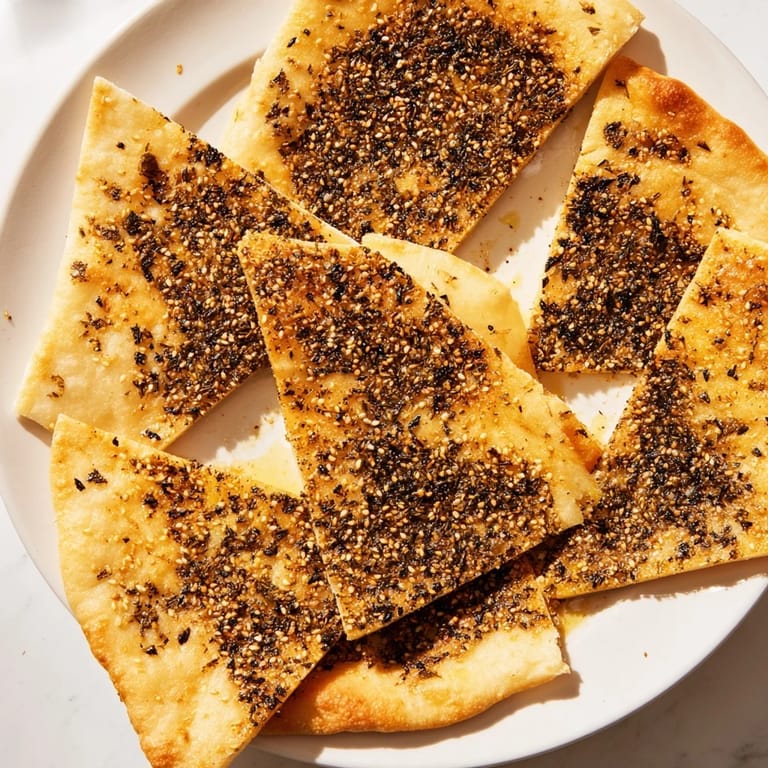
Save My neighbor brought over a platter of zaatar bread one evening, still warm from her oven, and the smell alone made me stop everything I was doing. The way the olive oil glistened on top, how the sesame seeds caught the light—I knew I had to learn to make it myself. Now whenever I pull a batch from the oven, that same golden moment happens in my kitchen, and I understand why she shared it so willingly.
I made these for a casual lunch party, worried they wouldn't be special enough, but watched them disappear while people were still arriving. Someone asked for the recipe before they'd even finished eating, and I realized that sometimes the simplest things—good bread, good spices, good oil—are exactly what people are hungry for.
Ingredients
- All-purpose flour (2 cups): The foundation of your dough, and it doesn't need to be fancy—standard grocery store flour works beautifully here.
- Instant dry yeast (1 teaspoon): This is what makes the magic happen; don't skip the rising time even though you're impatient.
- Sugar (1 teaspoon): Just enough to wake up the yeast and help it do its job.
- Salt (3/4 teaspoon): Brings out the flavor of everything else, especially the zaatar.
- Olive oil (2 tablespoons plus 1/3 cup for topping): Use extra virgin for the topping if you can; it makes a real difference in the final taste.
- Warm water (2/3 cup): The temperature matters more than you'd think—too hot and you'll kill the yeast, too cold and nothing rises.
- Zaatar spice blend (1/4 cup): This is where all the character lives; it's a mixture of dried herbs, sumac, and sesame that tastes like the Levantine sun.
- Toasted sesame seeds (2 tablespoons): They add a nutty crunch and should be toasted before you use them for maximum flavor.
Tired of Takeout? 🥡
Get 10 meals you can make faster than delivery arrives. Seriously.
One email. No spam. Unsubscribe anytime.
Instructions
- Build your dough base:
- In a large bowl, whisk together the flour, yeast, sugar, and salt so everything's evenly distributed. Add the olive oil and begin pouring in the warm water gradually, stirring as you go, until you have a shaggy, soft dough that's starting to come together.
- Knead until smooth:
- Turn your dough onto a lightly floured surface and knead for 5-7 minutes, folding it over itself, pushing with the heel of your hand, feeling it transform from rough to silky. You'll know it's ready when it springs back slightly when you poke it.
- Let it rise undisturbed:
- Place the dough in an oiled bowl, cover it with a damp kitchen towel, and find a warm corner of your kitchen where it can sit for about an hour. You're looking for it to roughly double in size, though honestly, it's hard to mess up this part.
- Preheat and prepare:
- While the dough rises, heat your oven to 220°C (425°F) and line two baking sheets with parchment paper. This is a good moment to toast your sesame seeds in a dry pan if you haven't already.
- Shape the breads:
- Once risen, divide the dough into four equal pieces, shape each into a ball, then gently flatten into a round about 6-7 inches across—they don't need to be perfect circles. Place them on your prepared sheets with a little space between each one.
- Mix your topping:
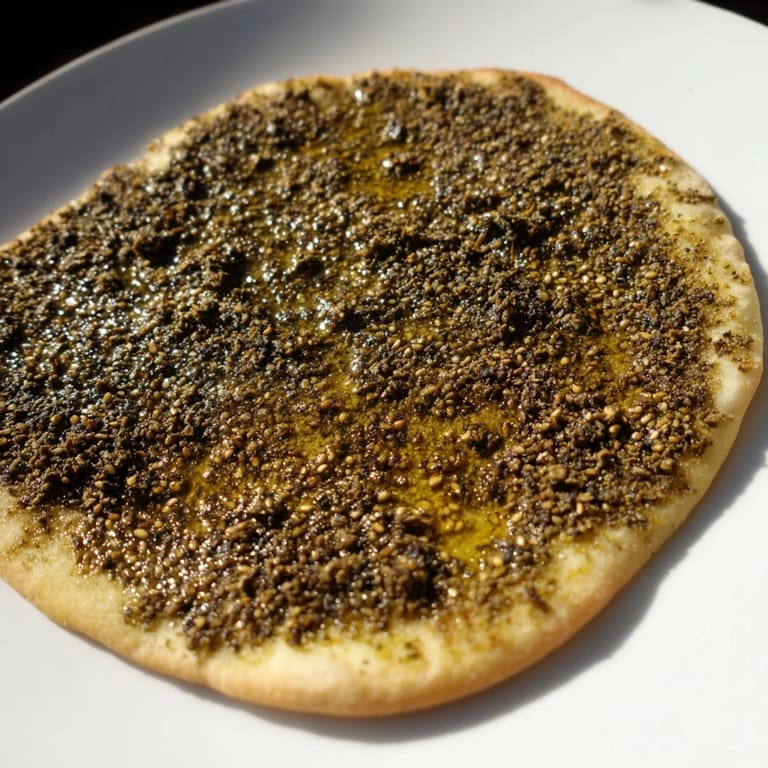
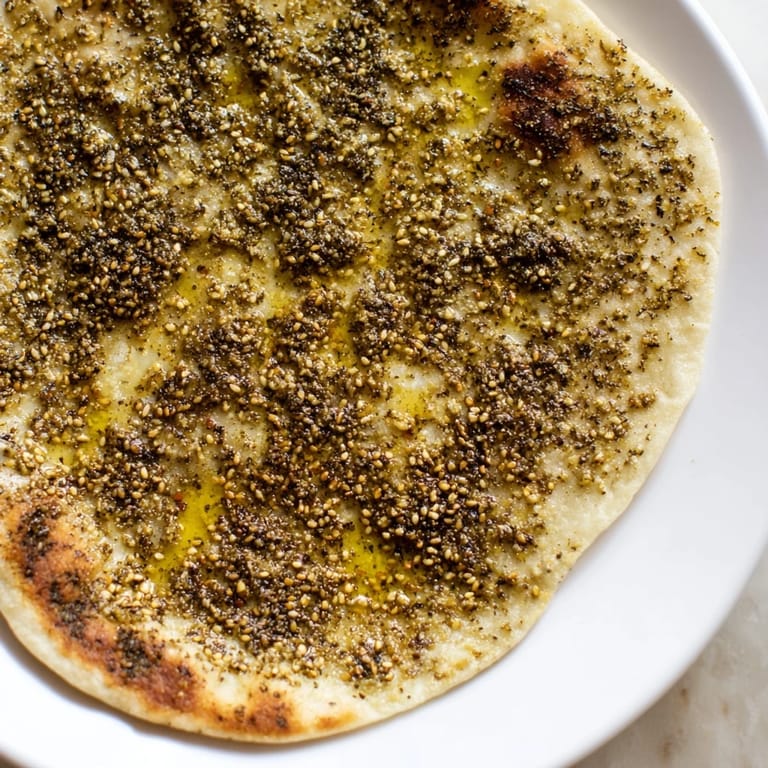
- Combine the zaatar, toasted sesame seeds, and extra virgin olive oil in a small bowl, stirring until you have a thick, fragrant paste. It should look almost jammy.
- Top generously:
- Spread the zaatar mixture evenly over each dough round, leaving just a tiny border at the edges so the bread can puff slightly. Don't be shy with the topping—this is where the flavor lives.
- Bake until golden:
- Slide the sheets into your preheated oven and bake for 12-15 minutes, until the edges are crisp and the bread has turned a beautiful golden brown. The kitchen will smell incredible.
- Serve it right:
- Pull them out and let them cool for just a minute or two, then serve warm or at room temperature alongside labneh, olives, fresh vegetables, or whatever else you have on hand.
 Save
Save My daughter came home from school one afternoon, took one bite of this bread still warm from the oven, and asked if we could make it together next time. That's when I knew I'd found something worth keeping in rotation, something that could become part of our regular kitchen conversation.
Why This Bread Matters
Zaatar bread sits at the intersection of simplicity and sophistication—it's easy enough to make on a busy weeknight, but feels special enough to serve when people matter. The beauty of it is that once you understand the basic dough, you've unlocked a whole category of Middle Eastern breads that follow the same gentle rhythm. I've started thinking of it as the bridge between everyday baking and something more intentional, the kind of bread that makes people slow down and taste what they're eating.
Timing and Temperature
The oven temperature is important here—220°C (425°F) is hot enough to give you that crispy exterior without burning the zaatar on top. I've learned that if your oven runs hot, you might need to reduce it slightly or watch carefully after the 12-minute mark. Every oven has its own personality, so the first time you make these, stay nearby and get to know how yours behaves with this particular bread.
Variations and Serving Ideas
Once you've made this version, you'll start seeing possibilities everywhere—a pinch of chili flakes transforms it into something more assertive, while a sprinkle of fresh thyme before baking pulls it in a different direction entirely. I've learned that the basic dough is forgiving, so you can experiment with different spice blends or even create your own, which is where the real joy of cooking comes in. The bread is stunning alongside hummus or baba ganoush, but I've also discovered it's perfect with just good cheese, fresh greens, and a drizzle of tahini sauce.
- For extra fluffiness, let the shaped dough rest for 10 minutes before adding the topping and baking.
- Add chili flakes, dried oregano, or fresh herbs to the zaatar mixture if you want to personalize it.
- Store leftovers in an airtight container and warm gently before serving to restore that just-baked texture.
 Save
Save This bread has become my quiet answer to the question of what to bring or what to make when I want to feel close to people while feeding them. There's something about baking together, about the smell and the warmth, that opens up conversation in a way other things don't.
Recipe Guide
- → What is the main spice blend used in this flatbread?
The flatbread is topped with a fragrant zaatar blend, combined with sesame seeds and olive oil, giving it a distinctive Middle Eastern flavor.
- → How long should the dough rise before baking?
Allow the dough to rise in a warm place for about 1 hour or until it doubles in size to achieve a light texture.
- → Can this flatbread be made vegan?
Yes, the ingredients like olive oil, flour, and yeast ensure this flatbread fits vegan and dairy-free diets.
- → What baking temperature is recommended for this bread?
Preheat the oven to 220°C (425°F) and bake the flatbreads for 12-15 minutes until golden and crisp at the edges.
- → Are there tips for enhancing the texture of the bread?
For a fluffier result, let the shaped dough rest for 10 minutes before spreading the zaatar topping and baking.
- → What are some serving suggestions?
Serve warm or at room temperature alongside labneh, olives, hummus, or baba ganoush for a complete Middle Eastern experience.