 Save
Save The first time I made labneh, I didn't even know what I was making. A friend had left a container of thick yogurt and cheesecloth on my counter with a cryptic note: "Just let it sit." Hours later, I peeked at it curiously, and what emerged was pure magic—a creamy, tangy cheese that tasted like the Mediterranean in a single spoonful. Now whenever I make it, I'm transported back to that moment of kitchen discovery, watching something so simple transform into something so essential.
I remember serving labneh at a small dinner party and watching my grandmother—who hadn't tasted it in decades—tear up a little when she spread it on warm pita. She called it the taste of home, and suddenly this humble drained yogurt became a bridge across time and distance. That's when I understood why this cheese matters so much in Levantine kitchens.
Ingredients
- Full-fat plain yogurt (1 kg): This is the star, so choose the thickest, creamiest yogurt you can find—Greek yogurt is ideal because it drains faster and yields richer results than thinner varieties.
- Fine sea salt (½ tsp): Salt seasons the yogurt and helps draw out whey, so don't skip it or reduce it, even though the amount seems tiny.
- Extra-virgin olive oil (2 tbsp): This isn't just a garnish; it's protection and flavor, creating a silky surface that keeps the cheese fresh and adds that authentic Mediterranean touch.
- Dried mint or zaatar (1 tsp, optional): A sprinkle of herbs transforms labneh from simple to something that feels intentional and special on the table.
- Aleppo pepper or sumac (pinch, optional): These add warmth and brightness without overwhelming the delicate tanginess of the cheese.
Tired of Takeout? 🥡
Get 10 meals you can make faster than delivery arrives. Seriously.
One email. No spam. Unsubscribe anytime.
Instructions
- Salt the yogurt:
- Stir the salt into the yogurt until it's fully dissolved and the mixture looks uniform. This step matters more than it seems—the salt helps break down the yogurt's structure and flavors the final cheese from the inside out.
- Prepare your strainer:
- Double-layer your cheesecloth or kitchen towel and line your sieve, then nest the sieve over a bowl deep enough to catch all the whey without the cloth touching the liquid below. This setup is your cheese-making infrastructure, so take a moment to get it right.
- Transfer and cover:
- Pour the salted yogurt into the lined sieve and gather the cloth edges up and over it like you're tucking it into bed. This wrapping keeps dust out and helps the yogurt drain evenly.
- Refrigerate and wait:
- Set it in the fridge and let time work its magic—12 hours for soft, spreadable labneh, up to 24 hours if you want something firmer that holds its shape. The waiting is the real cooking here.
- Transfer to a serving dish:
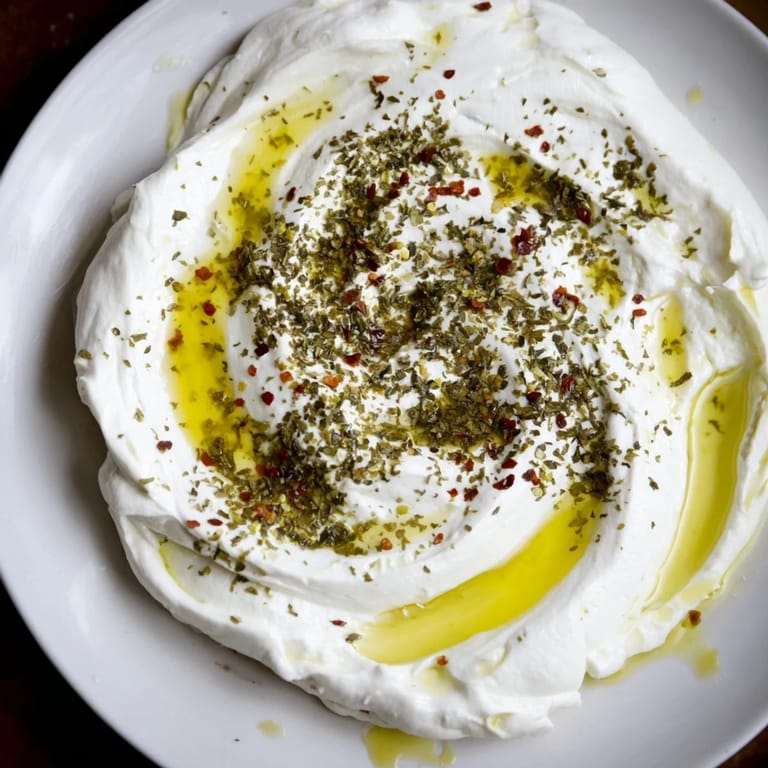
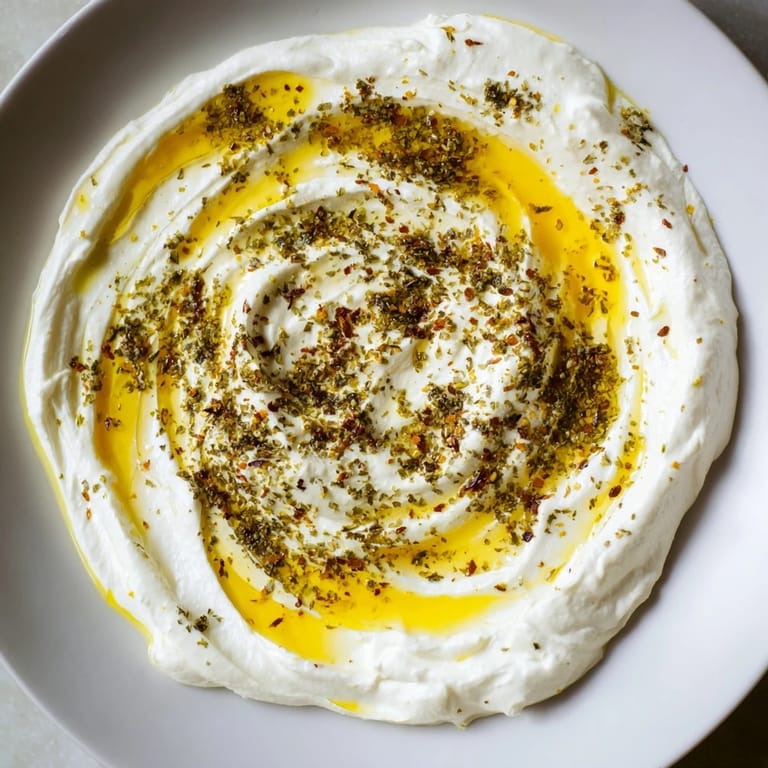
- Once it's reached your desired thickness, unwrap the cheesecloth gently and scoop the labneh into a shallow bowl or plate. The texture should be rich and creamy, clinging together but still soft.
- Finish with oil and herbs:
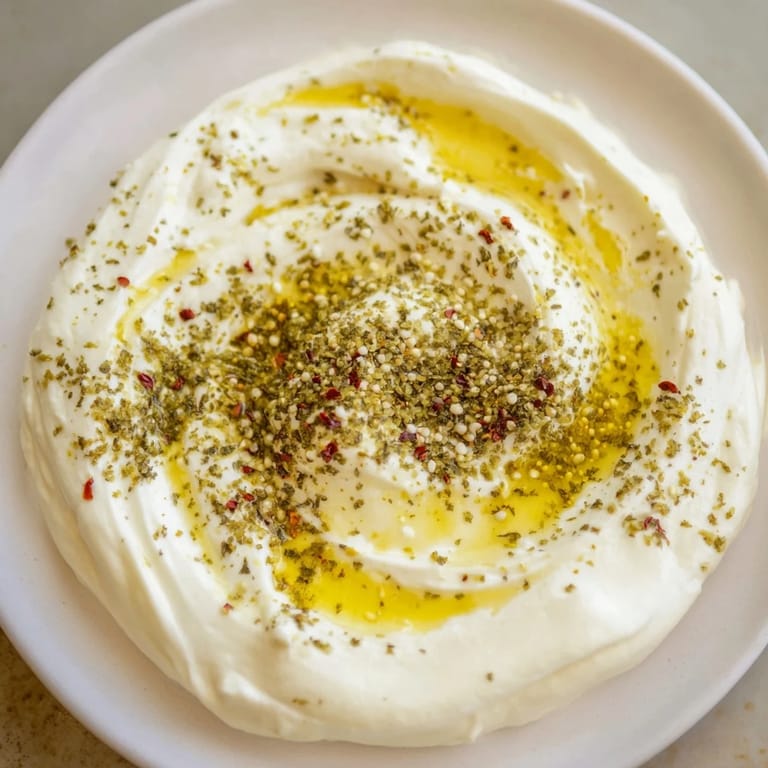
- Drizzle olive oil generously over the top—this is both flavor and preservation—then dust with dried mint, zaatar, or a pinch of Aleppo pepper if you have it. Serve chilled with warm pita, vegetables, or as part of a mezze spread.
 Save
Save There's something meditative about labneh-making—setting it up, then letting go. I've made it while stressed, tired, distracted, and every single time it emerges perfect, reminding me that some of the best things in life demand nothing but patience and trust. It's become a kitchen ritual that centers me.
The Science of Straining
Labneh works because yogurt is already cultured milk broken down by bacteria, and straining simply removes the liquid whey, concentrating the curds and tang. The longer you strain, the firmer it becomes—it's a sliding scale from yogurt to cheese, and you control exactly where on that spectrum you want to land. Understanding this helped me stop worrying about whether I was doing it right and start experimenting with different strain times.
Making It Your Own
Once you've mastered the basic version, labneh becomes a canvas for creativity. I've served it with berbere spice, crushed pistachios, pomegranate molasses, and even a drizzle of honey and hot sauce for unexpected guests. The technique is always the same, but the personality can shift completely depending on what's in your spice cabinet and what your table needs.
Storage and Keeping
Labneh keeps beautifully in the refrigerator for up to five days, though honestly I've never had it last that long. For longer storage, shape it into walnut-sized balls and submerge them completely in olive oil with dried herbs and spices—they'll keep for weeks and make for an elegant, ready-to-serve appetizer that looks far more complicated than it actually is. I always make extra for this reason alone.
- For a vegan version, use the thickest plant-based yogurt available and give it a few extra hours to strain.
- If your labneh tastes too salty, you can rinse it gently under cold water for a few seconds, though this rarely happens with ½ tsp.
- Serve it cold straight from the fridge; cold labneh is creamy and perfect, while room-temperature versions can split slightly.
 Save
Save Making labneh is less about following instructions and more about understanding what patience can create. It's a gift you give to yourself and everyone you feed, a reminder that the simplest recipes often carry the deepest flavors and the strongest memories.
Recipe Guide
- → What type of yogurt is best for labneh?
Full-fat plain yogurt, preferably Greek or already strained, yields the creamiest and richest labneh texture.
- → How long should yogurt be strained for different textures?
Strain yogurt for 12 hours for a soft, spreadable texture or up to 24 hours for a firmer, sliceable consistency.
- → Can labneh be flavored or garnished?
Yes, it’s commonly drizzled with extra-virgin olive oil and sprinkled with herbs like dried mint, zaatar, or spices such as Aleppo pepper or sumac.
- → What are common serving suggestions?
Serve labneh chilled with warm pita, fresh vegetables, olives, or as part of a mezze platter for a flavorful appetizer.
- → Is there a plant-based alternative to traditional labneh?
Using thick, plant-based yogurt allows preparation of a vegan labneh alternative with a similar creamy texture.