 Save
Save The first time I tasted truly exceptional hummus, I stopped mid-conversation. It wasn't the fancy restaurant presentation or the dramatic olive oil swirl that caught me—it was the texture, impossibly silky and almost cloud-like on my tongue. My Lebanese friend's grandmother had made it that afternoon, and when I asked her secret, she just smiled and said the answer was patience and cold water. That moment stuck with me, and now whenever I make hummus at home, I chase that exact sensation she created.
I made this hummus for a dinner party on a snowy evening, and people were still talking about it weeks later. The funny part? I'd originally planned to buy it pre-made, but a last-minute inspiration to do it myself changed everything. The moment I watched someone tear off a piece of warm pita and load it with hummus, then close their eyes while chewing, I knew I'd never buy it again.
Ingredients
- Cooked chickpeas: Use canned if you're short on time, but rinse them thoroughly to remove the thick liquid—this step matters more than you'd think for achieving that silky texture.
- Tahini: This is the soul of the dish, so buy a good quality sesame paste from a store with real turnover; rancid tahini ruins everything before you even start.
- Freshly squeezed lemon juice: Bottled lemon juice tastes thin and metallic here, so squeeze it yourself and taste as you go.
- Garlic: One small clove is enough; too much and it bullies the other flavors into submission.
- Cold water: This is the secret weapon that nobody talks about—it keeps everything cool and helps create that impossibly smooth consistency.
- Ground cumin: A whisper of warmth that ties everything together without announcing itself.
- Fine sea salt: Kosher salt works, but fine salt dissolves more evenly and won't create gritty pockets.
- Extra virgin olive oil: Save your best bottle for the drizzle; this is where it shines.
- Sweet paprika or sumac: Paprika adds gentle color, but sumac brings a tartness that echoes the lemon in an elegant way.
- Fresh parsley: A finishing touch that adds green brightness and reminds you this came from a kitchen, not a factory.
Tired of Takeout? 🥡
Get 10 meals you can make faster than delivery arrives. Seriously.
One email. No spam. Unsubscribe anytime.
Instructions
- Combine your base:
- Dump the chickpeas, tahini, lemon juice, garlic, cold water, cumin, and salt into your food processor. The cold water is key—it keeps everything from heating up and getting grainy.
- Blend until dreams:
- Pulse, then blend continuously for several minutes, scraping the sides down every 30 seconds or so. You're looking for something smoother than peanut butter, almost cloud-like if you keep going long enough.
- Find your consistency:
- If it's still thick, add cold water one tablespoon at a time and blend again. This happens in seconds once you get close, so go slowly and taste between additions.
- Taste and adjust:
- This is where intuition matters more than rules—add more salt if it tastes flat, more lemon if it tastes rich, or more garlic if it tastes shy.
- Create the plate:
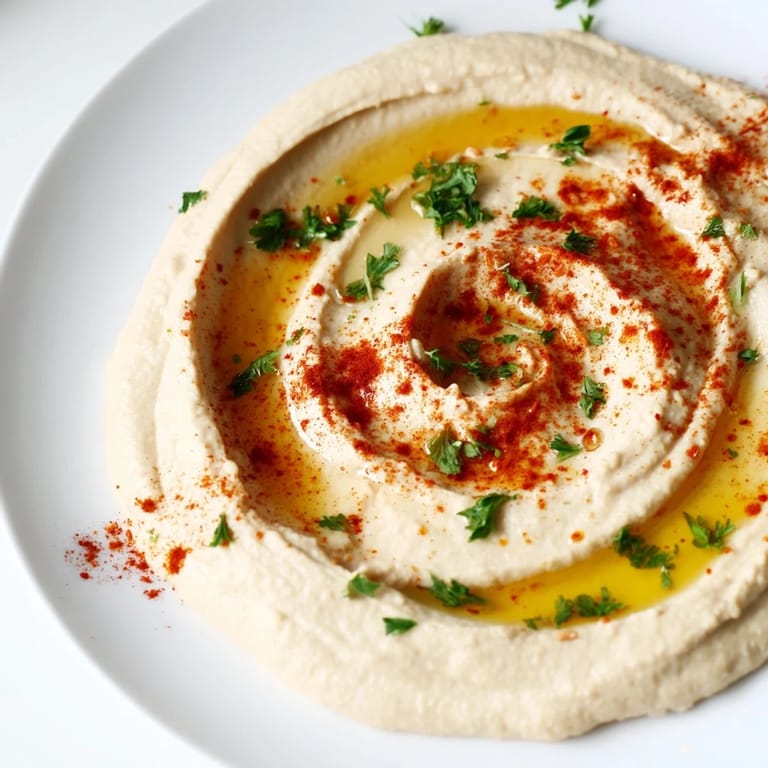
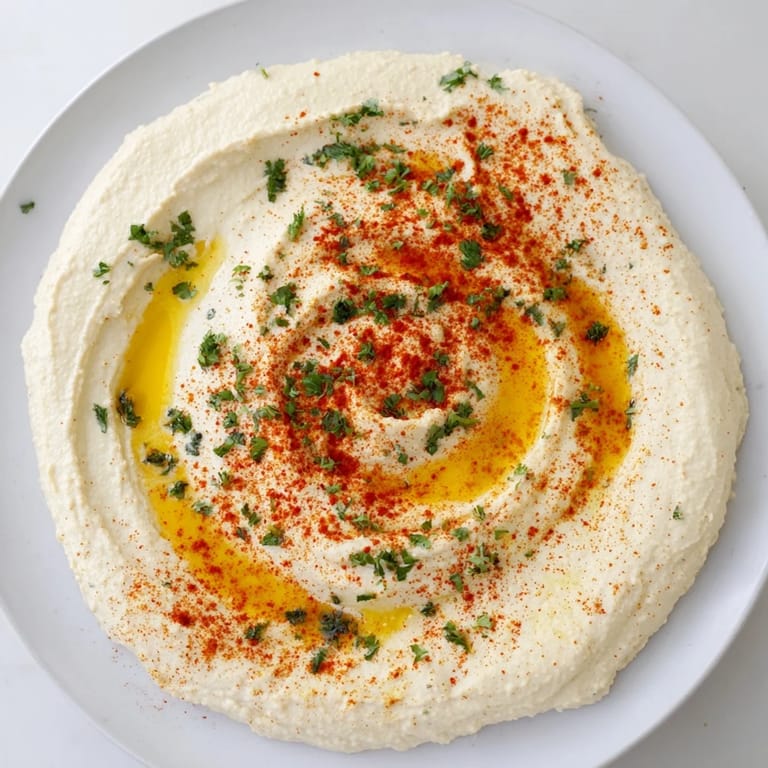
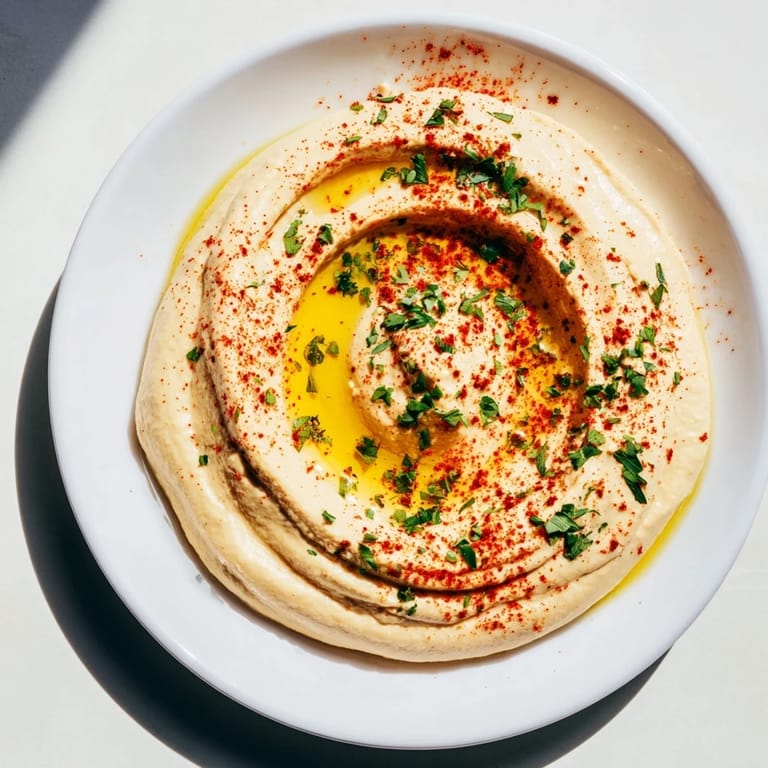
- Spoon the hummus onto a shallow bowl or plate and use the back of your spoon to create a gentle swirl or well in the center, almost like you're cradling it.
- Dress it up:
- Drizzle olive oil in thin lines across the top, sprinkle paprika or sumac, and scatter chopped parsley everywhere—this is your moment to make it beautiful.
 Save
Save I remember my neighbor knocking on my door, drawn by the smell of lemon and garlic floating from my kitchen. She stayed for hummus and pita, and we ended up talking for two hours about nothing important. That's when I realized hummus isn't really about the food—it's an invitation to slow down and sit with someone.
The Texture Test
The difference between good hummus and great hummus lives in the blending time. Most people stop too early, satisfied with something chunky or grainy, but push past that moment. Keep blending, scraping, adding cold water in small splashes, and suddenly everything transforms into something almost impossibly smooth. Your arm might get tired, but the result tastes like patience.
Flavor Layering
Lemon juice and garlic don't just season hummus—they define it. The lemon brings brightness and a subtle tang that keeps your palate awake, while garlic adds a warm, savory foundation that makes everything else taste more like itself. I learned this the hard way by trying versions with less of each, and every time something went missing from the experience.
Serving and Storage
Hummus tastes best when it's slightly chilled and the flavors have had an hour to settle, so make it ahead if you can. Warm pita bread is the perfect vehicle, but it's equally magical with raw vegetables, hard-boiled eggs, or simply by itself on a spoon. Store it in an airtight container in the refrigerator, where it keeps for up to four days, though it rarely lasts that long in my house.
- Always taste hummus straight from the fridge before serving—cold mutes flavors, so you might want to add a pinch more salt or squeeze of lemon at the last moment.
- If your hummus separates or gets watery after a few days, that's normal; just stir it back together and it tastes fine.
- Make a double batch and freeze half in small containers for moments when you want something beautiful on the table in minutes.
 Save
Save There's something about making hummus from scratch that feels like a small act of care, whether you're making it for guests or just for yourself on an ordinary Tuesday. This recipe is your starting point, not your ceiling.
Recipe Guide
- → What ingredients create the creamy texture?
The creamy texture comes from blending cooked chickpeas with tahini and cold water, yielding a smooth consistency.
- → Can I adjust the seasoning to taste?
Yes, you can add more salt or lemon juice after blending to match your flavor preference.
- → How should this be served?
Serve it drizzled with olive oil and sprinkled with paprika or sumac, accompanied by pita bread or fresh veggies.
- → What tools are needed to prepare it?
A food processor or high-powered blender is recommended to achieve the smooth texture.
- → Is it suitable for special diets?
Yes, it is vegan and naturally gluten-free, making it suitable for various dietary needs.