 Save
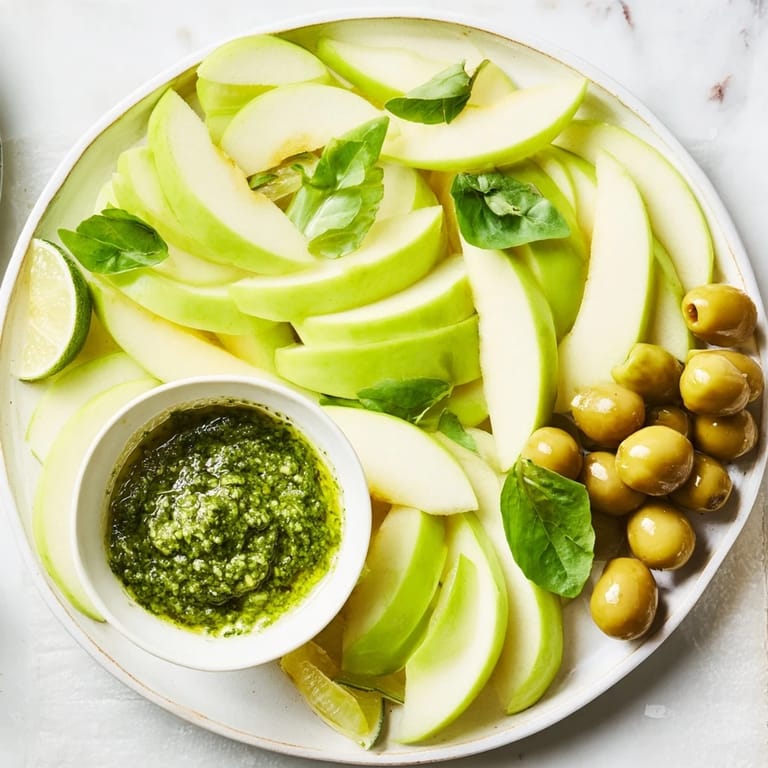
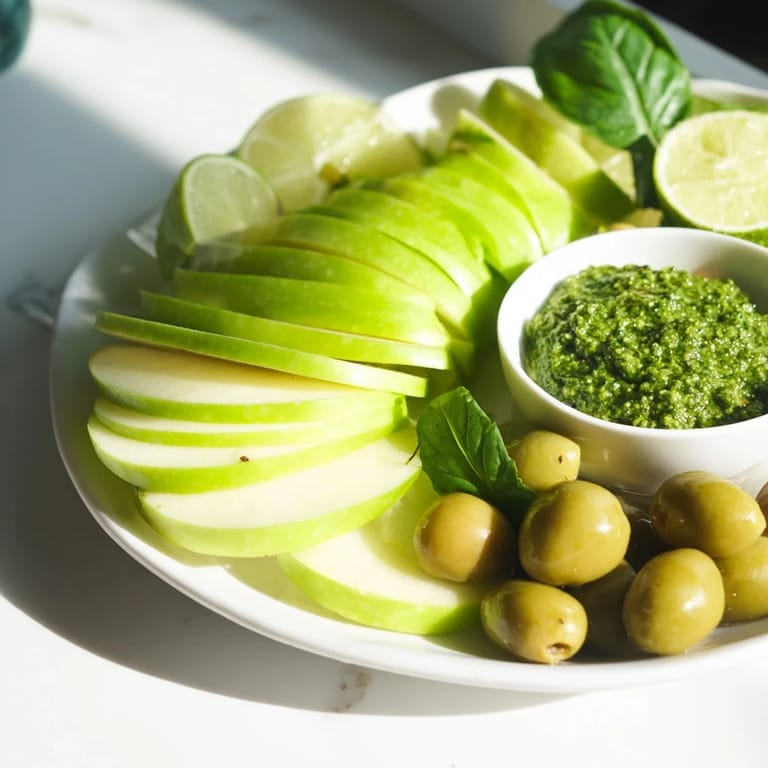
Save There's something magical about arranging food purely by color, and that's exactly what happened the first time I built The Emerald City board. I was frantically prepping for a dinner party when I realized I'd bought all these brilliant green ingredients without thinking about it—bright limes, those beautiful pale green olives, and crisp Granny Smith apples that catch the light just right. Instead of panicking about the limited palette, I leaned into it, and suddenly had this stunning, cohesive board that looked like edible art. My guests couldn't stop talking about it, not because it was complicated, but because it was so visually striking and tasted fresh and alive.
I made this board for my mom's book club last spring, and she kept refilling it because people genuinely couldn't stop snacking. One guest asked if I'd ordered it from somewhere fancy, which made me realize how much presentation matters—a simple snack board suddenly feels elevated just by being intentional about color and arrangement. That's when I knew I'd stumbled onto something worth repeating.
Ingredients
- Granny Smith apples: Their tartness balances the richness of the pesto, and they hold their crispness better than sweeter varieties. Slice them just before assembling to keep them bright.
- Limes: These do double duty—they add vibrant color and a fresh, zesty flavor that ties the whole board together. Their acidity also keeps the apples from oxidizing.
- Pesto: Use a basil or arugula variety for the most stunning green color. If you're avoiding dairy, almond-based or olive oil-forward pestos work beautifully.
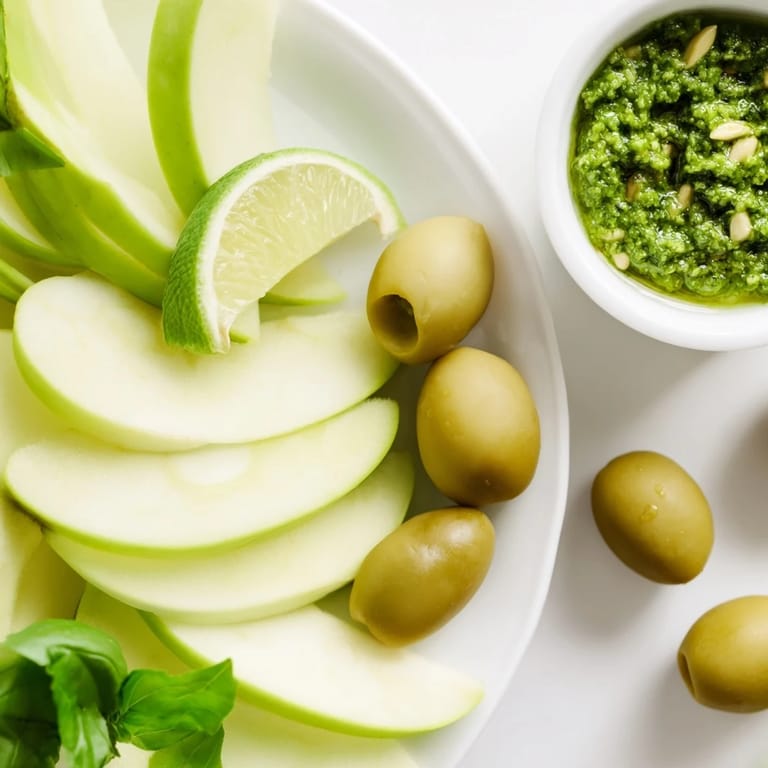
- Green olives: Castelvetrano olives are buttery and mild, while Manzanilla olives bring a more traditional briny punch. Choose whichever matches your flavor preference.
Tired of Takeout? 🥡
Get 10 meals you can make faster than delivery arrives. Seriously.
One email. No spam. Unsubscribe anytime.
Instructions
- Prep your produce:
- Wash and completely dry your apples and limes—any excess moisture will make them look dull once they're arranged. Pat them down with a clean towel until they're gleaming.
- Slice with intention:
- Use a sharp knife to cut the apples thin enough to see light through them, creating delicate, overlapping layers. For limes, you can go either way—thin rounds are elegant, while wedges are more playful and easier to juice over the board.
- Create your canvas:
- Start by laying apple slices across your board in loose rows, leaving space between them so the board peeks through. Think of it like you're painting—you want movement and rhythm, not rigid perfection.
- Add lime brightness:
- Tuck lime slices and wedges between the apples, letting them catch the light. This is where the board starts looking like an actual Emerald City.
- Pool the pesto:
- Spoon pesto into a small bowl and nestle it somewhere on the board where it's accessible but doesn't crowd the other elements. The deep green against the pale bowl creates a nice visual anchor.
- Scatter the olives:
- Fill any gaps with whole olives, treating them like jewels you're placing rather than items you're squeezing in. They add texture and that crucial salty pop.
- Serve right away:
- The magic of this board is its freshness and crispness, so don't let it sit in the fridge before serving. The apples will stay bright and the whole thing will taste as alive as it looks.
 Save
Save My favorite moment with this board was watching my friend Sarah, who usually picks at appetizers, grab a small plate and actually sit down with it like it was a proper meal. Sometimes the simplest things—good ingredients, thoughtful arrangement, zero stress—are exactly what people need.
Why Green Matters
Working within a single color family forces you to think differently about food arrangement. Instead of relying on a rainbow of colors to make something look good, you're paying attention to texture, shape, and the subtle variations in tone. A pale green olive next to a bright lime round next to a translucent apple slice—that's where the actual artistry lives, and it's so much more interesting than I expected.
The Pesto Decision
Store-bought pesto is genuinely fine for this board, but if you have fifteen extra minutes and some basil on hand, making your own opens up possibilities. You can control the salt level, the ratio of garlic to herb, whether it's pine nuts or almonds. I've made this board with both arugula pesto and traditional basil, and honestly, the arugula version feels slightly more sophisticated—more peppery, less predictable.
Board Building Beyond Green
Once you understand how to build a monochromatic board, you'll see possibilities everywhere. Red boards with radishes, strawberries, and tomatoes. Golden boards with stone fruits and cheese. The technique stays the same, but the mood shifts completely. This Emerald City version is my favorite though, because green just feels fresher, more alive somehow.
- If you want to add crunch, cucumber slices or sugar snap peas blend seamlessly into the green palette.
- Pair this with a crisp white wine, sparkling water with lime, or even a light beer—anything cold and refreshing.
- Make this board the day of, right before guests arrive, to preserve that just-arranged glow.
 Save
Save This board has become my go-to when I want to serve something that feels special without burning myself out in the kitchen. It's proof that constraints—like a single color—can actually spark creativity instead of limiting it.
Recipe Guide
- → How can I keep apple slices from browning?
Lightly brushing the apple slices with lime juice before assembling prevents browning and keeps them looking fresh.
- → Can I use homemade pesto for this board?
Yes, homemade basil or arugula pesto works well and enhances the vibrant green color of the board.
- → Are there vegan options for this snack board?
To keep it vegan, use pesto that doesn’t contain cheese or dairy ingredients.
- → What are good drink pairings for this snack board?
Crisp white wine or sparkling water with lime complement the fresh and tangy flavors beautifully.
- → Can I add other green snacks to this board?
Yes, adding cucumber slices or sugar snap peas adds extra crunch and variety to the board.