 Save
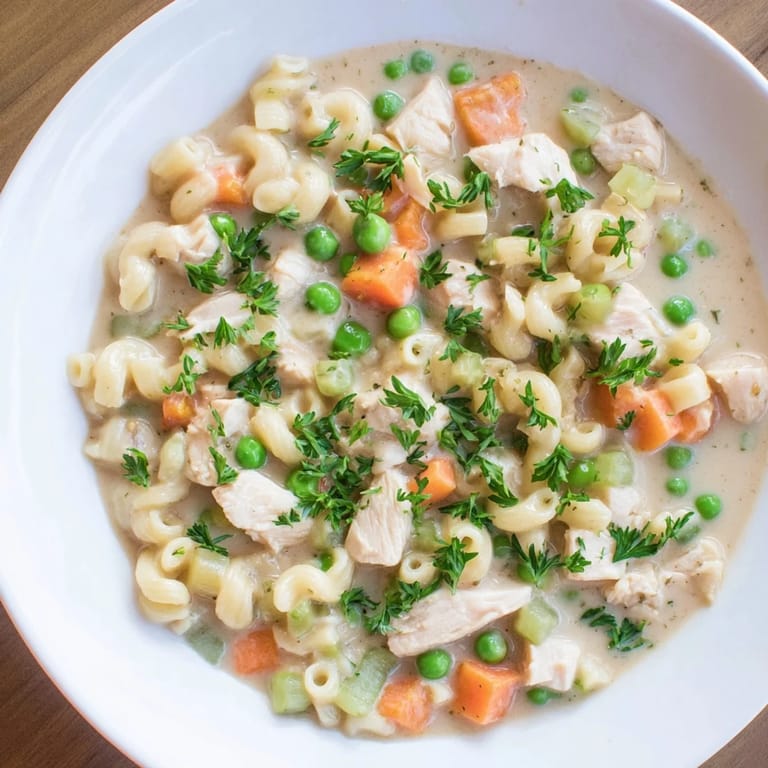
Save There's something about a bowl of chicken pot pie soup that takes me back to watching my grandmother work her magic in the kitchen, transforming simple ingredients into something that felt like edible comfort. One rainy afternoon, I decided to recreate that feeling but without the fussing over pastry—just the soul of the dish in a warm, creamy bowl. The first spoonful reminded me why this combination of tender chicken, soft vegetables, and that velvety broth had stayed with me all these years. Now, this soup is what I reach for when I want something homemade but don't want to spend hours at the stove.
I made this for my brother during his first week in a new apartment, when his kitchen was still half-unpacked boxes and he was living on takeout. Watching him blow on a spoonful and close his eyes while eating made me realize that the best recipes aren't always about technique—they're about showing up with something that says, I know you need this right now.
Ingredients
- Cooked chicken breast, shredded or diced (2 cups): Use a rotisserie chicken if you're short on time—it's a kitchen hack that saves thirty minutes without sacrificing flavor.
- Carrots, diced (1 cup): Cut them small so they soften fully in the simmering time, releasing their natural sweetness into the broth.
- Celery, diced (1 cup): This is the backbone of the flavor, so don't skip it even if you're tempted—it adds a subtle depth.
- Frozen peas (1 cup): Frozen is actually better here because fresh peas can turn mushy; these hold their shape beautifully.
- Yellow onion, diced (1 small): Dice it fine so it disappears into the soup and builds the base flavor rather than adding chunks.
- Garlic, minced (2 cloves): Mince it right before you add it to maximize that fresh, bright note.
- Fresh parsley, chopped (2 tablespoons, plus extra for garnish): This little herb lifts the whole soup at the end—don't cook it into oblivion, add it just before serving.
- Ditalini pasta, uncooked (1 cup): These small tubes capture the broth beautifully; regular small pasta shapes work if you can't find ditalini.
- Low-sodium chicken broth (4 cups): Low-sodium lets you control the salt and prevents the soup from tasting like seasoning alone.
- Whole milk (1 cup): This makes it creamy without being heavy—use it, don't skip to cream alone.
- Heavy cream (1/2 cup): Just enough to make the broth silky and rich without feeling like a butter bomb.
- Unsalted butter (2 tablespoons): This is where the sautéing magic happens, so use real butter, not a substitute.
- All-purpose flour (2 tablespoons): This thickens the broth into soup; cook it with the vegetables first to avoid lumps.
- Salt (1 teaspoon, or to taste): Always taste before serving because the final seasoning is where the magic happens.
- Ground black pepper (1/2 teaspoon): Fresh is better if you have a grinder, but pre-ground works just fine here.
- Dried thyme (1/2 teaspoon): This herb is unmistakably chicken pot pie—lean into it.
- Dried sage, optional (1/2 teaspoon): If you have it, add it; if not, the soup is perfect without it.
Tired of Takeout? 🥡
Get 10 meals you can make faster than delivery arrives. Seriously.
One email. No spam. Unsubscribe anytime.
Instructions
- Melt the butter and soften the vegetables:
- Melt the butter in your pot over medium heat, then add the diced onion, carrots, and celery. Let them sit and soften for about five minutes, stirring occasionally—you're building the flavor foundation here, so don't rush it. The vegetables should smell sweet and almost buttery when you move to the next step.
- Build the roux:
- Stir in the minced garlic and cook for just one minute—you want to wake up its flavor without letting it brown. Sprinkle the flour over everything and stir for two minutes straight, coating every vegetable bit. This step kills the raw flour taste and creates the thickener you need.
- Add the broth and dairy:
- Pour the chicken broth in slowly while whisking constantly to prevent any lumps from forming. Once it's smooth, add the milk and cream, stirring gently. Bring everything to a simmer—you'll see small bubbles breaking the surface, not a rolling boil.
- Cook the pasta:
- Add the uncooked ditalini pasta directly to the simmering broth along with the thyme, sage if using, salt, and pepper. Stir occasionally and let it cook uncovered for about ten minutes, until the pasta is al dente and the broth has thickened slightly. Taste a piece of pasta to make sure it's tender enough.
- Finish with chicken and peas:
- Stir in your shredded cooked chicken and the frozen peas, then let everything simmer together for three to five minutes until the peas are tender and heated through. The soup should now be thick and creamy, coating the back of a spoon.
- Final taste and serve:
- Taste your soup and adjust the salt and pepper to your liking—seasoning is everything. Remove from heat and stir in the fresh parsley just before serving, letting its brightness cut through all that richness. Ladle into bowls and garnish with extra parsley if you want it to look pretty.
 Save
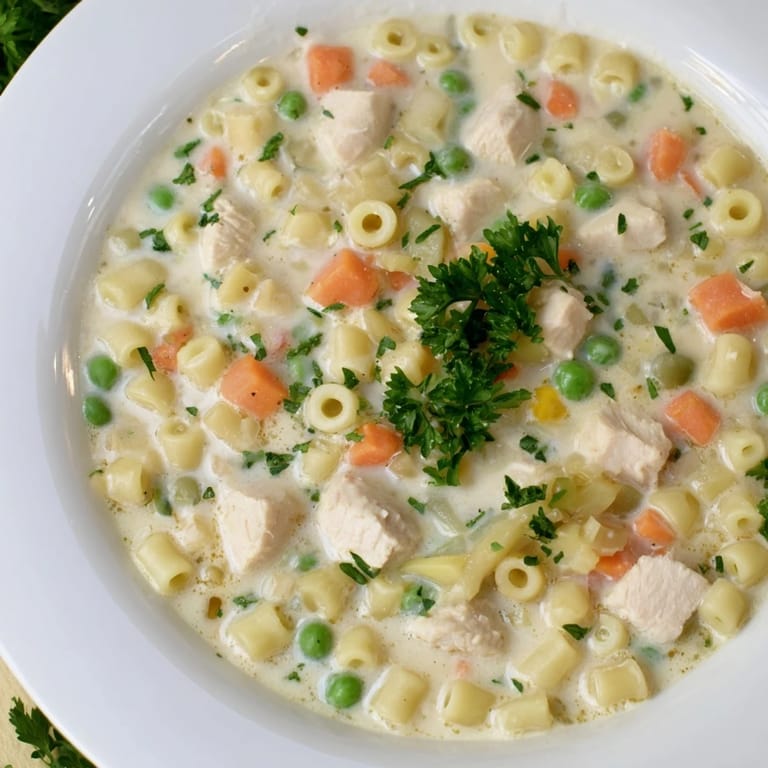
Save This soup showed me that sometimes the most comforting food doesn't need to be complicated. It's just about knowing which flavors belong together and giving them time to mingle in a warm bowl.
Quick Shortcuts That Actually Work
If you're buying rotisserie chicken instead of cooking your own, you're already saving twenty minutes and making a smart choice—this soup doesn't know the difference. A splash of dry white wine added with the broth will deepen the flavor if you have it on hand, giving the whole pot a subtle sophistication. Even small tweaks like these remind me that cooking at home should feel flexible and forgiving, not rigid.
Customizing Your Bowl
Once you've made this soup once, you'll start noticing little variations that suit your taste. Some people swap in cream of chicken soup for part of the broth for extra richness, while others add sautéed mushrooms for an earthy note that rounds everything out. The beauty of this soup is that it's a canvas—the chicken pot pie flavor is strong enough to handle your personal touches.
Storing and Reheating
This soup stores beautifully in the refrigerator for up to four days, and it actually tastes better the next day when all the flavors have gotten acquainted. When you reheat it, do so gently over medium heat, adding a splash of milk if it's thickened up too much in the fridge. You can also freeze it for up to three months, though the pasta texture changes slightly—so either freeze it without the pasta and add fresh pasta when reheating, or just make a fresh batch because this recipe comes together so quickly.
- Reheat gently on the stove rather than in the microwave to keep the texture creamy and avoid hot spots.
- If you freeze it, cool it completely first and use freezer-safe containers so you're not wasting space.
- A bowl of this soup with crusty bread is a complete meal—don't overthink what to serve alongside it.
 Save
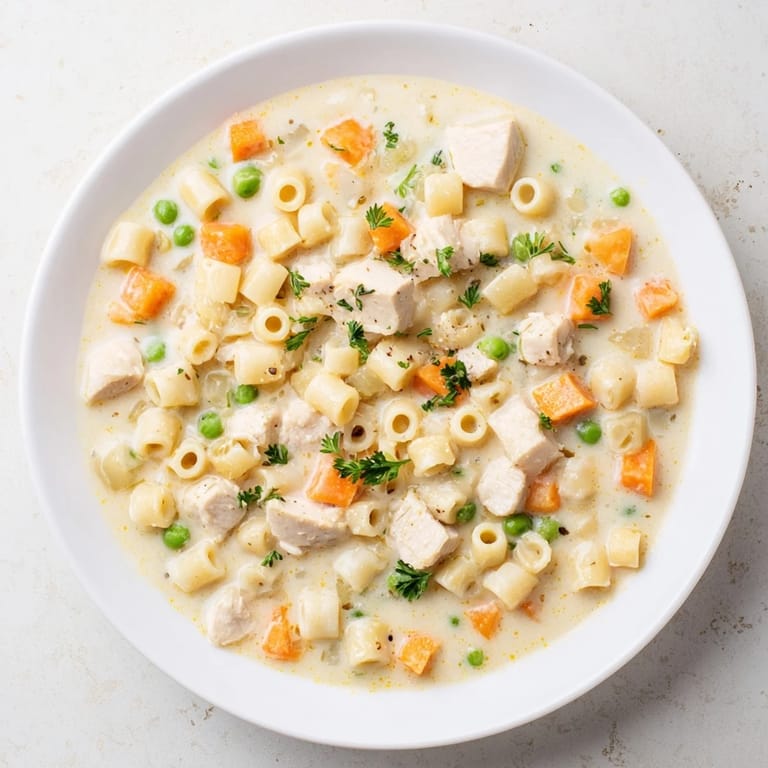
Save A bowl of this soup is proof that the best meals don't need to be fussy or complicated—they just need to be made with care. Serve it hot, with someone you like, and watch how it becomes the kind of thing people ask you to make again.
Recipe Guide
- → Can I use rotisserie chicken instead of cooking from scratch?
Yes, rotisserie chicken works great and saves time while keeping the dish flavorful.
- → What type of pasta is best for this dish?
Ditalini pasta holds up well in the creamy broth and provides a pleasing texture contrast.
- → How can I make this dish gluten-free?
Use gluten-free pasta and substitute all-purpose flour with a gluten-free thickener like cornstarch or rice flour.
- → Can I add other vegetables to this dish?
Absolutely, additional veggies like corn or mushrooms can be included to enhance flavor and nutrition.
- → How do I adjust seasoning properly?
Taste the broth before serving and add salt or pepper incrementally to balance the flavors.