 Save
Save I stumbled onto cauliflower fried rice by accident one Tuesday when my delivery order fell through and I had half a head of cauliflower sitting in the crisper drawer. Desperate not to order takeout again, I grabbed my food processor and started pulsing, thinking I'd at least try something different. Ten minutes later, my kitchen smelled like a proper wok station, and I realized I'd accidentally discovered something better than the original—lighter, fresher, and somehow more satisfying than I expected.
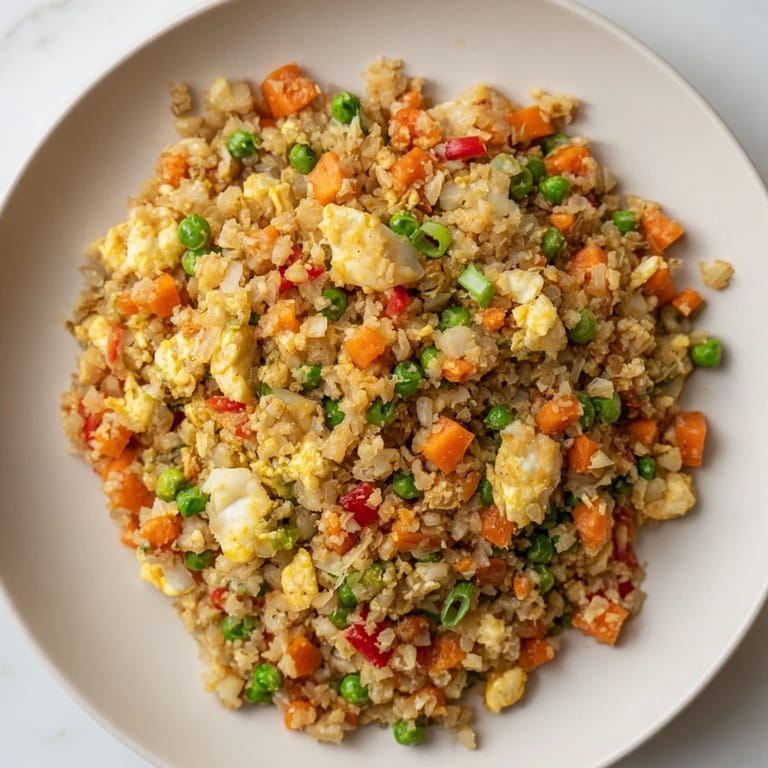
My partner came home to this bowl of golden, steaming cauliflower rice dotted with scrambled eggs and snap peas, and I watched his face shift from skepticism to actual surprise. He asked if I'd ordered it, which somehow felt like the highest compliment. That moment made me realize this wasn't just a diet hack—it was genuinely delicious enough to make again on purpose.
Ingredients
- Cauliflower (1 medium head, about 600g): The star that pretends to be rice—pulse it until it's the size of actual rice grains, or you'll end up with mushy results that taste more like mashed potatoes.
- Carrot (1 medium, peeled and diced): This adds sweetness and color without being preachy about it; dice it small so it cooks in the same time as everything else.
- Frozen peas (1/2 cup): Honestly better than fresh here because they're already blanched and stay bright; thawed peas disappear if you're not careful.
- Red bell pepper (1 small, diced): The flavor note that makes people ask what's different about this rice; sweet and slightly charred is the goal.
- Green onions (2, thinly sliced): Split these into whites (for cooking) and greens (for finishing) unless you like all your onion burnt.
- Garlic (2 cloves, minced): The non-negotiable base; mince it small enough that it distributes evenly and doesn't burn.
- Fresh ginger (1-inch piece, grated): This is what separates a good fried rice from a memorable one—don't skip it or substitute ground ginger.
- Eggs (2 large, lightly beaten): Optional but recommended; scrambled eggs are what give this texture and richness, though omit them for vegan or replace with tofu scramble.
- Sesame oil (2 tablespoons, divided): Use a neutral oil for cooking; toasted sesame oil is finishing oil only, or it burns and tastes bitter.
- Soy sauce or tamari (2 tablespoons, low-sodium): Tamari if gluten matters to you; the low-sodium version lets you control the salt, which is key.
- Toasted sesame oil (1 teaspoon, optional): The drizzle that makes people close their eyes when they eat this.
- White or black pepper (1/4 teaspoon) and salt: Taste as you go—salt levels vary wildly depending on your soy sauce brand.
Tired of Takeout? 🥡
Get 10 meals you can make faster than delivery arrives. Seriously.
One email. No spam. Unsubscribe anytime.
Instructions
- Pulse the cauliflower into submission:
- Rinse your florets and pat them completely dry—water is the enemy here. Pulse them in a food processor until they look like actual rice grains, not a slurry or chunky mess; work in batches if you have a small processor.
- Scramble and set aside:
- Heat 1 tablespoon of oil over medium-high heat, add your beaten eggs, and let them set without stirring too much—you want soft, tender curds, not a tight omelette. Slide them onto a plate and don't look back.
- Build the flavor foundation:
- Add your remaining oil to the pan, then immediately add garlic and ginger, stirring constantly for about 30 seconds until the kitchen smells undeniably good. This is the moment everything changes.
- Soften the vegetables:
- Toss in your carrots, bell pepper, and peas; stir them around for 2 to 3 minutes until they're slightly tender but still have some snap. You want color and texture, not mush.
- Cook the cauliflower rice:
- Add your riced cauliflower and stir it frequently for 4 to 5 minutes, breaking up any clumps and letting it get slightly golden in spots. It should smell nutty and look slightly caramelized, not steamed.
- Bring it all together:
- Stir in soy sauce, pepper, and salt to taste; add the scrambled eggs and white parts of your green onions back into the pan. Toss everything for about 1 minute until the eggs are warmed through and everything is coated.
- Finish and serve:
- Drizzle with toasted sesame oil if you're using it, scatter the green onion greens on top, and serve immediately while it's still steaming.
 Save
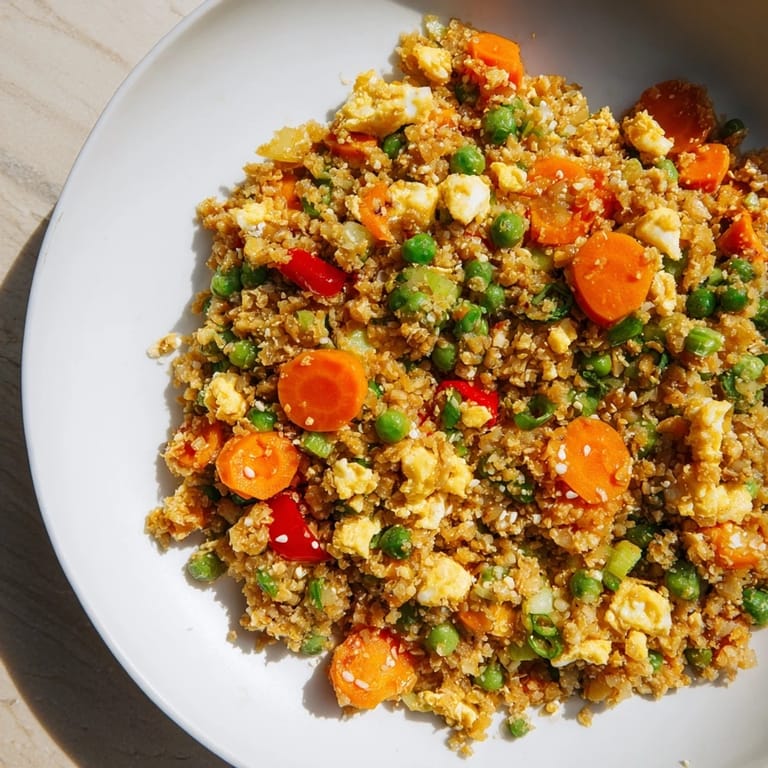
Save The real magic happened when I served this to my very skeptical mother-in-law who is deeply suspicious of anything marketed as healthy. She ate two bowls and asked for the recipe, which felt like winning an award. That's when I knew this wasn't just convenience food—it was something that genuinely belongs in regular rotation.
Why Cauliflower Works Here
Cauliflower has this subtle sweetness and neutral flavor that doesn't fight with the soy sauce and ginger the way some vegetables would. The texture, when cooked properly, actually mimics rice more than you'd expect—the trick is not turning it into cauliflower mash by overcooking or adding too much liquid. I learned this the hard way the first time, when I steamed my cauliflower beforehand like I was making a side dish, and ended up with a grainy soup instead of fried rice.
The Egg Question
I know eggs aren't for everyone, and honestly, this works fine without them if you're vegan or just not in an egg mood. That said, scrambled eggs are what give fried rice that signature richness and texture—they act like a binder and add protein without feeling heavy. If you go the egg route, don't overcook them in step two; they'll keep cooking when everything gets tossed together at the end.
Endless Variations
This is the kind of recipe that gets better the more you cook it because you start seeing it as a canvas instead of a rigid formula. Swap the vegetables for whatever you have on hand, throw in cooked protein if you want to make it heartier, or add a squeeze of lime and fresh cilantro at the end if you're feeling bright and summery. The sesame oil and soy sauce are your anchors—everything else can shift.
- Add cooked chicken, shrimp, or crispy tofu to make this a complete meal that actually fills you up.
- Try other vegetables like broccoli, snap peas, corn, or even mushrooms sautéed separately if they're wet.
- Finish with lime juice and cilantro for a lighter, fresher version that tastes like spring.
 Save
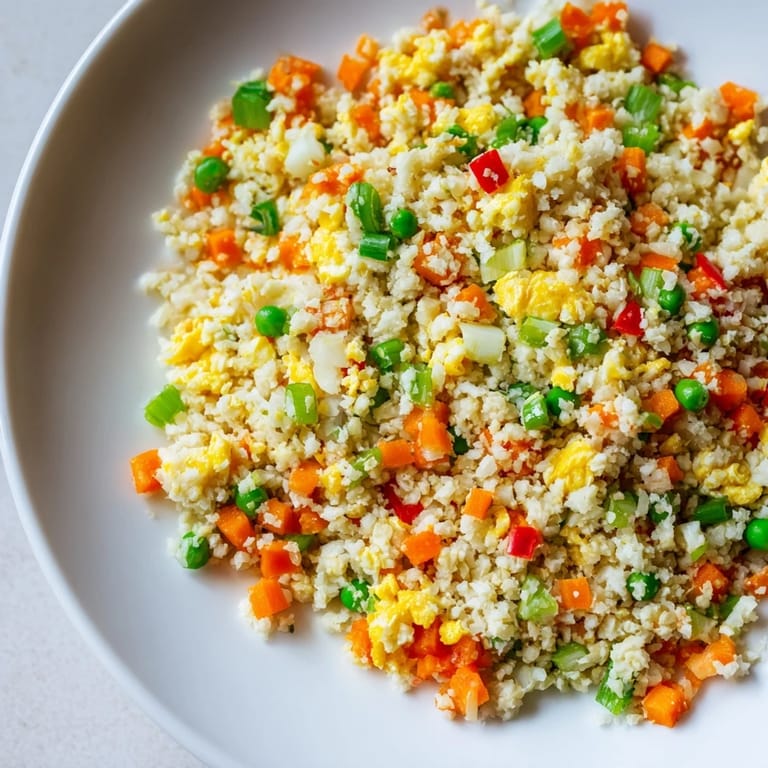
Save This has become my version of restaurant-quality takeout that's faster and better than actually ordering, which means it's rotated into weekly dinners without anyone complaining. It's proof that simple, real food doesn't need to feel like a compromise.
Recipe Guide
- → Can I make this dish vegan?
Yes, by omitting the eggs or substituting them with tofu scramble, you can create a vegan-friendly version that maintains great texture and flavor.
- → What is the best way to rice cauliflower?
Use a food processor to pulse cauliflower florets until they resemble rice grains. Alternatively, grate with a box grater for a similar texture.
- → Which oils work well for cooking this dish?
Sesame oil brings a rich, nutty aroma, ideal for finishing touches, while neutral oils like vegetable or canola are good for sautéing ingredients.
- → Can I add protein options to this dish?
Sure, cooked chicken, shrimp, or tofu are excellent additions that boost protein and complement the vegetables and seasonings.
- → How can I keep vegetables crisp yet tender?
Sauté vegetables on medium-high heat for just a few minutes until slightly tender but still crisp, preserving their color and texture.
- → Is this dish suitable for gluten-free diets?
Yes, by using tamari instead of soy sauce, you can assure a gluten-free version without compromising flavor.